Development and validation of a novel Simoa assay for NPTX2 in Alzheimer's disease and Down syndrome
Mathias Sauer, Bárbara Fernandes Gomes, Parasto Shahrouki, Juan Lantero‐Rodriguez, Laia Montoliu‐Gaya, Elena Camporesi, Olivia Belbin, Daniel Alcolea, Ashish Kumar, Mitu Sharma, Sangeeta Singh, Gunnar Brinkmalm, Johan Gobom, María Carmona‐Iragui, Michael Schöll

TL;DR
A new test for NPTX2 in spinal fluid was developed and shown to be lower in Alzheimer's and Down syndrome patients, and more closely linked to cognitive decline than existing biomarkers.
Contribution
A novel Simoa assay for measuring NPTX2 in cerebrospinal fluid was developed and validated.
Findings
CSF NPTX2 levels were significantly lower in Alzheimer's and Down syndrome patients compared to healthy individuals.
NPTX2 levels correlated with cognitive scores, tau-PET, and cortical thickness in Alzheimer's patients.
NPTX2 showed stronger associations with cognition than pTau and NFL biomarkers.
Abstract
Synaptic dysfunction and loss are pathological hallmarks of neurodegenerative diseases. Neuronal pentraxin 2 (NPTX2), a presynaptic protein involved in synaptic plasticity, has been linked to cognitive decline in Alzheimer's disease (AD) and other neurodegenerative disorders. We developed and validated a novel single molecule array (Simoa) for NPTX2 in cerebrospinal fluid, which was evaluated in two independent cohorts. CSF NPTX2 concentration was lower (fold change [FC] 0.82, p < 0.01) in AD patients and Down syndrome individuals (FC 0.56, p < 0.001), compared with cognitively unimpaired patients (CU). It was also associated with Mini‐Mental State Examination (MMSE) score (β = 2.51, p < 0.001), tau‐PET (β = −0.21, p < 0.01), and cortical thickness (β = 0.08, p < 0.001). We describe the first assay for NPTX2 on the Simoa platform, where we continue to highlight the valuable addition…
Genes, proteins, chemicals, diseases, species, mutations and cell lines named across the full text — each resolved to its canonical identifier and authoritative record.
Click any figure to enlarge with its caption.
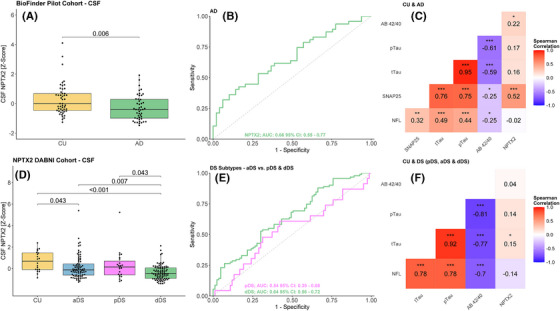 Figure 1
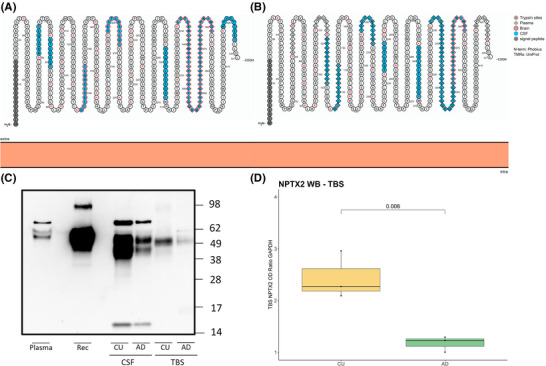 Figure 2
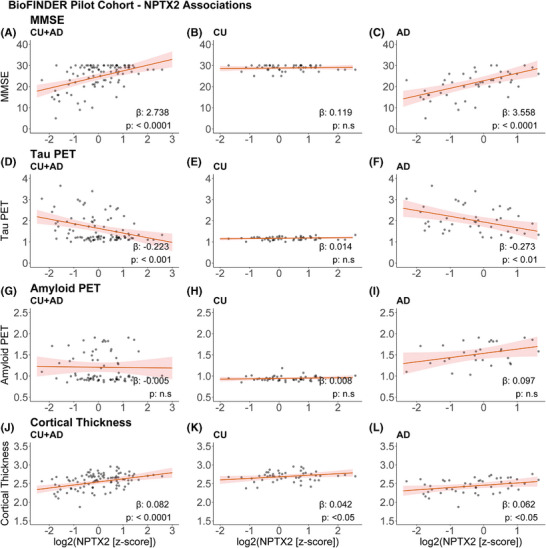 Figure 3
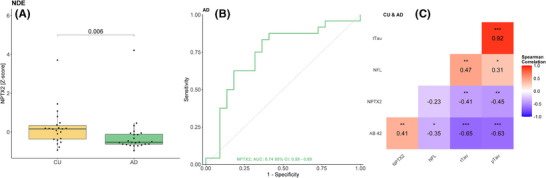 Figure 4
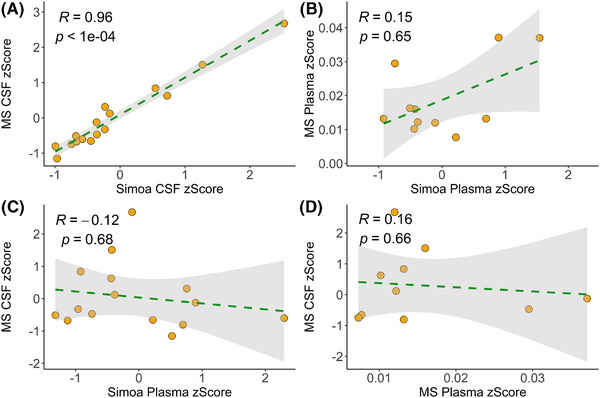 Figure 5
Peer Reviews
No public reviews on file for this paper yet. If you reviewed it on a platform where reviews are public (OpenReview, ICLR, NeurIPS, ICML), you can paste yours below so the community can read it here.
Videos
No videos yet. Explain this paper in a talk, walkthrough, or lecture? Add one.
Taxonomy
TopicsAlzheimer's disease research and treatments · S100 Proteins and Annexins · Neuroinflammation and Neurodegeneration Mechanisms