Congenital Chylothorax and Congenital Pulmonary Airway Malformation: Case Report and Literature Review
Andréa L. Corso, Amanda M. Magdaleno, Carolina R. Cappellaro, Mateus M. Neves, Geórgia P. F. Oliveira, Iara R. S. Lucena, José C. Fraga

TL;DR
This case report discusses the rare co-occurrence of congenital chylothorax and congenital pulmonary airway malformation in a newborn and the challenges in managing these conditions.
Contribution
The paper presents a novel case of concurrent congenital chylothorax and CPAM and proposes a treatment strategy when conservative measures fail.
Findings
Thoracic duct ligation and abrasive pleurodesis were performed during CPAM resection but failed to resolve the chylothorax.
Chemical pleurodesis with povidone-iodine was ultimately successful in resolving the chylothorax after 56 days.
The paper suggests that chemical pleurodesis is a viable option when conservative and surgical interventions fail.
Abstract
The association of two rare but important congenital conditions—congenital chylothorax (CCT) and congenital pulmonary airway malformation (CPAM)—can be challenging to manage, especially in the absence of well‐established protocols. We report an association between CPAM and CCT in a newborn. After birth, CCT did not respond to conservative treatment, and at the time of CPAM resection, thoracic duct ligation and abrasive pleurodesis were also performed. Despite these interventions, the CCT persisted even with the subsequent administration of octreotide and propranolol. Finally, after 56 days, chemical pleurodesis with povidone‐iodine was performed. Chest tube drainage ceased, and the thoracic drain was removed 4 days later. Conservative treatment remains the first‐line approach for neonatal CCT. However, when CCT is associated with CPAM and fails to respond to conservative measures,…
Genes, proteins, chemicals, diseases, species, mutations and cell lines named across the full text — each resolved to its canonical identifier and authoritative record.
Click any figure to enlarge with its caption.
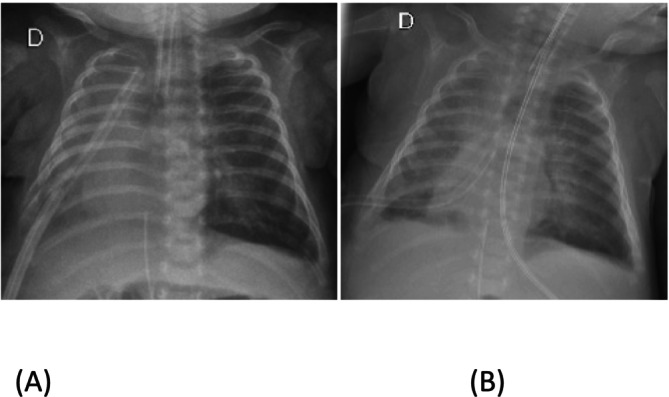 Figure 1
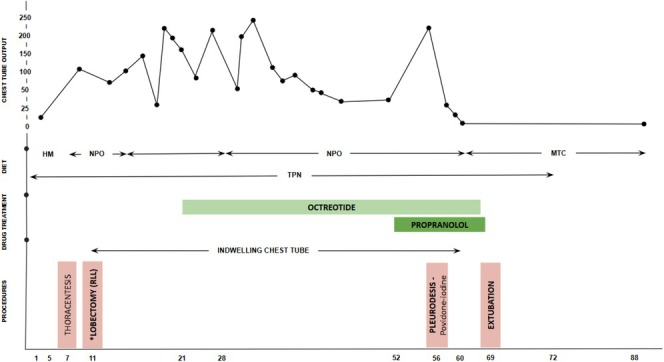 Figure 2
 Figure 3
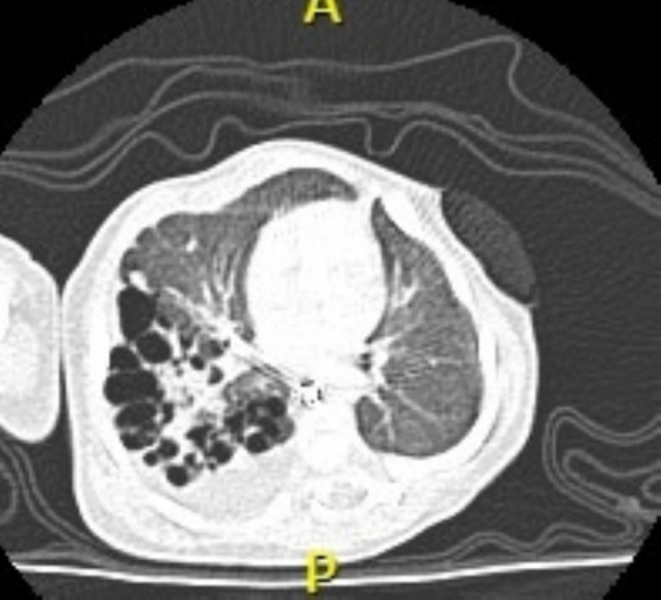 Figure 4
Peer Reviews
No public reviews on file for this paper yet. If you reviewed it on a platform where reviews are public (OpenReview, ICLR, NeurIPS, ICML), you can paste yours below so the community can read it here.
Videos
No videos yet. Explain this paper in a talk, walkthrough, or lecture? Add one.
Taxonomy
TopicsLymphatic Disorders and Treatments · Congenital Diaphragmatic Hernia Studies · Tracheal and airway disorders