Phenotypic Variation of Oak Species (Quercus spp.) Reveals Adaptive Strategies Across Natural and Semi‐Artificial Oak Stands
Xuan Li, Xuxu Bao, Yongfu Li, Yousry A. El‐Kassaby, Yanming Fang

TL;DR
This study explores how oak species adapt to different environments by analyzing leaf traits, revealing that some species are more flexible in changing conditions.
Contribution
The study reveals how hybridization and genetic coadaptation influence developmental stability and adaptive strategies in oak species.
Findings
Cerris group oaks show stable leaf morphology and higher fluctuating asymmetry in stable environments.
Q. fabri exhibits higher phenotypic plasticity and lower asymmetry, adapting better to dynamic environments.
Hybridization in Q. fabri increases morphological variability, affecting developmental stability.
Abstract
This study investigated leaf phenotypic variation in oak species to better understand how different groups of oaks adapt to diverse environmental conditions. We examined the leaf phenotypic traits of six oak populations in two mixed forests with differing species compositions: Zijin Mountain in Jiangsu Province, composed of Quercus acutissima , Q. variabilis , and Q. fabri; and Youhua Village in Anhui Province, consisting of Q. acutissima , Q. chenii , and Q. fabri. The results indicated that species in the Cerris group ( Q. acutissima , Q. chenii, and Q. variabilis ) exhibited stable leaf morphology and higher fluctuating asymmetry (FA), suggesting adaptation to stable environments. In contrast, Q. fabri from the Quercus group showed higher phenotypic plasticity and lower FA, indicating a strategy for adapting to dynamic environments. The study also explored the relationship…
Genes, proteins, chemicals, diseases, species, mutations and cell lines named across the full text — each resolved to its canonical identifier and authoritative record.
Click any figure to enlarge with its caption.
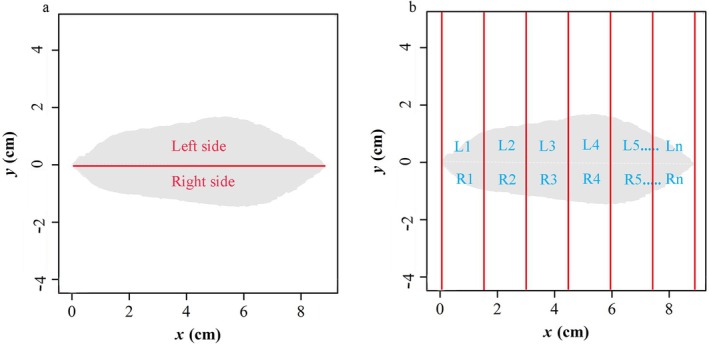 Figure 1
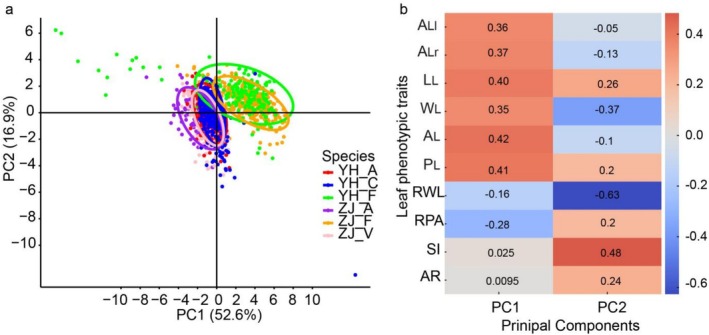 Figure 2
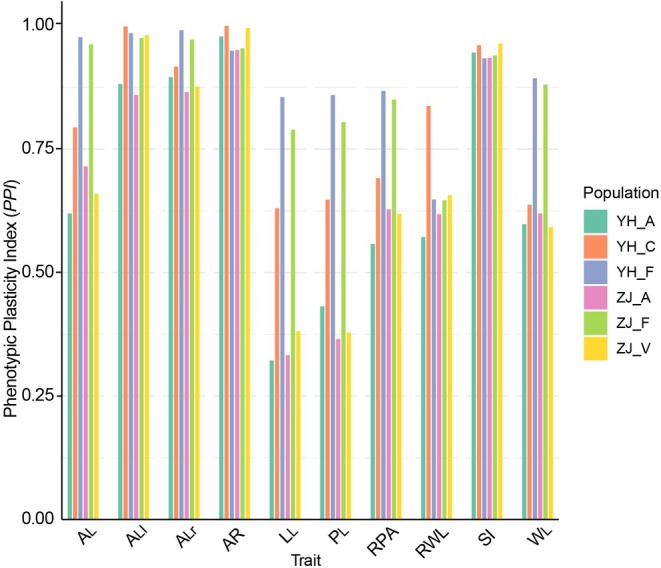 Figure 3
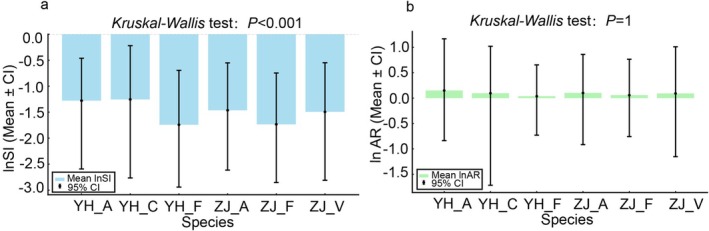 Figure 4
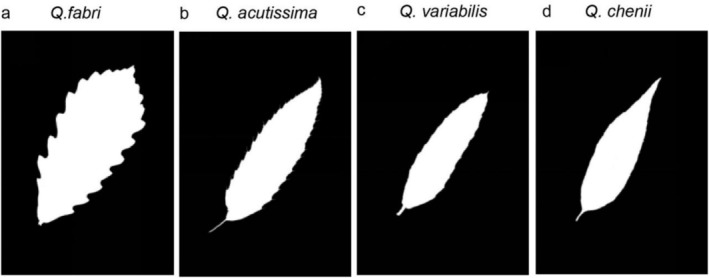 Figure 5
 Figure 6
Peer Reviews
No public reviews on file for this paper yet. If you reviewed it on a platform where reviews are public (OpenReview, ICLR, NeurIPS, ICML), you can paste yours below so the community can read it here.
Videos
No videos yet. Explain this paper in a talk, walkthrough, or lecture? Add one.
Taxonomy
TopicsMorphological variations and asymmetry · Evolution and Paleontology Studies · Ecology and Vegetation Dynamics Studies