Ansa cervicalis or ansa hypoglossi? A systematic review
Gustavo Henrique Pereira Boog, Flávio Carneiro Hojaij, Matheus Mychael Mazzaro Conchy, Renan da Silva Bentes, Flávia Emi Akamatsu, Alfredo Luiz Jácomo

TL;DR
This paper clarifies the correct anatomical term for a nerve loop, showing that 'ansa cervicalis' is more accurate than 'ansa hypoglossi'.
Contribution
The study resolves terminology confusion by proving 'ansa cervicalis' aligns better with anatomical origins.
Findings
The term 'ansa cervicalis' is anatomically accurate as its fibers arise from the cervical cord.
The term 'ansa hypoglossi' should be avoided as it is structurally incorrect.
Classic textbooks and literature support the use of 'ansa cervicalis' over 'ansa hypoglossi'.
Abstract
•There is a disparity of terminology in the literature between ansa cervicallis and ansa hypoglossi.•This systematic review of 3731 articles proved that the term that best suits anatomical reality is “ansa cervicalis”.•This conclusion is based on the fact that the nerve fibers arise only from the cervical cord.•The authors also demonstrated that the term “ansa hypoglossi” should be avoided, in scientific research and clinical/surgical practice. There is a disparity of terminology in the literature between ansa cervicallis and ansa hypoglossi. This systematic review of 3731 articles proved that the term that best suits anatomical reality is “ansa cervicalis”. This conclusion is based on the fact that the nerve fibers arise only from the cervical cord. The authors also demonstrated that the term “ansa hypoglossi” should be avoided, in scientific research and clinical/surgical…
Genes, proteins, chemicals, diseases, species, mutations and cell lines named across the full text — each resolved to its canonical identifier and authoritative record.
Click any figure to enlarge with its caption.
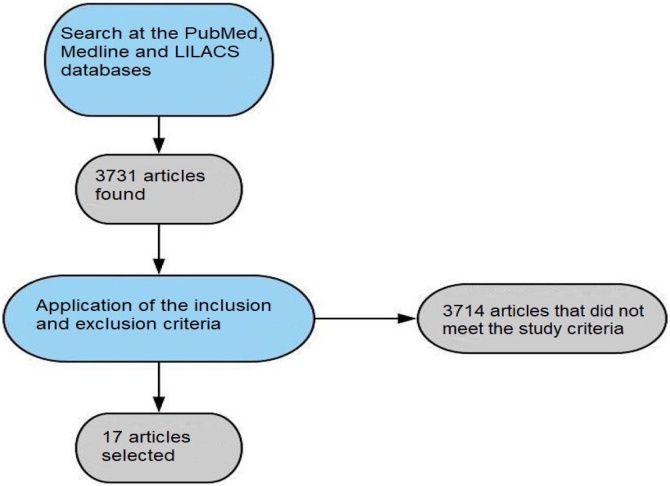 Figure 1
Peer Reviews
No public reviews on file for this paper yet. If you reviewed it on a platform where reviews are public (OpenReview, ICLR, NeurIPS, ICML), you can paste yours below so the community can read it here.
Videos
No videos yet. Explain this paper in a talk, walkthrough, or lecture? Add one.
Taxonomy
TopicsVoice and Speech Disorders
Introduction
In the study of Anatomy, disparities between anatomical terminology and terms used in clinical or surgical practice are very common. In most cases, there are no problems associated with these differences. However, when a given term causes conceptual errors about the structures involved, correction is needed. In the Head and Neck Surgery specialty, there is much discussion about Ansa Cervicalis (AC) or Ansa Hypoglossi (AH), as both terms are used to refer to the loop of nerves that composes part of the cervical plexus. The relationship of this loop with the Hypoglossal Nerve (HN) and the disparities between the terms used to describe it are the focus of this study, which is justified by the importance of this structure for several surgical procedures.
The original Latin term ansa cervicalis is used to designate the nerve structure that is a motor portion of the cervical plexus and innervates the infrahyoid muscles, which are used in both phonation and deglutition. Although it presents a high level of anatomical variation, it is generally composed of a descending branch (superior root) arising from the first Cervical nerve (C1) (which is connected to the HN) and an ascending branch (inferior root) arising from the second (C2) and third (C3) cervical nerves. It is the junction of these two branches that creates the form of a loop.
The HN, on the other hand, is the 12th pair of Cranial Nerves (CN XII), and arises from the anterior lateral sulcus of the medulla oblongata, exiting the skull through the hypoglossal canal. It also presents a motor function, being responsible for the movements of the tongue.
The study of the relationship between the AC and the HN has generated controversies since the 19th Century, as several terms have been suggested and adopted to describe this structure: ansa cervicalis, ansa hypoglossi, and ansa hypoglossocervicalis. This study aimed to conduct a literature review on this relationship, which hinders clinical/surgical practice, discussing this disparity in terminology, and to determine which of these terms is the most suitable to identify this important nerve structure.
Methods
A search using the following standard descriptors was conducted at the LILACS and PUBMED/MEDLINE databases: hypoglossal nerve; hypoglossal nerve OR ansa cervicalis; hypoglossal nerve OR ansa hypoglossi. No time interval was established for the selection of the articles.
Clinical trials, randomized clinical trials, and case reports were excluded from the search. The content selected for this systematic review comprised studies in English, Portuguese, and Spanish with the following characteristics: original research, systematic review and meta-analysis, and retrospective, multicenter and observational studies. In addition, classic textbooks1, 2, 3, 4, 5, 6 of Descriptive and Topographic Anatomy were consulted in their recent editions in English and Portuguese.
Results
Fig. 1 illustrates the results of this search and the selection of articles for the present systematic review.Fig. 1. Flow chart of the steps followed to select the articles for the present systematic review of the literature.Fig. 1
Classic anatomy textbooks
In major Anatomy textbooks, identification of the structure in question is practically unanimous, although its description ‒ especially regarding its relationship to the HN - varies largely. Ansa cervicalis is the preferred term in the latest editions of these classic textbooks. This unanimity is in agreement with the International Anatomical Terminology, which uses this term to name this loop of nerves.
Frank H. Netter (Atlas of Human Anatomy)1 shows the superior and inferior roots of the AC, evidencing a union of part of the superior root with the HN. Only AC fibers that supply the geniohyoid and thyrohyoid muscles remain joined to the HN. The same situation is described by Michael Shünke (Prometheus Atlas of Anatomy: neck and internal organs),2 who states that there is no fiber exchange in the junction of HN and AC. In turn, Friedrich Paulsen (Sobotta Atlas of Human Anatomy)3 makes a visual description identical to the aforementioned, and does not mention of any fiber exchange between the two nerve structures in question. Both Prometheus and Sobotta use the term “deep ansa cervicalis” to distinguish the anastomosis between the transverse cervical nerve and the cervical branch of the facial nerve, which composes another neck loop named the superficial ansa cervicalis. Susan Strandring (Gray’s Anatomy: The Anatomical Basis of Clinical Practice)4 uses the term ansa cervicalis, but mentions, in parentheses, the term ansa hypoglossi. However, it is specified that the AC superior root contains only fibers arising from C1, and not from the HN, whence it arises. W. Henry Hollinshead (Anatomy for Surgeons: The Head and Neck)5 describes the junction between the HN and the superior root of the loop, naming it ansa cervicalis and, like Strandring, mentions the term ansa hypoglossi in parentheses. Hollinshead mentions, also in parentheses, the term “descendens hypoglossi” as an alternative for the superior root of the loop. However, Keith L. Moore (Moore’s Clinically Oriented Anatomy)6 does not mention the term ansa hypoglossi, and describes that the superior root of the AC joins momentarily with the HN, but it does not state that this root carries fibers from this nerve (Table 1).Table 1. Summarizes the results of the search conducted in these classic textbooks.Table 1. AuthorDate of publicationTerm usedRelationship with the hypoglossal nerveW. Henry Hollinshead1982Ansa cervicalis, with Ansa hypoglossi in parenthesesJunction, but shows no evidence of fiber exchangeMichael Shunke2007Deep ansa cervicalisJunction, shows evidence of no fiber exchangeFriedrich Paulsen2012Deep ansa cervicalisJunction, but shows no evidence of fiber exchangeKeith L. Moore2014Ansa cervicalisJunction, but shows no evidence of fiber exchangeFrank H. Netter2015Ansa cervicalisJunction, shows evidence of no fiber exchangeSusan Standring2015Ansa cervicalis, with Ansa hypoglossi in parenthesesJunction, shows evidence of no fiber exchange
Scientific research databases
A methodical search conducted at the aforementioned scientific research databases found a total of 3731 articles, of which 45 met the inclusion and exclusion criteria defined for this systematic review. Among these, 17 studies were available and complete (Fig. 1). The most pertinent considerations from the included articles are presented ahead.
The first mention dates from 1825, when French anatomist Jules Cloquet7 referred to both branches of the cervical plexus as “ramus descendens cervicalis” and “ramus descendens hypoglossi”, but did not name these branches as loop or ansa. Ten years later, Christophorus Ernestus Bach8 presented a doctoral dissertation in which he stated that all AC anastomoses came from the cervical plexus. This was the first time the term ansa cervicalis was used.
Between the late 19th and early 20th centuries, divergent opinions arose about the origin of the AC: Would the nerve branches arise exclusively from the cervical plexus, or would there be a contribution of the HN through anastomoses?
Among the terms that emerged, “ansa hypoglossi” was the most adopted. In 1955, at the VI Federative International Congress of Anatomy in Paris, “ansa cervicalis” was suggested as a universal term and, in 1998, it was presented as definitive terminology.9, 10 However, disagreements over the ideal terminology and the origin of nerve fibers persist to date.
Several researchers have claimed that only C1 fibers communicate with the HN. This implies the presence of C1 only in the anastomosis with NH and in the three branches arising from this anastomosis (the superior root of the loop and the nerve branches to the thyrohyoid and geniohyoid muscles).11, 12, 13, 14 However, morphological studies, such as those undertaken by Kikuchi15 and Banneheka,16 showed a considerable number of ascending cervical fibers contributing to the superior root of the AC. The difference between these two literatures can be explained by the fact that the studies conducted by Kikuchi and Banneheka analyzed the AC and HN from the microscopic point of view, which explains the same observation by both authors of persisting cervical nerve fibers even after this triple ramification. The findings of these two authors show that cervical nerve fibers join the HN permanently for a short distance. The anatomical consequence of this is that the AC contributes to the HN, but the opposite does not occur. This implication justifies the more descriptive term used by these two authors: “ansa hypoglosso-cervicalis”.
In a study carried out on fetuses using microscopic dissection, Pillay et al.17 reported that the superior root of the AC arises from the HN, and not from the cervical cord, as found in previous dissections; however, they did not use the term ansa hypoglossi.
Other published studies using ansa hypoglossi, and not AC, to refer to the structure in question in this review were also found (Table 2).18, 19, 20Table 2. Summarizes this part of the results.Table 2. AuthorDate of publicationTerm usedRelationship with the hypoglossal nerveJules Cloquet1825NoneDoes not report anastomosisChristophorus Ernestus Bach1835Ansa cervicalisDoes not report anastomosisVI Federal International Congress of Anatomy - Paris1955Ansa cervicalisDoes not report anastomosisKikuchi1970Ansa hypoglossi cervicalisAnastomosis with contribution of ansa cervicalis to hypoglossal nerveBanneheka2008Ansa hypoglossi cervicalisAnastomosis with contribution of ansa cervicalis to hypoglossal nervePillary2012Ansa cervicalisSuperior root of the loop arising from the hypoglossal nerve and not from the cervical plexus
Discussion
As demonstrated in the results, the term “ansa cervicalis” is used more often than “ansa hypoglossi”, which is in agreement with how this cervical plexus nerve structure is officially named by the International Anatomical Terminology.
However, it is worth discussing the reasons that led to such indiscriminate use of the term ansa hypoglossi. With this regard, reasons can be found in both historical (ansa hypoglossi was a term adopted through common use) and structural (the cervical fibers responsible for the superior root of the loop actually join the HN in a short stretch and separate afterwards) issues. However, this momentary junction does not justify the term ansa hypoglossi; after all, in this junction the fibers arising from the hypoglossal nucleus run parallel to, and independent from, those arising from the cervical cord. Sources mentioning some exchange of fibers between the two nerve structures are actually few, so that most studies do not suggest contribution of the HN to this loop of nerves.
Controversies over this terminology were discussed and, based on the literature revised and compiled in this systematic review, the most appropriate term to meet our initial objective was established. The term that best suits anatomical reality is “ansa cervicalis”, since the nerve fibers arise only from the cervical cord. Thus, we have demonstrated that the term “ansa hypoglossi” should be avoided, both in scientific research and clinical/surgical practice, to minimize the disparities and errors that may arise from the non-universalization of the use of descriptive terms.
Funding
None.
Declaration of competing interest
The authors declare no conflicts of interest.
The reference list from the paper itself. Each links out to its DOI / PubMed record.
- 1Netter F.H.Atlas de anatomia humana 6th ed 2015 Elsevier Rio de Janeiro
- 2Schunke M.Schulte E.Schumacher U.Prometheus, atlas de anatomia: pescoço e órgãos internos 1st ed 2007 Guanabara Koogan Rio de Janeiro
- 3Paulsen F.Waschke J.Sobotta atlas de anatomia humana 23rd ed 2012 Guanabara Koogan Rio de Janeiro
- 4Standring S.Gray’s anatomy: the anatomical basis of clinical practice 41st ed 2015 Elsevier Health Sciences New York
- 5Hollinshead W.H.Anatomy for surgeons: the head and neck 3rd ed 1982 Harper New York
- 6Moore K.L.Dalley A.F.Agur A.M.R.Moore anatomia orientada para a clínica 7th ed 2014 Guanabara Koogan Rio de Janeiro
- 7Cloquet J.H.Manuel d’anatomie descriptive du corps humain 1825 Béchet Paris
- 8Bach C.E.Annotationes anatomicae de nervis hypoglosso et laryngeis 1835 Orell Füssli Zurich