Prevalence and Risk Factors Associated With Anemia in Adolescent Females From Rural Maharashtra, India: Findings From the MAS 2 Project
Rohan Shah, Laila J. Tata, Andrew Fogarty, Agnieszka Lemanska, Pratyush Kabra, Anand Ahankari

TL;DR
This study found that nearly 30% of adolescent girls in rural Maharashtra, India, are anemic, with risk factors including age, religion, and lack of regular lentil consumption.
Contribution
The study provides new insights into anemia prevalence and risk factors among rural adolescent females in Maharashtra using community and hospital-based recruitment.
Findings
Anemia prevalence was 29.42% among 401 adolescent females studied.
Adolescents engaged in paid work had significantly lower hemoglobin levels.
Regular lentil consumption was associated with a reduced risk of anemia.
Abstract
Background: Anemia is a serious public health problem in India, affecting a large proportion of children, adolescent females, and women. The primary aim of the study was to investigate the prevalence and risk factors of anemia in adolescent females and to understand the feasibility of involving adolescent females from rural regions of Maharashtra through a combination of community-based recruitment and hospital-based investigation strategies. Methods: A cross-sectional study was conducted involving unmarried adolescent females (10–19 years) from the Osmanabad district of Maharashtra (April–August 2018). Venous blood samples were taken, and anemia was defined using a hemoglobin cutoff of < 12.0 g/dL. Multiple logistic and linear regression models were used to explore associations of risk factors with anemia status and hemoglobin (Hb) levels, respectively. Results: Out of 679…
Genes, proteins, chemicals, diseases, species, mutations and cell lines named across the full text — each resolved to its canonical identifier and authoritative record.
Click any figure to enlarge with its caption.
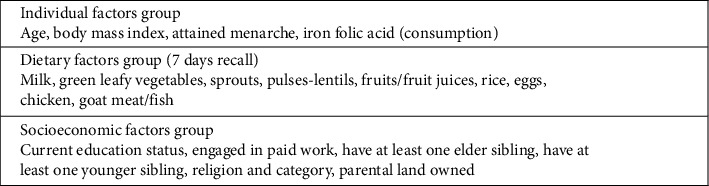 Figure 1
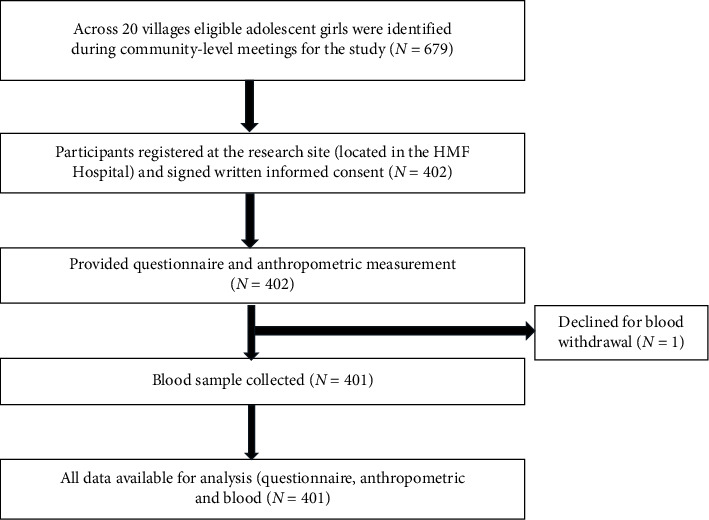 Figure 2
- —Maharashtra Foundation, USA
- —University of Surrey
- —Manchester Metropolitan University
Peer Reviews
No public reviews on file for this paper yet. If you reviewed it on a platform where reviews are public (OpenReview, ICLR, NeurIPS, ICML), you can paste yours below so the community can read it here.
Videos
No videos yet. Explain this paper in a talk, walkthrough, or lecture? Add one.
Taxonomy
TopicsIron Metabolism and Disorders · Hemoglobinopathies and Related Disorders · Erythropoietin and Anemia Treatment
1. Background
Anemia is a public health problem characterized by a reduction in the red blood cells or hemoglobin (Hb), which reduces the oxygen-carrying capacity of the blood. This condition can lead to fatigue, weakness, dizziness, and difficulty in breathing and may impact school performance and social–emotional development [1–5]. The recent Global Burden of Disease report stated that about 25% of the world's population is affected by anemia, which accounts for over 2 billion cases [6]. In 2019, anemia was responsible for over 50 million years of healthy life lost due to disability, where causes of anemia included dietary iron deficiency, thalassemia, sickle cell trait, and malaria [7]. A high prevalence is seen in children, adolescents, pregnant, and postpartum women. World Health Organization (WHO) reported that about 40% of children aged between 6 and 59 months and 30% of women of reproductive age (15–49 years) have anemia [8]. Adolescent females are at higher risk, especially in low- and middle-income countries (LMICs), with a higher burden in rural areas among poorer households [7]. In adolescents, anemia can negatively impact physical development during their critical development period, increase the risk of infection, and poor pubertal and neurocognitive growth [6]. Poor nutrition leads to micronutrient deficiency, particularly iron deficiency anemia, responsible for adolescent morbidity and mortality [7]. Adolescent health and well-being indicators from 195 countries and territories estimated that the prevalence of anemia among adolescent females was 40% in multiburden countries (188 million people out of 467 million), with India standing second (54.1%) after Bhutan (58.0%) [9].
Adolescents now account for 1.8 billion worldwide, of which, 90% live in LMICs [10]. The Government of India has been implementing several initiatives through the National Health Mission (NHM), which has a component to provide weekly iron and folic acid supplementation (WIFS) as an intervention to decrease the prevalence of adolescent anemia [11]. Despite continuous efforts by the Government, prevalence remains much higher in India. According to the recent National Family Health Survey (NFHS) of India, the prevalence of anemia in adolescent females 15–19 years of age increased from the NFHS-4 (2015–2016) to NFHS-5 (2019–2021) from 55.8% to 59.1%, and for adolescent males, it increased from 30.2% to 31.1% [12]. The Comprehensive National Nutrition Survey (CNNS) from India showed that 28.5% of adolescents (females: 39.6%, boys: 17.6%) were anemic. Hemoglobinopathies, iron deficiency, zinc, and vitamin A deficiencies were associated with an increased risk of anemia [13].
Maharashtra, India's second most populous state, has a high adolescent population, wherein every fifth person is between 10 and 19 years of age [14]. Anemia prevalence ranges from 28% to 68% among adolescents across regions of Maharashtra [15–18]. One of our previous community-based cross-sectional studies conducted in rural areas (of the Marathwada region of Maharashtra) found the prevalence to be as high as 87% among adolescent females (13–17 years) [19], demonstrating the need for further research in this region. Various studies in community settings in India including our outlined survey have mainly chosen the capillary Hb measurement method due to its feasibility in field areas [19, 20]. However, anemia assessment using venous blood samples conducted in hospital settings is preferred, considering they provide accurate measurements (gold standard) [21, 22]. There are no studies from the Marathwada region (∼19 million population), where the rural and difficult-to-reach adolescent population were involved in anemia research having venous blood investigations. Due to the limited infrastructure and lack of resources, field-based venous blood collection is challenging to conduct due to further required sample transportation and investigation facilities. Therefore, this study was designed to investigate the prevalence and risk factors of anemia in adolescent girls and to understand the feasibility of involving adolescent females from rural regions of Maharashtra to participate in research through a combination of community-based recruitment and hospital-based investigation strategies.
2. Methods
2.1. Study Context and Field Area
The Maharashtra Anemia Study Phase 2 (MAS 2) was initiated by Halo Medical Foundation (HMF), India, in collaboration with the University of Nottingham, United Kingdom. This was a cross-sectional study across 20 villages (population ∼40,000) located in the Osmanabad (Dharashiv) district of Marathwada region of the Maharashtra state of India. This region of India is considered as one of the country's underprivileged areas due to limited development, inadequate infrastructure, and frequent droughts. All study villages had similar challenges such as limited healthcare access, poor transport facilities, and lack of water purification infrastructure. Government nurses generally visit monthly, offering healthcare services focused primarily on pregnant women and vaccinations. Females qualifying for inclusion in the study were aged 10–19 years, unmarried, and residents of the study area and willing to come to the research site (located in the HMF Hospital) for participation.
2.2. Ethical Consideration
The ethical approval for the study was obtained from the Medical School Ethics Committee of the University of Nottingham, United Kingdom (Reference: 145–1707), and the Institutional Ethics Committee of the Ashwini Rural Medical College, Hospital, and Research Center, Maharashtra, India (Reference: ARMCH/IECHR/12/2017). The study was conducted using the Guidelines for Good Clinical Practice (GCP) set by the International Council for Harmonization [23] and the ethical guidelines for Biomedical Research on Human Subjects suggested by the Indian Council of Medical Research [24]. Participation in the study was only possible when an adolescent participant (< 18) was accompanied during their visit to the hospital by a family member such as one of the parents, a sibling above 18 years of age, or a guardian. This requirement was part of the ethical considerations, as the study population comprised of minors (< 18 years), who were required to travel to the research site. Those who were 18 or 19 years were allowed to provide consent for their own participation and were allowed to attend the hospital visit unaccompanied. In addition, in line with ethical considerations and the National Iron + Initiative guidelines for controlling iron deficiency anemia, participants who were found to be anemic were referred to a medical doctor at the HMF Hospital and provided with a complete blood count (CBC) report. After evaluation by a medical doctor, the physician prescribed 60 mg of elemental iron for 3 months, which was provided free of cost from the hospital. Participants were offered follow-up services at no cost at the hospital, ensuring their well-being and the integrity of the study.
2.3. Participant Recruitment and Data Collection
A health worker appointed by the HMF facilitated the recruitment of the project in each village. These health workers had worked with HMF on public health and development projects and were specially trained on procedures for this study. The recruitment and data collection period was from April 2018 to August 2018 (project duration: April 2017–March 2019). A full-time research coordinator was employed to plan and implement all project and research activities in collaboration with the network of village health workers. Between January and April 2018, community-level meetings across 20 villages were conducted to disseminate information about the project. These meetings were held mainly on Sundays, school holidays, and evenings to maximize attendance. Eligible participants willing to participate in the study were enlisted after meetings (unmarried, adolescent females aged 10–19 years). Health workers prepared a list of eligible participants from their allocated village and initiated contact with all eligible residents, assisted by the research coordinator during field visits. Those eligible were invited to the research site (located in the HMF Hospital) to participate in the study. All eligible participants were approached only once, and those who declined/did not inform their decision were not approached a second time. Participants were asked to register with their village-based health worker. The health worker planned a research visit through discussions with the research coordinator. The research coordinator and health workers did not select participants; instead, participation was by self-selection through registration. Participants were verbally informed about the project during village meetings and in written format.
During the visit to the research site, all information regarding the study was presented to each participant and accompanying adult, both verbally and in written format in the local language (Marathi). Written informed consent was obtained from each participant, and their accompanying adult and the research coordinator countersigned it. Due to logistic constraints, the sample size in the study was capped at ∼400 adolescent females. This limit was decided considering available funding ($12,000) and timeframe due to the nature of the MAS 2 project having both research and health service (charity) components. Participation in the study was entirely voluntary. All services at the HMF Hospital were provided at no cost to participants across the project duration. Participants and their guardians had to travel to the research site independently, and no travel compensation was provided for the visit due to limited financial resources.
Along with CBC, two additional investigations were conducted during the initial visit, namely, C-reactive protein (CRP) and ABO blood group typing. During follow-up visits (only in participants who were anemic and prescribed iron-folic acid [IFA]), they were checked for CBC. Research findings on systemic inflammation and association with Hb levels from the MAS 2 project are published elsewhere [25].
2.4. Sample Collection and Analysis
Following consent, all participants were interviewed using a validated questionnaire tool to collect information on sociodemographics, diet, anemia history, and anemia treatment. Anthropometric measurements were taken, including height, weight, and mid-upper arm circumference. This was followed by a venous blood withdrawal performed by a phlebotomist in a supine position. All laboratory investigations were conducted at the HMF Hospital using routinely standardized equipment.
The CBC was performed using a cell counter, Sysmex XP100 (Sysmex Corporation, Japan). Weight was taken using an OMRON digital scale. Height and mid-upper arm circumference were taken using standardized measuring tapes. The study coordinator checked and validated all study tools and equipment on the first working day of each month throughout the data collection period. Monthly reports for study equipment, data collection progress, and overall project monitoring were prepared by the study lead (AA) in collaboration with the project coordinator and the local co-investigator (PK). The local co-investigator (PK) regularly visited the study sites to ensure adherence to good research practices and compliance with the study protocol and ethical guidelines. This paper is reported in line with the STROBE guidelines for cross-sectional studies (Supporting Information 1).
2.5. Statistical Analysis
Data analyses were performed using the Statistical Package for Social Sciences (SPSS) V.26.0 (IBM, 2020). Descriptive statistics were presented for all participants, those with anemia, and those without anemia within the study population, expressed as numbers (N) and percentages or median (25^th^ and 75^th^ centile). Variables were characterized into three groups, namely, individual, dietary, and sociodemographic. The chi-square test and Mann–Whitney test were applied to check whether the difference between anemia and nonanemia is statistically significant at a 5% level of significance.
BMI was computed using the WHO's AnthroPlus software [26]. Based on Hb levels, anemia was categorized into four groups: no anemia (≥ 11.5 g/dL for ages 10–11, and ≥ 12.0 g/dL for ages 12–19), mild (11.0–11.4 g/dL for ages 10–11, and 11.0–11.9 g/dL for ages 12–19), moderate (8.0–10.9 g/dL for ages 10–19), and severe (< 8.0 g/dL for ages 10–19) [27]. Linear and logistic regression techniques were used to identify risk factors associated with adolescent anemia. Linear regression was used to assess the association between each risk factor and Hb level, and results were presented using regression coefficients (unstandardized β) with 95% confidence intervals (CIs). Logistic regression was used to assess the association of each risk factor with anemia status (severe/moderate/mild combined and compared with no anemia), and results were presented using odds ratios (ORs) and 95% CI. Initially, an unadjusted regression analysis was performed with all variables during both regression techniques. Other than age, all variables had subcategories. The 7-day dietary recall categories were simplified from four (never, 1–2 times a week, 3–6 times a week, everyday) to two (≤ 2 times a week, ≥ 3 times a week) to ensure an adequate number of participants in each category for regression analyses. After the unadjusted analyses, a multivariable analysis approach was used. In the adjusted analysis, risk factors were categorized into three groups based on their theoretical relationship with anemia and also based on the understanding of our field area: individual factors, dietary factors, and socioeconomic factors (Figure 1). Three multivariate models with mutual adjustment within groups were constructed, followed by a final model with full adjustment for all risk factors. Multicollinearity was examined using a covariate correlation matrix and variance inflation factor (VIF). Statistical significance was determined with a p value < 0.05. The above regression analyses' strategy was informed by our previous work through the MAS 1 project, which involved adolescent girls to study prevalence and risk factors associated with anemia [19].
3. Results
Of 679 eligible participants across 20 villages, 402 adolescent females accepted the study invitation and visited the research site based in the HMF Hospital, giving a response rate of 59.2%. One participant withdrew consent for a blood sample, which led to their exclusion from the study. Complete data, including blood investigations, were available from 401 participants (Figure 2). The anemia prevalence with Hb < 12.0 g/dL was 29.42%, with 1.74% identified with severe anemia (Hb < 8.0 g/dL for ages 10–19), 11.97% had moderate anemia (Hb: 8.0–10.9 g/dL for ages 10–19), and 15.71% had mild anemia (Hb: 11.0–11.4 g/dL for ages 10–11, and Hb: 11.0–11.9 g/dL for ages 12–19). None reported systemic disorders or conditions which could affect Hb levels. None reported blood transfusion within 12 months prior to enrollment in the study.
The participants were divided into two groups: those without anemia and those with anemia (Table 1). The median age of participants with anemia (15 years) was significantly higher than that of the nonanemic group (13 years), with an interquartile range of 13.00–17.00 and 12.00–15.00, respectively (p < 0.001).
Age, paid work, and Muslim religion (open and reserved category) were statistically significant in the fully adjusted linear regression model (Table 2). Hb levels reduced by 0.15 g/dL with a per year increase in age (β: −0.15 [95% CI: −0.24 to −0.05], p = 0.002). Similarly, Hb levels were lower in those engaged in paid work (some form of employment) (β: −1.19 [95% CI: −2.09 to −0.29], p = 0.01) and among those belonging to the Muslim religion (open and reserve category) (β: −0.75 [95% CI: −1.41 to −0.10], p = 0.024).
In the adjusted logistic regression model, the risk of anemia increased by 24% with a per year increase in age (OR: 1.24 [95% CI: 1.07–1.44], p = 0.003) (Table 3). Similarly, participants belonging to the Muslim religion (open or reserve category) were associated with a three times higher risk of having anemia compared to the Hindu religion (open category) (OR: 3.02 [95% CI: 1.14–7.99], p = 0.026). On the other hand, the risk of anemia was reduced by 49% if participants consumed pulses and lentils ≥ 3 times a week (OR: 0.51 [95% CI: 0.28 to 0.90], p = 0.022). The effect estimates of the studied risk factors showed consistency across all three models: unadjusted analysis, adjusted within the group, and fully adjusted model.
A total of 118 participants were found to be anemic (63 mild, 48 moderate, and 7 with severe anemia) and were referred for further medical advice. The participants were prescribed IFA supplements for 3 months, provided independently by the HMF Hospital, and availed from the hospital pharmacy without cost. Participants were advised by the doctor to return for a follow-up Hb estimation (CBC test) after 3 months. Of these 118, 67 (35 mild, 28 moderate, and 4 severe) returned for follow-up (follow-up rate 56.78%). The mean Hb was similar between the initial visit and follow-up visit post-IFA consumption (mean [SD]: 10.51 [1.70] versus 10.65 [1.76]; p = 0.171 [N = 67]). Of the 67 participants who attended follow-up visits, 41 had an increase in their Hb levels, 20 had a reduction, and 6 showed no difference in their Hb levels post-IFA consumption.
4. Discussion
4.1. Summary of Findings
The prevalence of anemia in our study was 29.42%, with most participants having mild (15.71%) and moderate anemia (11.97%) and a small proportion with severe anemia (1.74%). An increased risk of anemia was observed with increasing age, belonging to the Muslim religion, and engaged in paid work. In contrast, the risk was reduced with a higher intake of pulses and lentils (≥ 3 times a week).
4.2. Synthesis
Different parts of rural Maharashtra have reported varying prevalence ranging from 28% to 68% [15–18]. Similarly, other studies from rural India report high anemia prevalence rates between 46% and 70% [28–31]. Studies conducted in deprived areas have reported a prevalence of up to 90% [32] and a much higher prevalence of 96.5% among economically weaker groups compared to 65.18% in middle or higher economic groups [33]. The recent NFHS-5 project shows that more than 15 states have a high prevalence (> 55%) among socially backward groups [34]. The rural prevalence in other countries such as Turkey, Saudi Arabia, Iran, Palestine, and Egypt ranges from as low as 8.3%–46.6% [35–40].
The risk of anemia increased with age, consistent with previous studies on anemia from India [19, 41, 42]. Some of this elevated risk may be attributable to the age of menarche [43]. Research suggests that a shorter duration of menstrual bleeding is associated with high Hb levels, whereas heavy menstrual flow directly contributes to decreased Hb levels [43]. Similarly, the higher number of daily pad changes (a proxy for heavy menstruation) was found to be significantly associated with a higher risk of anemia (OR: 3.06 [95% CI: 1.60–5.84], p < 0.001) [44]. A study in rural western China involving young adolescent boys and girls (aged 10–14 years) reported an association between age and anemia even after adjusting for stages of puberty (p trend = 0.040) [45]. A study in Malaysian adolescent females showed an increasing trend of anemia across age groups (11.1% [95% CI: 6.7–17.8], 15.7% [95% CI: 11.4–21.3], and 23.1% [95% CI: 16.8–31.0]) at age 13, 15 and 17 years, respectively [46]. Similar findings were observed in young adolescents of Ethiopia, Sudan, and Tanzania, where higher prevalence was seen with an increase in age [47]. Contrary to our study, research conducted in Ethiopia reported females in early adolescence years (10–14) having a greater risk of anemia than those aged 15–17 and late adolescents 18–19 [48]. This may be due to differences in the onset of menarche across study populations or having participants, mainly from age 13–14, in the early adolescence group who may develop anemia after attaining menarche, as explained earlier.
Adolescents who engaged in paid work were associated with a higher risk of anemia. This could be attributed to various social and health causes outlined as follows. During crucial development stages across adolescence, nutritional demands are generally high. In our study area, adolescents from poorer families engage in work to support their family income. This mainly involves agricultural work, the primary income source in our study area. Adolescents engaged in paid work are likely to have higher nutrition demands due to physical activities; however, they are often not addressed due to limited food resources. Agricultural work and a poor diet have been described as a risk factor for chronic energy deficiency (CED) and anemia. Women performing agricultural work are 50% more likely to develop CED and anemia [49]. We understand that physical activity and poor diet may strain adolescent females during a period already requiring higher energy needs, leading to further deficiencies and anemia.
There was a higher risk of anemia in participants from the Muslim religion compared to Hindu religion participants. The findings are in agreement with previous studies from India and other LMICs. A study conducted by Agrawal and colleagues on young adolescents (10–19 years, both genders) in a coastal district of India reported higher odds of anemia in Muslims compared to those from the Hindu religion; however, it was not statistically significant (OR: 1.40 [95% CI: 0.82–2.43], p = 0.20) [50]. In another study performed on pregnant women in western Rajasthan (India), the proportion of anemia was higher in women belonging to the Muslim community (92.3%) compared to non-Muslim women (81.1%), respectively [51]. Findings from the Ethiopian Demographic and Health Survey on young women aged 15–24 years mentioned that anemia was more likely among Muslims compared to Orthodox Christians (aOR: 1.31 [95% CI: 1.07–1.70], p = 0.01] [52].
The participants in our study consumed less milk (≤ 2 times a week), green leafy vegetables, sprouts, fresh fruits or fruit juices, eggs, chicken, and goat meat/fish. Intake of pulses and lentils was associated with decreased odds of anemia (OR: 0.51 [95% CI: 0.28–0.90], p = 0.022]. Lentil is a good source of protein and is predominantly rich in albumin and globulin. DellaValle and team have reported that iron bioavailability in green lentils is far greater than in red lentils, even though the phytic acid values in green and red lentils are similar [53]. Lentils are the primary source of minerals for people on a vegetarian diet and contain some iron; however, their bioavailability is low. In a study, iron absorption from lentils was significantly lower than iron absorption from ferrous sulfate in iron-deficient women [54]. Pulses and lentil consumption was relatively higher in our population, where 77.81% of all participants consumed them ≥ 3 times a week. Nonetheless, there is limited evidence to investigate the association further observed.
4.3. Combination of Community-Based Recruitment and Hospital-Based Investigation Strategies
Our previous study (known as MAS 1) in a similar geographic area reported a very high prevalence of 87% in girls aged 13–17 [19]. One potential reason for such a high prevalence could be a difference in recruitment strategy and different methods of Hb estimation. The study also reported a similar association with age (identified as a risk factor), mid-upper arm circumference, and consumption of fruit (≥ 3 times a week), which were associated with a lower risk of anemia in this population [19]. We observed over 95% of the response rate in the MAS 1 project in the same region. MAS 1 involved 1010 adolescent females aged 13–17 years from 34 villages. Participants were approached within the community, and questionnaires and blood sample collection were made at the village level. Out of the 1035 individuals approached, 1010 participated in the study, resulting in a response rate of 98.00% [19]. Similarly, another study of the MAS 1 project targeted pregnant women between the third and fifth months of pregnancy from the same region. A total of 303 pregnant women were approached, and data collection was completed for 287 participants, yielding a response rate of 95% [55]. For our current study (MAS 2), based on consultation with key stakeholders, we incorporated community-based meetings to inform potential participants about the study, followed by hospital-based data collection and investigation strategies. This approach was specifically selected for us to understand the future scope of conducting hospital-based research where advanced blood investigations and long-term sample storage could be performed using venous blood samples. However, the response rate was 59.20%. Travel expenses for participants and their parent/guardian and remuneration to cover the loss of income for an accompanying family member could have improved our response rate. Though the response rate of our current hospital-based research work is much lower compared to our previous work in a village/community, it is moderate considering the size of the field area; the nearest village was 4 km, and the farthest was 50 km away from our research site (HMF Hospital). Our rural study population is often inaccessible and neglected in public health research. Thus, our study provides a valuable opportunity to inform future research and public health programs in anemia prevention and control, which may differ in risk factors from other areas. Nonetheless, it is plausible that those who were willing but could not afford to pay for their travel may have impacted our prevalence and associations observed.
4.4. Strengths and Limitations
A gold standard analytical method was used for hemogram (CBC) measurement using venous blood samples involving rural and difficult-to-reach adolescent populations. Laboratory equipment and tools had regular quality control checks across the study duration. Though the study setting is remote, an experienced research team led the data collection, ensuring strict adherence to research protocol and ethics procedures. To our knowledge, this is the first study from a rural Indian setting, where we have presented our learnings from a combination of community-based recruitment and hospital-based investigation strategies involving the adolescent girls' population. Our statistical analysis used two different but complementary approaches; the logistic regression analysis of anemia is clinically pertinent from a public health perspective; the linear regression analysis of Hb levels is more sensitive statistically to linear associations and hence helps maximize the value of this analysis using a clinical epidemiological approach. Due to limited funding resources, the sample size for this study was restricted as mentioned earlier. Our study area is much smaller, and findings may not be generalizable due to sociodemographic variations across Marathwada or Maharashtra state. Our study did not have access to resources such as modern laboratory equipment to measure iron, folate, vitamin B12, vitamin A, zinc, and helminth infestation, which are essential to investigate micronutrient deficiencies and causes of anemia in our population. The HMF Hospital is a secondary referral rural center with limited infrastructure, and due to budgetary constraints, it was not feasible to procure costly equipment or transport blood samples for 300 km to the nearest research center or a laboratory based in Pune city for such advanced blood investigations. A cross-sectional study approach prevents causal inference investigation considering the design limitations, and multiple regression can lead to Type 1 error(s). Dietary habits, anemia history, and menstrual history are prone to nondifferential and reporting biases. Some residual confounding is possible, although adjustments for several covariates were made. Our dataset had limited information about dietary practices; as a result, further investigations into higher risks in certain groups were not feasible. Considering our experience and understanding of the field area, we anticipate that this is likely to be due to access to food resources and lack of awareness, which needs further research. Considering the above issues, our study cannot provide specific recommendations about required interventions to address anemia; however, it provides an evidence to plan further work on anemia in rural India.
5. Conclusion
The prevalence of anemia among adolescent females in rural Maharashtra is moderately high. The key risk factors identified include age, engagement in paid work, Muslim religion, and low consumption of pulses and lentils. To address such multifactorial issues, comprehensive preventive measures are essential, encompassing education, nutrition, supplementation, and social support schemes for the entire adolescent female population. In addition, future research should focus on identifying modifiable/preventable causes of anemia in adolescents to plan effective interventional studies. Further research into medical and nonmedical causes of anemia is necessary to develop sustainable and holistic interventions to address this chronic public health issue in India. We understand that future projects involving a combination of community-based recruitment and hospital-based investigation models in a rural Indian setting would need financial support to enable participants to undertake travel as well as some remuneration to cover the loss of income for an accompanying family member.
The reference list from the paper itself. Each links out to its DOI / PubMed record.
- 1World Health Organization-WHO 2019 Anemia 2019 https://www.who.int/health-topics/anaemia#tab=tab_1
- 2Mosiño A. Villagómez-Estrada K. P. Prieto-Patrón A. Association Between School Performance and Anemia in Adolescents in Mexico International Journal of Environmental Research and Public Health 2020175 p. 146610.3390/ijerph 1705146632106470 PMC 7084426 · doi ↗ · pubmed ↗
- 3Hu Y. Mao Y. Wang W. Relationship Between Anemia and Academic Performance in Chinese Primary School Students: Evidence From a Large National Survey Health and Social Care in the Community 20242024111310.1155/2024/1150608 · doi ↗
- 4East P. Delker E. Lozoff B. Delva J. Castillo M. Gahagan S. Associations Among Infant Iron Deficiency, Childhood Emotion and Attention Regulation, and Adolescent Problem Behaviors Child Development 201789259360810.1111/cdev.127652-s 2.0-8501367790628233303 PMC 5569004 · doi ↗ · pubmed ↗
- 5Ssemata A. S. Opoka R. O. Ssenkusu J. M. Nakasujja N. John C. C. Bangirana P. Socio-Emotional and Adaptive Behaviour in Children Treated for Severe Anemia at Lira Regional Referral Hospital, Uganda: A Prospective Cohort Study Child and Adolescent Psychiatry and Mental Health 2020141 p. 4510.1186/s 13034-020-00352-433292468 PMC 7694894 · doi ↗ · pubmed ↗
- 6Gardner W. M. Razo C. Mc Hugh T. A. Prevalence, Years Lived With Disability, and Trends in Anemia Burden by Severity and Cause, 1990–2021: Findings From the Global Burden of Disease Study 2021 The Lancet Haematology 2023109 e 713e 73410.1016/s 2352-3026(23)00160-637536353 PMC 10465717 · doi ↗ · pubmed ↗
- 7World Health Organization-WHO Anemia 2023 https://www.who.int/news-room/fact-sheets/detail/anaemia
- 8Anemia in Women and Children https://www.who.int/data/gho/data/themes/topics/anaemia_in_women_and_children