Correction to: Artificial intelligence–based, volumetric assessment of the bone marrow metabolic activity in [18F]FDG PET/CT predicts survival in multiple myeloma
Christos Sachpekidis, Olof Enqvist, Johannes Ulén, Annette Kopp‑Schneider, Leyun Pan, Elias K. Mai, Marina Hajiyianni, Maximilian Merz, Marc S. Raab, Anna Jauch, Hartmut Goldschmidt, Lars Edenbrandt, Antonia Dimitrakopoulou‑Strauss

Abstract
Genes, proteins, chemicals, diseases, species, mutations and cell lines named across the full text — each resolved to its canonical identifier and authoritative record.
Click any figure to enlarge with its caption.
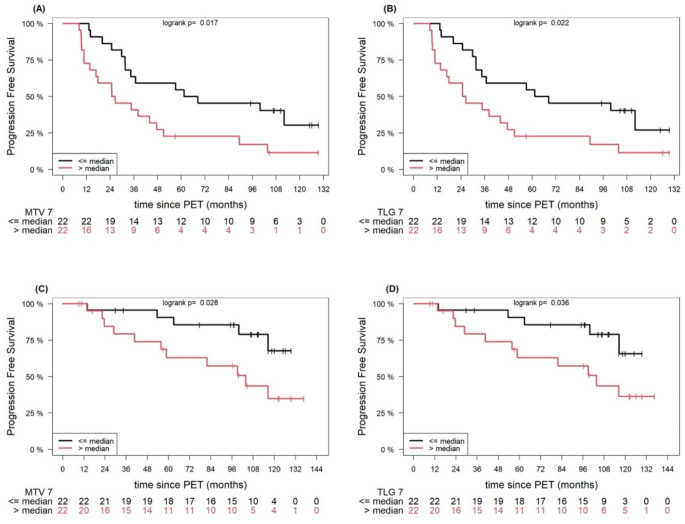 Figure 1
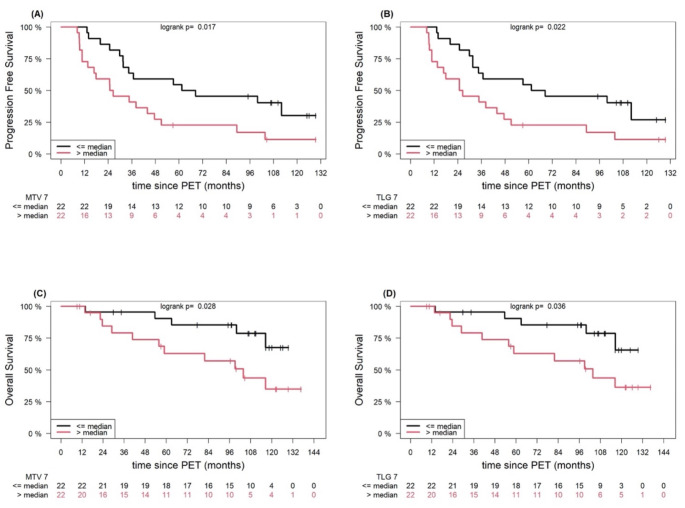 Figure 2
Peer Reviews
No public reviews on file for this paper yet. If you reviewed it on a platform where reviews are public (OpenReview, ICLR, NeurIPS, ICML), you can paste yours below so the community can read it here.
Videos
No videos yet. Explain this paper in a talk, walkthrough, or lecture? Add one.
Taxonomy
TopicsMultiple Myeloma Research and Treatments · Radiomics and Machine Learning in Medical Imaging
Correction to: European Journal of Nuclear Medicine and Molecular Imaging (2024) 51:2293–2307
10.1007/s00259-024-06668-z
The authors regret that the version of Fig. 3 that appears in the original published article is incorrect.
Below is the incorrect Fig. 3.
Fig. 3. Example of Kaplan-Meier estimates of PFS according to AI-derived, whole-body MTV (A) and TLG (B), and estimates of OS according to whole-body MTV (C) and TLG (D), based on approach 7. The number of patients at risk in each group and at each time point is shown below the plots
The correct Fig. 3 is shown below.
Fig. 3. Example of Kaplan-Meier estimates of PFS according to AI-derived, whole-body MTV (A) and TLG (B), and estimates of OS according to whole-body MTV (C) and TLG (D), based on approach 7. The number of patients at risk in each group and at each time point is shown below the plots
The original article has been corrected.