Survival assessment in extremely preterm neonates in a middle-income setting
Maria J. Rodriguez-Sibaja, Olivo Herrera-Ortega, Mario I. Lumbreras-Marquez, Deneb Morales-Barquet, Sandra Acevedo-Gallegos, Yazmin Copado-Mendoza, Dulce M. Camarena-Cabrera, Juan M. Gallardo-Gaona

TL;DR
This study examines survival rates and health outcomes of extremely preterm infants in a middle-income setting, finding that survival improves with gestational age but is often accompanied by major health issues.
Contribution
The study provides survival data for extremely preterm infants in a middle-income setting, emphasizing the impact of gestational age and the importance of denominator selection in survival analyses.
Findings
Survival rates to NICU discharge exceed 50% for infants born at 26 weeks or later.
Survival rates vary significantly based on the denominator used in survival calculations.
Most NICU survivors experienced major neonatal morbidity.
Abstract
Globally, an estimated 15.1 million preterm neonates are born annually, with 1% classified as extremely preterm (i.e., <28.0 weeks of gestation). The survival and outcomes of this vulnerable population are influenced by multiple factors, particularly gestational age, birth weight, and available medical resources. This study aimed to describe the hospital discharge survival of extremely preterm infants born in a middle-income setting. As a secondary objective, we assessed the neonatal morbidity associated with this group. In this cross-sectional study of singleton pregnancies, neonatal survival following extremely preterm birth was determined using three different denominators and expressed as prevalence (i.e., percentages): (1) the total number of extremely preterm births, including intrapartum fetal deaths; (2) the total number of all live births, including neonatal deaths in the…
Click any figure to enlarge with its caption.
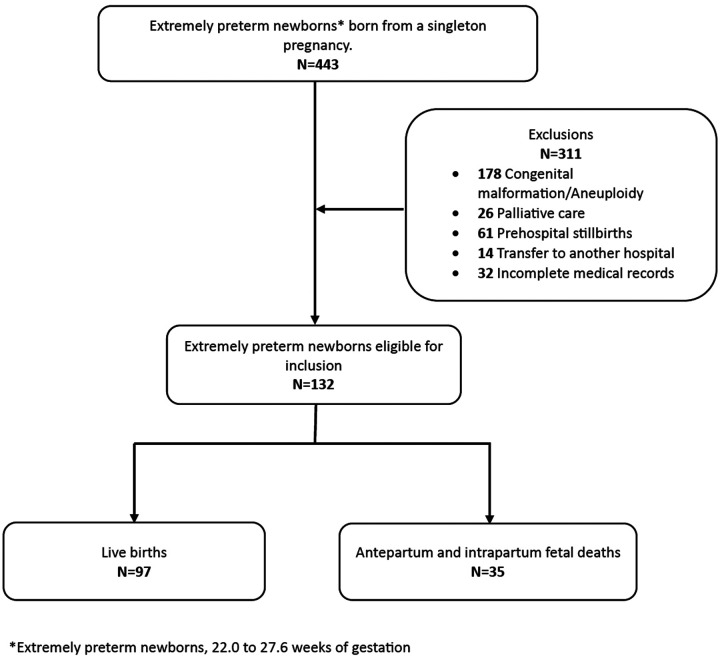 Figure 1
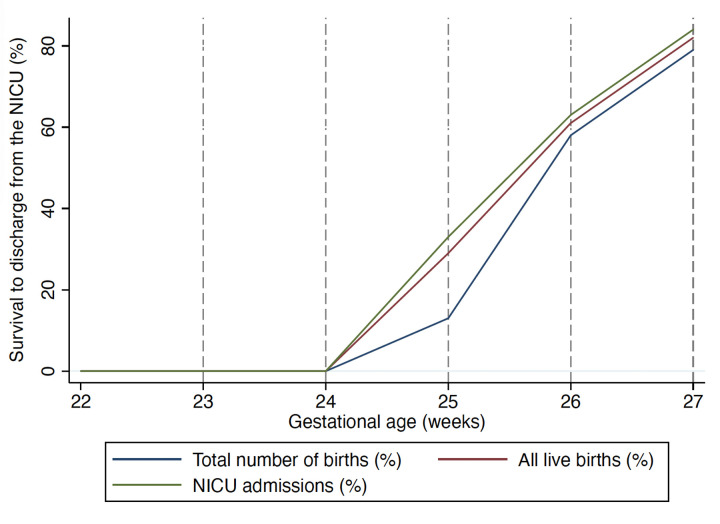 Figure 2
| Characteristic | Total cohort ( |
|---|---|
| Maternal age, years, median (IQR) | 30 [26, 34] |
| Gravidity, median (IQR) | 2 [1, 3] |
| Pregestational BMI | |
| Underweight | 4 (3.0) |
| Normal | 57 (43.2) |
| Overweight | 34 (25.8) |
| Obesity | 37 (28.0) |
| Tobacco exposure, | 26 (19.7) |
| Pregestational diabetes, | 7 (5.3) |
| Gestational diabetes, | 5 (3.8) |
| Chronic hypertension, | 21 (15.9) |
| Hypertensive disorders of pregnancy, | |
| Gestational hypertension | 4 (3.0) |
| Preeclampsia | 10 (7.5) |
| Preeclampsia with severe features | 25 (18.9) |
| Delivery indication | |
| Spontaneous labor and delivery | 51 (38.6) |
| Hypertensive disorders of pregnancy | 35 (26.5) |
| Preterm premature rupture of membranes | 30 (22.7) |
| Chorioamnionitis | 13 (9.8) |
| Fetal growth restriction | 9 (6.8) |
| Non-reassuring fetal status | 1 (0.8) |
| Other causes | 12 (9.1) |
| Antenatal steroids, | |
| Complete course | 44 (33.3) |
| Incomplete course | 38 (28.8) |
| Predelivery magnesium sulphate administration, | 88 (66.7) |
| Predelivery antibiotics administration, | 72 (54.6) |
| Delivery mode, | |
| Spontaneous vaginal delivery | 47 (35.6) |
| Induced labor, vaginal delivery | 20 (15.2) |
| Cesarean delivery | 65 (49.2) |
| Gestational age at delivery, weeks, median, (IQR) | 26.3 [25.3, 27.2] |
| Birth weight, grams, median (IQR) | 800 [660, 955] |
| Five-minute Apgar score, median (IQR) | 7 [6, 8] |
| Newborn gender, | |
| Unknown | 1 (0.7) |
| Male | 76 (57.6) |
| Female | 55 (41.7) |
| Gestational age (weeks) | 22 | 23 | 24 | 25 | 26 | 27 | Total |
|---|---|---|---|---|---|---|---|
| Patients, | 2 | 2 | 22 | 16 | 38 | 52 | 132 |
| Fetal mortality (antepartum/intrapartum), | 2 (100) | 2 (100) | 18 (81.8) | 9 (56) | 2 (5) | 2 (4) | 35 (27) |
| Live births, | 0 (0) | 0 (0) | 4 (18.2) | 7 (44) | 36 (95) | 50 (96) | 97 (73) |
| Mortality in the delivery room, | 0 (0) | 0 (0) | 1 (5) | 1 (6) | 1 (3) | 1 (2) | 4 (3) |
| Mortality in the NICU, | 0 (0) | 0 (0) | 3 (13) | 4 (25) | 13 (34) | 8 (15) | 28 (21) |
| Gestational age (weeks) | 22 | 23 | 24 | 25 | 26 | 27 | Total |
|---|---|---|---|---|---|---|---|
| (%) Total number of births, including fetal antepartum/intrapartum mortality (95% CI) | (0) 0/2 | (0) 0/2 | (0) 0/22 | (13) 2/16 (2, 40) | (58) 22/38 (40, 70) | (79) 41/52 (70, 90) | (49) 65/132 (40, 60) |
| (%) All live births, including neonatal deaths in the delivery room (95% CI) | (0) 0 | (0) 0 | (0) 0/4 | (29) 2/7 (4, 70) | (61) 22/36 (40, 80) | (82) 41/50 (70, 90) | (67) 65/97 (60, 80) |
| (%) Preterm newborns admitted to the neonatal intensive care unit (95% CI) | (0) 0 | (0) 0 | (0) 0/3 | (33) 2/6 (4, 80) | (63) 22/35 (40, 80) | (84) 41/49 (70, 90) | (69) 65/93 (60, 80) |
| Outcomes | Full cohort | Survivors | Non-survivors | |
|---|---|---|---|---|
| Gestational age at birth, weeks, median, IQR | 27.0 [26.1, 27.3] | 27.0 [26.4, 27.4] | 26.1 [25.8, 27.0] | <0.001 |
| Septic shock, | 31 (33.3) | 14 (21.5) | 17 (60.7) | <0.001 |
| Neonatal seizures, | 17 (18.3) | 9 (13.8) | 8 (28.6) | 0.090 |
| Necrotizing enterocolitis, | 21 (22.6) | 16 (24.6) | 5 (17.9) | 0.470 |
| Intraventricular hemorrhage, | 39 (41.9) | 24 (36.9%) | 15 (53.6) | 0.140 |
| Grade 1–2 | 27 (29) | 21 (32.3) | 6 (21.4) | 0.330 |
| Grade 3–4 | 12 (12.9) | 3 (4.6) | 9 (32.1) | 0.001 |
| Periventricular leukomalacia, | 12 (12.9) | 8 (12.3%) | 4 (14.3) | 0.790 |
| Bronchopulmonary dysplasia, | 67 (72.0) | 63 (96.9%) | 4 (14.3) | <0.001 |
| Mild | 4 (4.3) | 4 (6.2) | 0 (0.0) | 0.312 |
| Moderate-severe | 63 (67.7) | 59 (90.8) | 4 (14.3) | <0.001 |
| Retinopathy of prematurity, | 50 (53.8) | 49 (75.4) | 1 (3.6) | <0.001 |
| Composite outcome | 88 (94.6) | 63 (96.9) | 25 (89.2) | – |
Peer Reviews
No public reviews on file for this paper yet. If you reviewed it on a platform where reviews are public (OpenReview, ICLR, NeurIPS, ICML), you can paste yours below so the community can read it here.
Videos
No videos yet. Explain this paper in a talk, walkthrough, or lecture? Add one.
Taxonomy
TopicsNeonatal Respiratory Health Research · Infant Development and Preterm Care · Birth, Development, and Health
Introduction
1
Over the years, advances in perinatal care and management have led to sustained improvement in the survival rates and outcomes of preterm infants (1). Yet, prematurity remains one of the leading causes of neonatal mortality and long-term morbidity worldwide (2, 3). Globally, an estimated 15.1 million preterm neonates are born annually, with 1% classified as extremely preterm (i.e., <28.0 weeks of gestation) (4). Extremely preterm infants face the highest risk of mortality and morbidity, with an inverse correlation between gestational age and such risks (5). The survival and outcomes of this vulnerable population are influenced by multiple factors, particularly gestational age, birth weight, and available resources (6, 7).
The limit of viability is defined as the earliest gestational age at which a preterm neonate has a significant probability of survival with available medical technology (8). Over time, this threshold has changed, and the World Health Organization (WHO) currently defines it at 22 weeks of gestation, and/or 500 g of birth weight, and/or a birth length of 25 cm (8–10). However, this definition has inherent limitations, as the exact point at which viability occurs depends on multiple factors, including biological variability, environmental conditions, and the availability of specialized neonatal care (11, 12). These thresholds apply predominantly to high-resource settings with highly specialized technical capabilities.
Given these limitations, it is recommended that each center establishes its viability threshold to guide counseling, medical decision-making, and management of extremely preterm births. This study aimed to describe the hospital discharge survival rates of extremely preterm infants born at the Instituto Nacional de Perinatologia. As a secondary objective, we assessed neonatal morbidity in this population.
Material and methods
2
Study population and outcomes
2.1
This single-center cross-sectional study was conducted from January 2018 through December 2022 at the Maternal-Fetal Medicine and Neonatology Divisions of the Instituto Nacional de Perinatologia in Mexico City, a tertiary-level national maternal and neonatal care referral center. The study population consisted of all consecutive extremely preterm newborns (i.e., gestational age 22.0–27.6 weeks) born from a singleton pregnancy. Gestational age was primarily determined using the best obstetric estimation, defined as a reliable last menstrual period confirmed by a first-trimester crown-rump length measurement or early second-trimester biometry (i.e., biparietal diameter) (13). In cases where this information was unavailable, gestational age was estimated using standardized neonatal assessment tools (14). Births with unknown gestational age were excluded from the analysis. Stillbirths occurring outside the hospital, neonates with major structural anomalies (i.e., those expected to cause mortality or severe morbidity identifiable at birth) or genetic syndromes, cases with incomplete medical records, and neonates receiving perinatal palliative care were excluded from the study.
For the present analysis, fetal death was defined as the delivery of a neonate without signs of life (i.e., absence of breathing, heartbeat, umbilical cord pulsation, or voluntary muscle movement) after complete expulsion or extraction from the mother, occurring either before labor (i.e., antepartum mortality) or during labor and delivery (i.e., intrapartum mortality) (15). Live birth was defined as the delivery of a neonate exhibiting any sign of life following complete expulsion or extraction (15). Obstetric and neonatal management were at the discretion of the attending obstetrician and neonatologist. Notably, all live-born neonates included in this analysis received active neonatal care at birth, including cardiopulmonary resuscitation, intubation, and invasive or non-invasive mechanical ventilation (16). The Neonatal Intensive Care Unit (NICU) level at our institution is classified as level III, according to the American Academy of Pediatrics (17).
Data regarding the pregnancy, neonatal period, and infant outcomes were retrieved from electronic medical records. Definitions for neonatal morbidities are presented in Supplementary Table S1. According to institutional regulations, retrospective analyses of anonymized data are exempt from formal ethics committee review and approval. Additionally, all women provided written consent at the time of prenatal care enrollment to use their routinely collected hospital data in retrospective studies, ensuring no patient identifiers were included.
Statistical analysis
2.2
Baseline characteristics and morbidity are reported using n (%) for categorical variables, mean (standard deviation) for normally distributed continuous variables, and median (interquartile range) for non-normally distributed variables. For this descriptive analysis, the neonatal survival rate was estimated using three different denominators and expressed as percentages: (1) the total number of extremely preterm births, including intrapartum fetal deaths; (2) the total number of all live births, including neonatal deaths in the delivery room, and (3) the total number of extremely preterm neonates admitted to the NICU. A 95% confidence interval (CI) for proportions using the method proposed by Clopper-Pearson was calculated for the outcomes of interest. Statistical analyses were performed in Stata (Version 18.0, StataCorp LLC, Texas, USA).
Results
3
During the study period, 12,426 births were registered at the institution, with an extremely preterm birth prevalence of 3.5% (443/12,426). Data from 132 extremely preterm newborns who met the inclusion criteria were available for analysis (Figure 1). Relevant maternal demographic, obstetric, and neonatal characteristics are presented in Table 1.
Flowchart outlining the pregnancies included in the study.
A total of 97 (73%) live births and 35 (27%) fetal deaths were identified in the study population. Table 2 presents data on fetal mortality, live births, and mortality in the delivery room and NICU by gestational age. No live births were recorded between 22.0 and 23.6 weeks of gestation. Fetal mortality decreased from 100% (4/4) at <23.0 weeks to 4% (2/52) at 27 weeks, while live birth rates increased from 18.2% (4/22) at 24 weeks to 96% (50/52) at 27 weeks. Moreover, overall mortality declined with increasing gestational age, from 100% (22/22) at <24.0 weeks to 87% (14/16) at 25 weeks, 42% (16/38) at 26 weeks, and 21% (11/52) at 27 weeks. Notably, 27% (35/132) of overall mortality occurred before delivery, with 6% (2/35) classified as antepartum deaths and 94% (33/35) as intrapartum deaths. An additional 3% (4/132) of deaths occurred in the delivery room, while 21% (28/132) occurred in the NICU.
Survival rate to NICU discharge
3.1
Table 3 presents survival rates to NICU discharge calculated using three different denominators: (1) all births (including antepartum and intrapartum fetal deaths), (2) all live births, and (3) neonates admitted to the NICU. Additionally, Figure 2 provides a visual representation of survival estimates across gestational ages for each denominator.
Visual representation of estimated survival rates across gestational ages for each denominator.
The overall survival rate to NICU discharge among extremely preterm infants was 49% (65/132) when considering all births, 67% (65/97) when considering all live births, and 69% (65/93) when considering NICU admissions. No neonates born before 24.6 weeks of gestation survived to discharge. At all gestational ages, the survival rate calculated based on all births was lower than the estimated when only live births or NICU admissions were considered. However, the difference in survival rates between denominators diminished with increasing gestational age, as shown in Table 3.
Neonatal morbidity
3.2
Among neonates who survived NICU discharge, 96.9% (63/65) developed at least one major morbidity, defined as the presence of one or more of the following: septic shock, neonatal seizures, necrotizing enterocolitis, grade 3–4 intraventricular hemorrhage, periventricular leukomalacia, moderate-to-severe bronchopulmonary dysplasia, and retinopathy of prematurity. The most common morbidity was moderate-to-severe bronchopulmonary dysplasia, occurring in 90.8% of cases, followed by retinopathy of prematurity (75.4%) and necrotizing enterocolitis (24.6%), as shown in Table 4. Therapeutic interventions administered in the NICU are detailed in Supplementary Table S2.
Discussion
4
In this study, we present a comprehensive assessment of survival in extremely preterm infants born at a tertiary-level center in a middle-income setting, using different denominators for survival estimations. Our analysis showed no survival to discharge before 24.6 weeks of gestation, regardless of the denominator used. At 25 weeks, survival to discharge rates varied widely (i.e., 13%–33%) depending on the denominator. Notably, from 26 weeks onwards, survival to discharge rates exceeded 50%, and differences between denominators were no longer clinically relevant.
The findings of this study provide a detailed perspective on the reality of neonatal care for extremely preterm infants in middle-income settings. Although the observed rate of extremely preterm births was higher than national and international data (18, 19)—likely due to the tertiary-level care provided at our institution (20)—our survival results are consistent with those reported in similar settings (18, 21–23). However, they differ substantially from findings in high-income countries, where survival rates are as high as 68%, 73%, and 94% for 22, 23, and 24 weeks of gestation, respectively (24–27). These discrepancies may be explained by significant variations in active obstetric and neonatal care policies among countries, institutions, and even cultures, as well as, substantial methodological heterogeneity across studies (e.g., inclusion/exclusion criteria, definitions of live birth, etc.). While survival outcomes in high-income nations serve as a reference for improvement (28), they also underscore the significant disparities in prenatal and neonatal care resources.
Impact of denominator selection on survival estimations
4.1
Our analysis highlights the impact of denominator selection when reporting neonatal survival. The choice of the denominator (i.e., all births, live births, NICU admissions) considerably affects reported survival rates, particularly at lower gestational ages. At 25 weeks, survival rates varied from 13 to 33%, depending on the denominator used. However, this variation diminished with increasing gestational age, and differences became clinically irrelevant from 26 weeks onwards. A decreasing fetal mortality rate may explain this trend as gestational age increases, as well as our institution's active neonatal care policy (i.e., ≥26.0 weeks of gestation or birth weight ≥700 g). Similar findings have been reported in previous studies (1, 26, 29, 30).
The denominator used in survival analysis can significantly influence the interpretation of neonatal outcomes. Estimations based on NICU admissions may exclude neonates who did not receive resuscitation. In contrast, reports based solely on live births may overestimate survival by ignoring pregnancies at the limits of viability, where active obstetric or neonatal care is not provided (1, 29). The WHO recommends considering fetal and delivery room mortality in survival analysis, yet many studies that estimate neonatal survival fail to include this critical information (31).
Neonatal morbidity and healthcare implications
4.2
Neonatal morbidity at discharge was high in our study population. Moderate-to-severe bronchopulmonary dysplasia (90.8%), retinopathy of prematurity (75.4%), and necrotizing enterocolitis (24.6%) were the most frequently observed complications. This pattern has been previously described in the literature (6); however, our observed morbidity rates were significantly higher than those reported in high-income countries (24, 32). While survival rates are critical in extremely preterm neonates, long-term morbidity remains a significant concern, posing challenges for healthcare systems and families. Our findings highlight the need for improved access to high-quality neonatal care and the potential optimization of existing management strategies.
Strengths and limitations
4.3
Our study has some strengths. It provides updated data on a topic with limited research in middle-income settings, addressing a critical knowledge gap. We also included an unselected population with reliable gestational age assessment and all neonatal care was overseen by experienced neonatologists. Moreover, the study performed a comprehensive survival analysis using different denominators, emphasizing their impact on reported outcomes and their importance when counseling families. Furthermore, we provide precision estimates of the reported results via 95% confidence intervals.
However, some limitations should be acknowledged. First, the retrospective design may introduce biases inherent to observational studies. Second, obstetric and neonatal management were at the discretion of the attending clinicians, potentially influencing neonatal outcomes. Third, the lack of active management at periviable gestational ages may have affected survival estimates. Additionally, long-term follow-up data (e.g., neurodevelopment outcomes) were unavailable, limiting a comprehensive assessment of health trajectories beyond NICU discharge.
Finally, as this was a single-center study conducted in a national tertiary-level referral hospital, the findings reflect local clinical practices and may not be generalizable to other institutions or healthcare systems. Further studies addressing causal relationships between outcomes and exposures are warranted beyond a detailed description. Moreover, the relatively small sample size, particularly at the lowest gestational ages, hampered the possibility of additional analyses. Future studies involving larger and diverse samples are needed to validate the reported results and to account for heterogeneity in care practices across regions and countries.
Conclusions
5
This study demonstrated that survival rates at NICU discharge exceed 50% from 26 weeks onwards in a middle-income setting. Importantly, survival estimates vary significantly depending on the denominator used, underscoring the need for careful selection of inclusion criteria in neonatal survival analyses. Furthermore, survival following extremely preterm birth was associated with significant morbidity, reinforcing the need for ongoing efforts to optimize neonatal care.
While survival rates and outcomes for extremely preterm infants continue to improve, substantial variability in clinical outcomes and reporting methods persists across different settings. Recognizing these discrepancies highlights the importance of research that provides standardized, up-to-date data to guide neonatal care decisions.
The reference list from the paper itself. Each links out to its DOI / PubMed record.
- 1Zeballos-Sarrato S Villar-Castro S Zeballos-Sarrato G Ramos-Navarro C González-Pacheco NSánchez-Luna M. Survival estimations at the limit of viability. J Matern Fetal Neonatal Med. (2016) 29(22):3660–4. 10.3109/14767058.2016.114073626762756 · doi ↗ · pubmed ↗
- 2Youssefzadeh AC Mazza GR Mandelbaum RS Ouzounian JG Matsuo K. Trends of preterm delivery in the United States, 2016–2019. AJOG Glob Rep. (2023) 3(2):100181. 10.1016/j.xagr.2023.10018136915827 PMC 10006850 · doi ↗ · pubmed ↗
- 3Simmons LVE Rubens CE Darmstadt GL Gravett MG. Preventing preterm birth and neonatal mortality: exploring the epidemiology, causes, and interventions. Semin Perinatol. (2010) 34(6):408–15. 10.1053/j.semperi.2010.09.00521094415 · doi ↗ · pubmed ↗
- 4Blencowe H Cousens S Oestergaard MZ Chou D Moller AB Narwal R National, regional, and worldwide estimates of preterm birth rates in the year 2010 with time trends since 1990 for selected countries: a systematic analysis and implications. Lancet. (2012) 379(9832):2162–72. 10.1016/S 0140-6736(12)60820-422682464 · doi ↗ · pubmed ↗
- 5Higgins BV Baer RJ Steurer MA Karvonen KL Oltman SP Jelliffe-Pawlowski LL Resuscitation, survival and morbidity of extremely preterm infants in California 2011–2019. J Perinatol. (2024) 44(2):209–16. 10.1038/s 41372-023-01774-637689808 PMC 10844092 · doi ↗ · pubmed ↗
- 6Zhu Z Yuan L Wang J Li Q Yang C Gao X Mortality and morbidity of infants born extremely preterm at tertiary medical centers in China from 2010 to 2019. JAMA Netw Open. (2021) 4(5):e 219382. 10.1001/jamanetworkopen.2021.938233974055 PMC 8114138 · doi ↗ · pubmed ↗
- 7Rysavy MA Li L Bell EF Das A Hintz SR Stoll BJ Between-hospital variation in treatment and outcomes in extremely preterm infants. N Engl J Med. (2015) 372(19):1801–11. 10.1056/NEJ Moa 141068925946279 PMC 4465092 · doi ↗ · pubmed ↗
- 8Pignotti MS. The definition of human viability: a historical perspective. Acta Paediatr. (2010) 99(1):33–6. 10.1111/j.1651-2227.2009.01524.x 19814750 · doi ↗ · pubmed ↗