Efficacy of External Siddha Pharmacotherapy for Giant Acrochordon: A Case Report
Saravanasingh Karan Chand Mohan Singh, Sugumaran Pichamuthu, V Gowri, Murugesan Sannasi, Chenthamarai Selvi G

TL;DR
A 50-year-old man successfully treated a large skin tag using Pachaieruvai, a traditional Siddha medicine, with no recurrence after six months.
Contribution
Demonstrates the potential efficacy of Pachaieruvai, a traditional Siddha medicine, for treating giant acrochordons as a non-surgical alternative.
Findings
The lesion was completely resolved within 15 days of applying Pachaieruvai.
No recurrence or complications were observed during follow-up evaluations up to six months.
Pachaieruvai contains ingredients like arsenic trioxide and copper sulfate, which may target abnormal cell growth.
Abstract
Giant acrochordons, commonly referred to as skin tags, are benign, pedunculated lesions often linked to conditions such as obesity, diabetes, and metabolic syndrome. While these lesions are generally harmless, they can lead to discomfort or cosmetic concerns, prompting individuals to seek treatment. Traditional methods, including excision and cryotherapy, are frequently employed but come with certain risks. This study explores the use of Pachaieruvai, a traditional Siddha medicine, as an alternative treatment option. The subject of this report was a 50-year-old male who had a large skin tag on his gluteal region that had been growing for 15 years. Opting for Pachaieruvai over surgery, he applied the topical preparation for 10 days. Remarkably, the lesion was completely resolved within 15 days, and follow-up evaluations at two weeks, three weeks, and six months showed no recurrence or…
Genes, proteins, chemicals, diseases, species, mutations and cell lines named across the full text — each resolved to its canonical identifier and authoritative record.
Click any figure to enlarge with its caption.
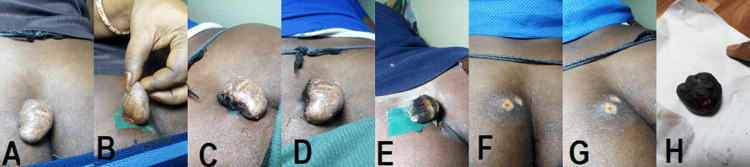 Figure 1
Peer Reviews
No public reviews on file for this paper yet. If you reviewed it on a platform where reviews are public (OpenReview, ICLR, NeurIPS, ICML), you can paste yours below so the community can read it here.
Videos
No videos yet. Explain this paper in a talk, walkthrough, or lecture? Add one.
Taxonomy
TopicsGlaucoma and retinal disorders · Herpesvirus Infections and Treatments · Advanced Neuroimaging Techniques and Applications
Introduction
Giant acrochordon, commonly known as a skin tag or fibroepithelial polyp, is a benign cutaneous neoplasm that appears as a large, soft, and pedunculated lesion. It is often found in areas prone to friction, such as the neck, axilla, groin, and intertriginous regions. Acrochordons are associated with comorbid conditions like obesity, diabetes, high cholesterol, insulin resistance, acromegaly, and metabolic syndrome, suggesting a link to lifestyle and metabolic factors [1,2]. They are typically harmless but can cause discomfort or cosmetic concern, leading individuals to seek removal. In most cases, a physical examination is enough for a diagnosis. However, there are rare instances where a histopathological examination might be needed [3]. Human papillomavirus (HPV) has been found in about 80% of skin tags, mainly subtypes 6 and 11. This suggests that HPV might play a role in the development of these lesions, although the exact mechanism is still not fully understood [4]. Skin tags are quite common, affecting around 25-30% of the general population, particularly among middle-aged and older adults. There’s a strong link between acrochordons and obesity; in fact, 74% of those with skin tags are either overweight or obese, and 24% meet the criteria for metabolic syndrome [5]. When it comes to treating skin tags, common methods include surgical excision and cryotherapy. However, it’s important to keep in mind that these treatments can come with risks, such as scarring, infection, and the possibility of the tags returning [6]. This report explores the exciting potential of Siddha medicine, an indigenous healing tradition from India. It specifically highlights Pachaieruvai as a promising and affordable alternative for managing acrochordon.
Case presentation
A 50-year-old man came to our outpatient clinic with a noticeable, sizable, soft growth on the inner upper quadrant of his right gluteal region. This lesion has been around for 15 years, gradually getting larger over time. The patient mentioned that he hasn’t experienced any pain, itching, or bleeding; however, he has had occasional friction from clothing due to the size of the growth. His medical history is unremarkable, with no significant issues such as hypertension, diabetes, or other systemic diseases.
Upon examination, we identified the lesion as a large pedunculated skin tag, also known as an acrochordon, measuring about 12 cm in diameter. It was soft, non-tender, and could move freely, being attached to the skin by a narrow stalk. The skin covering the lesion was intact, showing no signs of inflammation, ulceration, or infection. The surrounding skin looked normal, and there were no other similar lesions found elsewhere on his body.
Diagnosis
The lesion was clinically diagnosed as a skin tag, or acrochordon, due to its characteristics as a large, soft, pedunculated, skin-colored growth. Both general and systemic examinations yielded no remarkable findings, and no other abnormalities were noted during the evaluation.
Management
The patient decided to seek treatment primarily due to ongoing irritation caused by friction with clothing. Rather than opting for surgical excision, he chose to pursue a traditional Siddha medicine approach, using Pachaieruvai, a topical preparation. Preparation typically involves several steps, including the purification and grinding of materials. Local applications are often crafted by traditional Siddha practitioners, who rely on specific instruments, such as stone mortars and pestles. The discussion section provides a detailed analysis of the various components involved in these preparations. Before starting the treatment, he provided written consent.
The treatment plan involved applying Siddha medicine daily over the stalk of the skin tag for 10 consecutive days. During treatment, the patient experienced mild pain and a burning sensation at the application site, which lasted about 30 minutes after each application. These symptoms were temporary and resolved quickly. Interestingly, these reactions were viewed as positive signs indicating that the lesion was regressing. Ultimately, the treatment was successful, leading to the destruction of the growth within just 15 days. Figures 1A-1H show the progression of acrochordon.
Progression of acrochordon stages.The images show: (A) before treatment, (B) day 1 of treatment, (C) day 3 of treatment, (D) day 5 of treatment, (E) day 8 of treatment, (F) day 12 of treatment, (G) day 15 of treatment, (H) separated skin tag progression of acrochordon.
Follow-up
The patient was reassessed two weeks after completing the treatment, and the site of the lesion had healed remarkably well, showing no signs of infection or any residual growth. During the three to six-month follow-up, there was no evidence of recurrence or any adverse effects, which confirmed the effectiveness and safety of the treatment regimen involving Pachaieruvai. The patient remained symptom-free, and no complications were reported, underscoring the success of this alternative approach in managing a large acrochordon.
Discussion
This case highlights the successful application of Pachaieruvai, a traditional Siddha medicinal preparation, as an effective alternative therapy for treating a large acrochordon. Rooted in ancient Siddha texts, Pachaieruvai is made up of the following five key ingredients: vellaipadanam (arsenic trioxide), aridharam (arsenic trisulfide), thurusu (copper sulfate), karchunnam (calcium carbonate), and kungiliyam (resin from Shorea robusta) [7]. Each of these components brings unique pharmacological properties to the table. Research has shown that vellaipadanam, commonly known as arsenic trioxide and a vital part of Pachaieruvai, possesses significant anti-glioma and antiviral effects. Studies suggest that it can reduce the growth of glioma cells while promoting programmed cell death [8]. Both vellaipadanam and aridharam have demonstrated powerful cytotoxic effects, aiding in the induction of apoptosis and the inhibition of tumor growth [9]. Thurusu, or copper sulfate, is notable for its cytotoxic properties that also inhibit tumor growth and exhibit antiviral effects. Its mechanism involves the generation of reactive oxygen species (ROS), which trigger cytotoxic reactions that compromise cellular integrity and prevent the growth of abnormal cells [10-12]. Karchunnam plays a role in further suppressing abnormal cell growth, while kungiliyam, a resin extracted from Shorea robusta, shows strong cytotoxic properties against abnormal cellular growth. Research indicates that extracts from *Shorea robusta *can hinder the proliferation of cancer cells. Notably, robustic acid derivatives found in this resin have exhibited potent cytotoxic effects against various cancer cell lines, including HL-60 (human leukemia) and HepG2 (human hepatoblastoma) [13-15].
When combined, these five ingredients work synergistically to specifically target the abnormal cells associated with acrochordons. The cytotoxic effects of vellaipadanam, aridharam, thurusu, and kungiliyam collaborate to promote cell death and prevent the excessive growth of these abnormal cells. Calcium carbonate plays a vital role by creating an optimal environment that enhances the effectiveness of these active ingredients. Together, this unique blend not only helps to reduce the size of skin tags but can also lead to their complete elimination by directly attacking the cells responsible for their growth, resulting in noticeable shrinkage or even disappearance of the lesion.
Limitations of the study
This report has several limitations that impact the generalizability and reliability of the findings regarding Pachaieruvai for treating acrochordons. The lack of a larger sample size restricts our ability to draw robust conclusions about its effectiveness and safety across a broader population. Additionally, the absence of controlled trials makes it challenging to determine whether the observed results are genuinely due to the Siddha medicine or influenced by natural regression or other factors. Although the patient showed no recurrence at three and six months, a longer follow-up period is essential to confirm the treatment's long-term efficacy and safety. The subjective reports of mild discomfort also highlight variability in patient experiences, as there was no standardized measurement for these outcomes. Furthermore, potential biases in reporting outcomes and the lack of objective data, such as histological analyses, weaken the findings. The exact mechanisms by which Pachaieruvai's ingredients act on acrochordons remain unclear, necessitating further biochemical research. The study also emphasizes the need for standardization in Siddha medicine, as preparation and dosage can vary significantly among practitioners. Lastly, while no immediate adverse effects were noted, the inclusion of arsenic-based compounds raises safety concerns that warrant further investigation, particularly regarding the long-term risks associated with arsenic exposure.
Conclusions
This study demonstrates the successful treatment of a large acrochordon using Pachaieruvai, a traditional Siddha medicine. Complete resolution occurred within two weeks with no recurrence at six-month follow-up. The cost-effective treatment produced excellent cosmetic results with minimal side effects. While promising, this single case necessitates further research including controlled clinical trials with larger cohorts, standardized preparation protocols, comparative studies with conventional treatments, and safety assessments of arsenic compounds. Scientific validation of traditional medicines like Pachaieruvai is essential for their integration into modern dermatological practice and recognition of Siddha medicine's potential value in treating skin conditions.
The reference list from the paper itself. Each links out to its DOI / PubMed record.
- 1The benign annexure - acrochordon J Med Oncol Ther Bajaj A 222452020
- 2The possible role of trauma in skin tags through the release of mast cell mediators Indian J Dermatol El Safoury OS Fawzy MM Hay RM Hassan AS El Maadawi ZM Rashed LA 6416465620112234576110.4103/0019-5154.91819 PMC 3276887 · doi ↗ · pubmed ↗
- 3Penile acrochordon: an unusual site of presentation - a case report and review of the literature Int J Health Allied Sci Ambika H Kumar YK Seema S Sujatha C 12012 https://go.gale.com/ps/i.do?id=GALE%7CA 304508093&sid=google Scholar&v=2.1&it=r&linkaccess=abs&issn=22784292&p=HRCA&sw=w&user Group Name=anon%7E 25fe 4f 74&aty=open-web-entry
- 4Human papilloma virus (HPV) causing skin tags J Evol Med Dent Sci Ramachandrareddy D Prathap R 7357736022013 https://jemds.com/data_pdf/1_Ramachandra%20Reddy%20-.pdf
- 5Prevalence, clinical criteria, and risk factors of skin tags: a hospital-based study J Egypt Women Dermatol Soc Abdel Rahman AT Elsaied SA Mohammed SS 106113202023
- 6Selective therapy (cryo or scalpel) combined with multimodal therapy for treating keloids J Cutan Aesthet Surg Savant SS Jr Savant SS Daruwala F 85931720243880082010.4103/JCAS.JCAS_40_23PMC 11126220 · doi ↗ · pubmed ↗
- 7Siddha Surgery. [Book in Tamil] Uthamarayan KS Chennai, India Directorate of Indian Medicine and Homeopathy 1968 https://archive.org/details/dli.j ZY 9lup 2k Zl 6Tu X Gl Z Qdj Zp 1kuty.TVA_BOK_0007005/mode/1up?q=69
- 8Differential response of glioma stem cells to arsenic trioxide therapy is regulated by MNK 1 and m RNA translation Mol Cancer Res Bell JB Eckerdt F Dhruv HD 32461620182904248710.1158/1541-7786.MCR-17-0397 PMC 5926791 · doi ↗ · pubmed ↗