Comparative Clinical Outcomes and Safety of Generic Versus Original Imatinib in the Treatment of Chronic Myeloid Leukemia: A Real-World Cohort Study from Thailand
Jirapath Tangkitchot, Adisak Tantiworawit, Piangrawee Niprapan, Nuttanun Wongsarikan, Sirichai Srichairatanakool, Teerachat Punnachet, Nonthakorn Hantrakun, Pokpong Piriyakhuntorn, Thanawat Rattanathammethee, Chatree Chai-Adisaksopha, Ekarat Rattarittamrong, Lalita Norasetthada

TL;DR
This study compares the effectiveness and safety of generic and original imatinib for treating chronic myeloid leukemia in Thailand, finding similar early responses but worse long-term survival with the generic version.
Contribution
The study provides real-world evidence on the comparative safety and outcomes of generic versus original imatinib in CML patients.
Findings
No significant differences in early treatment responses between original and generic imatinib.
Overall survival was significantly longer for patients receiving original imatinib.
Event-free survival showed no significant difference between the two groups.
Abstract
Background/Objectives: Imatinib, a first-generation tyrosine kinase inhibitor, is the standard treatment for chronic myeloid leukemia (CML). Although generic formulations have improved access, concerns regarding their efficacy and safety remain. This study aimed to compare the clinical outcomes and adverse events of original and generic imatinib in patients with CML in Thailand. Methods: We conducted a retrospective cohort study of patients with chronic-phase CML receiving frontline imatinib at Chiang Mai University Hospital between January 2012 and September 2022. Treatment responses, event-free survival (EFS), overall survival (OS), and adverse events were also analyzed. Results: Among the 71 patients, 46 (64.8%) received original imatinib, and 25 (35.2%) received generic imatinib. The median follow-up period was 80.3 months (IQR: 52.0–106.4). At 12 months, there were no significant…
Genes, proteins, chemicals, diseases, species, mutations and cell lines named across the full text — each resolved to its canonical identifier and authoritative record.
Click any figure to enlarge with its caption.
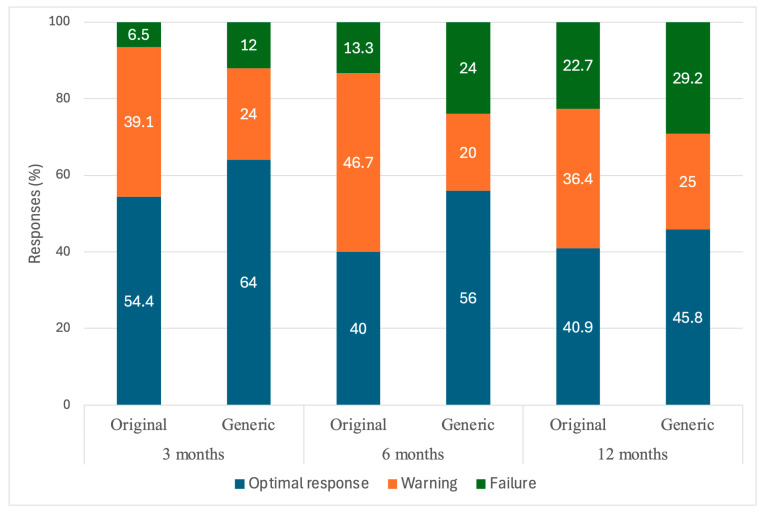 Figure 1
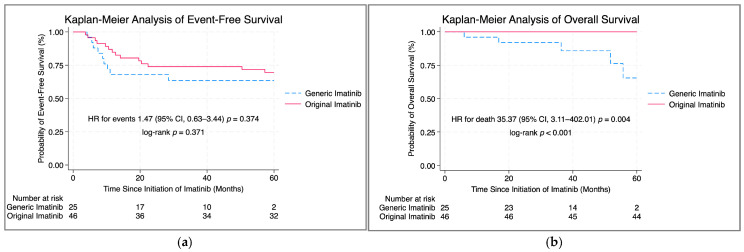 Figure 2
Peer Reviews
No public reviews on file for this paper yet. If you reviewed it on a platform where reviews are public (OpenReview, ICLR, NeurIPS, ICML), you can paste yours below so the community can read it here.
Videos
No videos yet. Explain this paper in a talk, walkthrough, or lecture? Add one.
Taxonomy
TopicsChronic Myeloid Leukemia Treatments · Chronic Lymphocytic Leukemia Research · Eosinophilic Disorders and Syndromes