Effect of a 4 mm vs. a 6 mm Diameter Mold on the Depth of Cure of 6 Bulk-Fill Resin-Based Composites
Anubhav Gulati, Alexandre P. Gareau, Richard B. Price

TL;DR
This study compares how mold size affects the depth of cure for dental composites, finding that a 6 mm mold gives higher cure depths than a 4 mm mold.
Contribution
The study reveals that the ISO 4049 standard's 4 mm mold underestimates the depth of cure compared to a 6 mm mold for bulk-fill composites.
Findings
The 6 mm mold consistently produced greater depth of cure values than the 4 mm mold for all six tested composites.
A broad-spectrum LED curing light did not improve cure depth compared to a single-peak light for the tested materials.
A frosty, solvent-resistant region was observed in all specimens, indicating incomplete curing near the mold walls.
Abstract
Dental researchers and manufacturers use the ISO 4049 standard to determine the depth of cure (DoC) of resin-based composites (RBCs). This standard uses a 4 mm diameter stainless-steel mold and subsequently divides the length of the remaining hard RBC by 2. However, the DoC values obtained using this mold have been challenged. Six bulk-fill RBCs (Tetric plus Fill, Tetric plus Flow, Tetric PowerFill, Tetric PowerFlow, Filtek One, and Aura Bulk Fill) were used to investigate the limitations of the 4 mm diameter mold used in the ISO 4049 standard when compared to a 6 mm diameter metal mold that represented the dimensions of a large cavity in a tooth. Two distinct light curing units were used. One light (Elipar S10) emitted a single peak wavelength of light, while the other (Bluephase G4) was a broad-spectrum, multiple-peak curing light. After 10 s of photocuring, the uncured RBC was…
Genes, proteins, chemicals, diseases, species, mutations and cell lines named across the full text — each resolved to its canonical identifier and authoritative record.
Click any figure to enlarge with its caption.
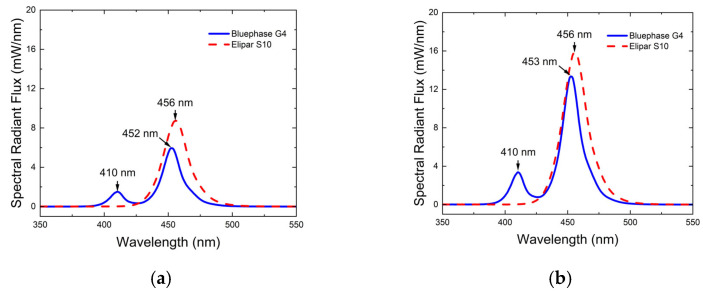 Figure 1
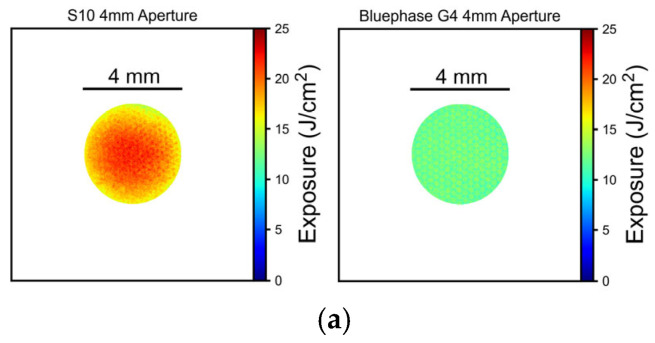 Figure 2
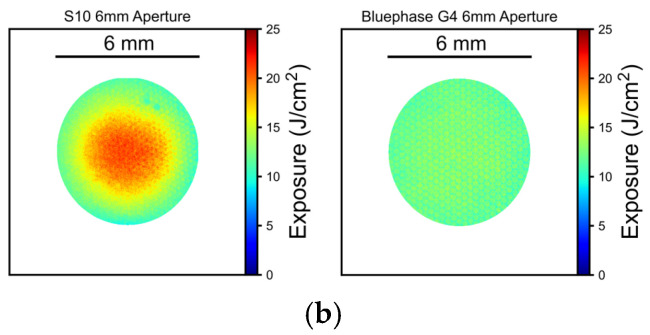 Figure 3
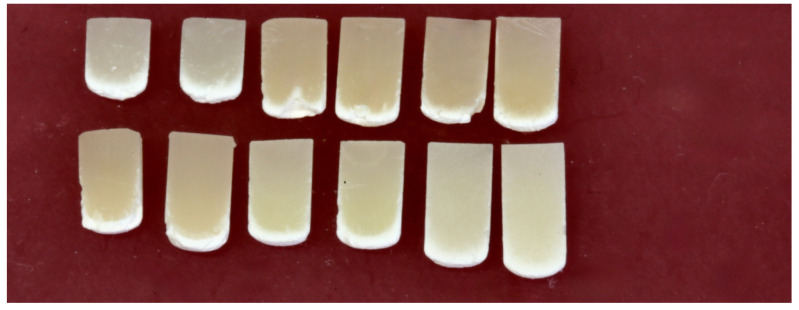 Figure 4
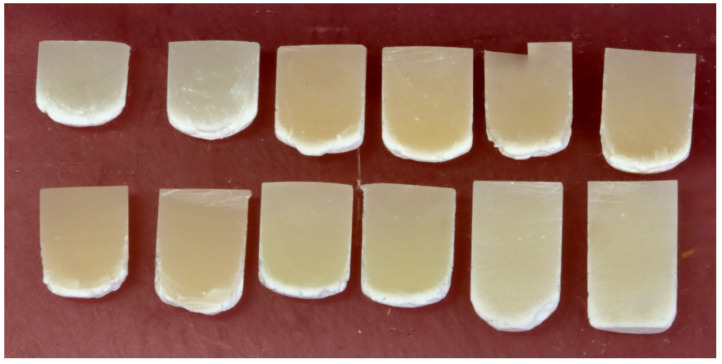 Figure 5
Peer Reviews
No public reviews on file for this paper yet. If you reviewed it on a platform where reviews are public (OpenReview, ICLR, NeurIPS, ICML), you can paste yours below so the community can read it here.
Videos
No videos yet. Explain this paper in a talk, walkthrough, or lecture? Add one.
Taxonomy
TopicsDental materials and restorations · Additive Manufacturing and 3D Printing Technologies · Photopolymerization techniques and applications