A Straightforward Approach Towards Phosphadecalones by Microwave-Assisted Diels–Alder Reaction
Elżbieta Łastawiecka, Anna E. Kozioł, K. Michał Pietrusiewicz

TL;DR
A new method for making phosphorus-containing compounds using a microwave-assisted chemical reaction is described, allowing for precise control over the structure of the products.
Contribution
A scalable and stereoselective approach for synthesizing phosphorus-containing bicyclic and tricyclic compounds using microwave-assisted Diels–Alder reactions is introduced.
Findings
The cis/trans-fusion of cycloadducts can be selectively controlled by adjusting microwave-assisted reaction conditions.
Eight products were structurally characterized by X-ray crystallography, confirming endo-selectivity and P-stereogenic centers.
Post-cycloaddition transformations demonstrate the synthetic versatility of phosphadecalones.
Abstract
A stereoselective and scalable strategy for the synthesis of phosphorus-containing bicyclic and tricyclic compounds from 1-phenylphosphin-2-en-4-one 1-oxide is presented. This activated dienophile, available in both racemic and enantiopure forms, undergoes smooth [4+2] cycloadditions with acyclic and cyclic dienes, affording products with excellent yields and controlled stereochemistry. Notably, the cis/trans-fusion of the cycloadducts (phosphadecalones and phosphahexahydrochrysene) can be selectively controlled by fine-tuning the conditions of microwave-assisted cycloaddition reaction. The influence of temperature, time, and steric effects on cis/trans and endo/exo selectivity was examined in detail. The molecular structure, including the absolute configuration, of eight products has been determined by X-ray crystallography. These analyses further established the endo-selective nature…
Genes, proteins, chemicals, diseases, species, mutations and cell lines named across the full text — each resolved to its canonical identifier and authoritative record.
Click any figure to enlarge with its caption.
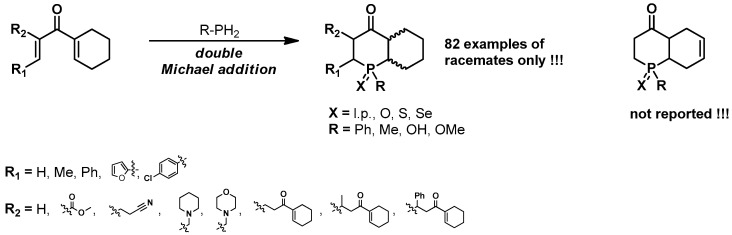 Figure 1
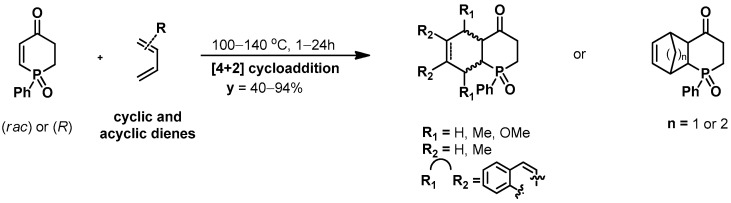 Figure 2
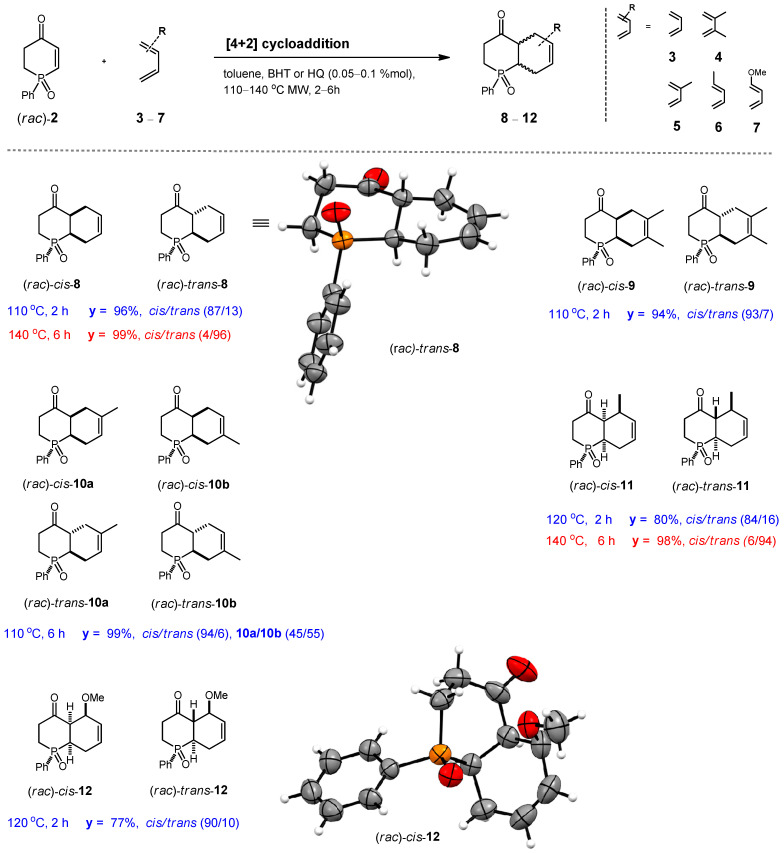 Figure 3
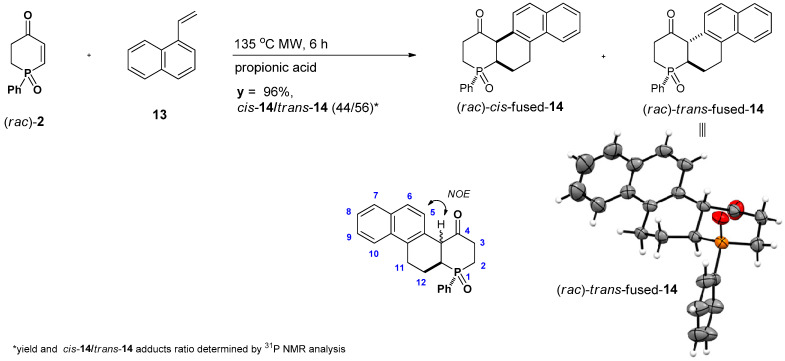 Figure 4
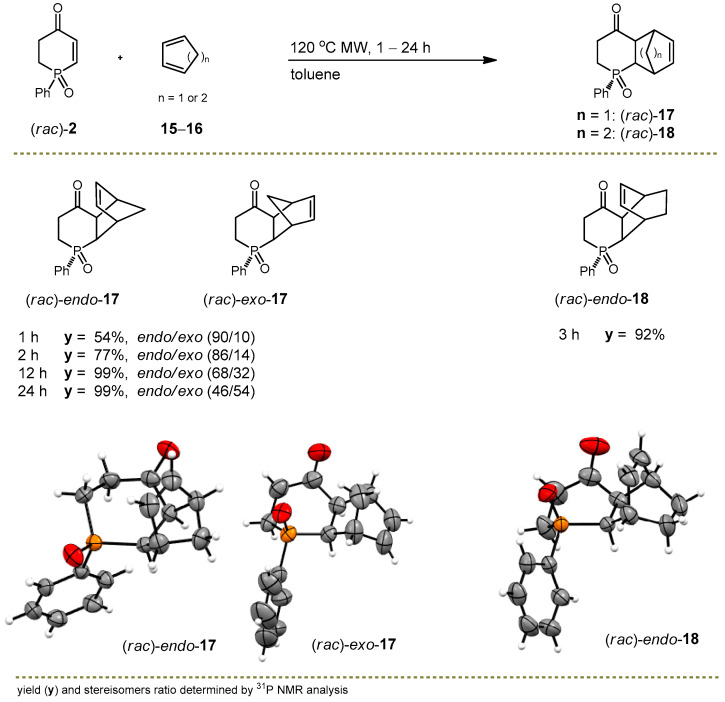 Figure 5
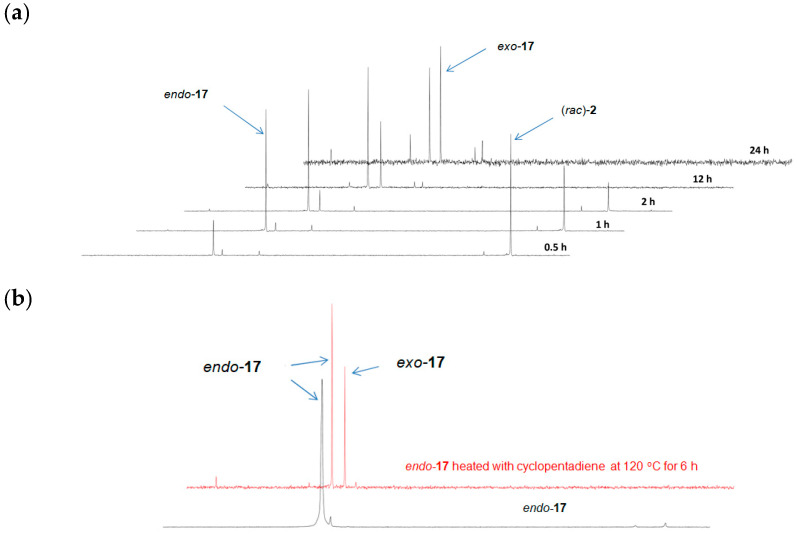 Figure 6
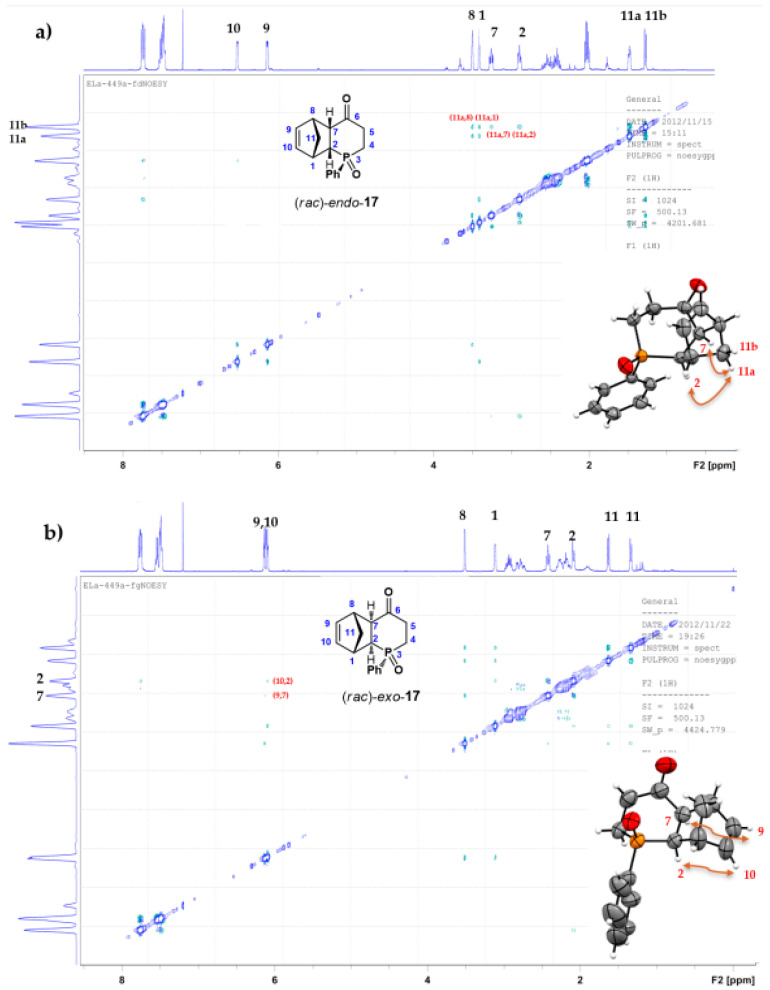 Figure 7
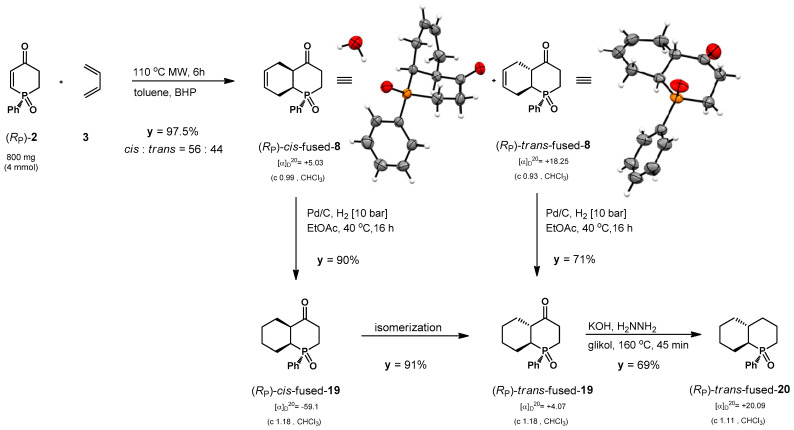 Figure 8
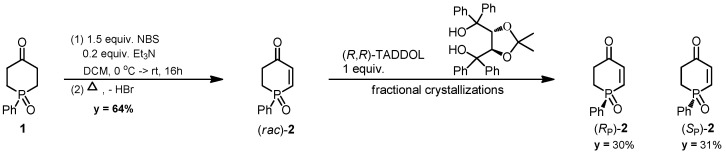 Figure 9
Peer Reviews
No public reviews on file for this paper yet. If you reviewed it on a platform where reviews are public (OpenReview, ICLR, NeurIPS, ICML), you can paste yours below so the community can read it here.
Videos
No videos yet. Explain this paper in a talk, walkthrough, or lecture? Add one.
Taxonomy
TopicsOrganophosphorus compounds synthesis · Asymmetric Hydrogenation and Catalysis · Phosphorus compounds and reactions