The High Interfacial Activity of Betaine Surfactants Triggered by Nonionic Surfactant: The Vacancy Size Matching Mechanism of Hydrophobic Groups
Guoqiao Li, Jinyi Zhao, Lu Han, Qingbo Wu, Qun Zhang, Bo Zhang, Rushan Yue, Feng Yan, Zhaohui Zhou, Wei Ding

TL;DR
This study explores how combining betaine surfactants with nonionic surfactants can drastically reduce interfacial tension, which is important for oil recovery.
Contribution
The paper introduces a vacancy size matching mechanism that explains how nonionic surfactants enhance betaine surfactant performance.
Findings
Span80 forms a compact interfacial film with betaine surfactants, reducing interfacial tension to ultra-low values.
Tween80 has minimal impact on betaine surfactant interfacial tension due to lack of aqueous-side vacancies.
The study offers insights for selecting betaine surfactants in enhanced oil recovery processes.
Abstract
Alkyl sulfobetaine shows a strong advantage in the compounding of surfactants due to the defects in the size matching of hydrophilic and hydrophobic groups. The interfacial tensions (IFTs) of alkyl sulfobetaine (ASB) and xylene-substituted alkyl sulfobetaine (XSB) with oil-soluble (Span80) and water-soluble (Tween80) nonionic surfactants on a series of n-alkanes were studied using a spinning drop tensiometer to investigate the mechanism of IFT between nonionic and betaine surfactants. The two betaine surfactants’ IFTs are considerably impacted differently by Span80 and Tween80. The results demonstrate that Span80, through mixed adsorption with ASB and XSB, can create a relatively compacted interfacial film at the n-alkanes–water interface. The equilibrium IFT can be reduced to ultra-low values of 5.7 × 10⁻³ mN/m at ideal concentrations by tuning the fit between the size of the nonionic…
Genes, proteins, chemicals, diseases, species, mutations and cell lines named across the full text — each resolved to its canonical identifier and authoritative record.
Click any figure to enlarge with its caption.
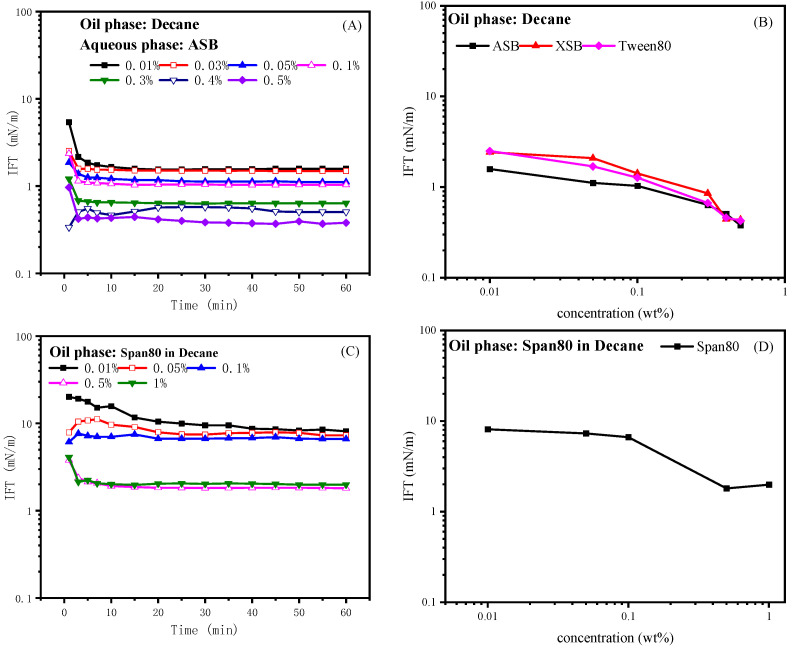 Figure 1
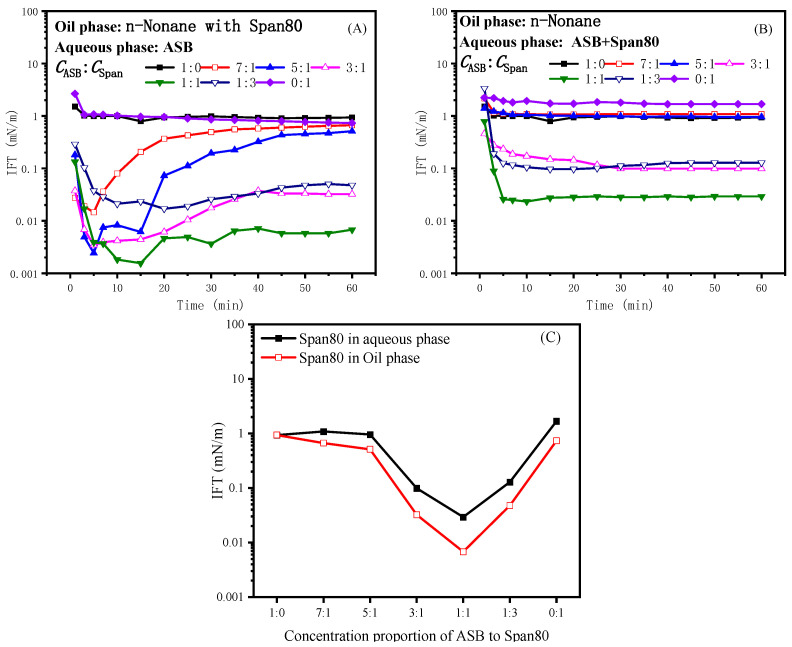 Figure 2
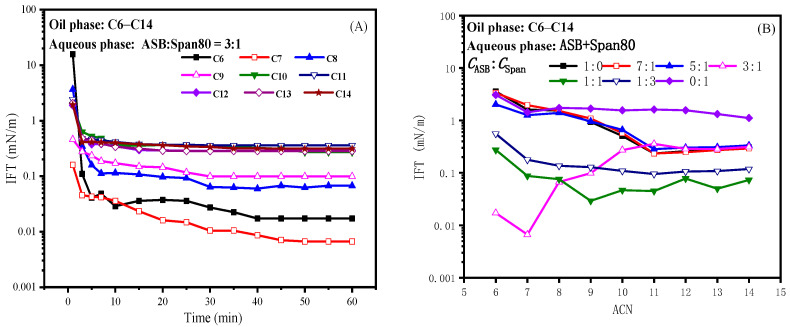 Figure 3
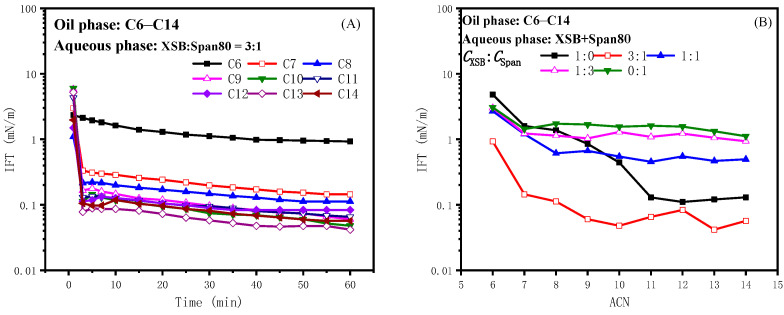 Figure 4
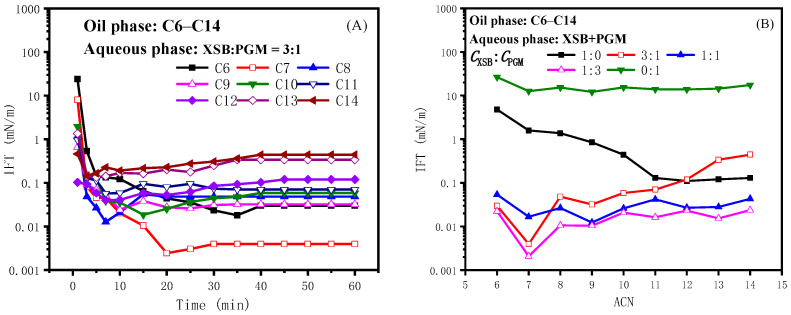 Figure 5
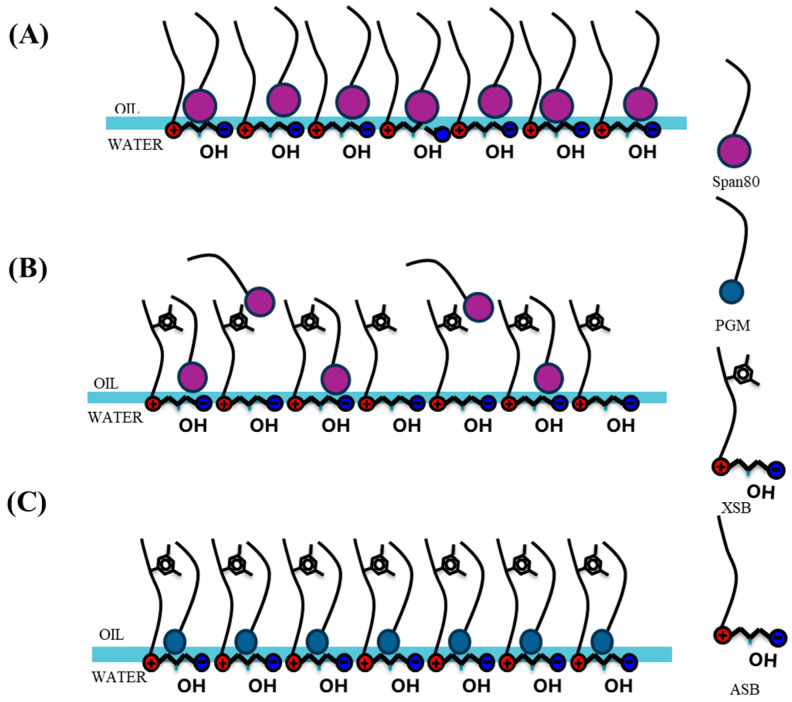 Figure 6
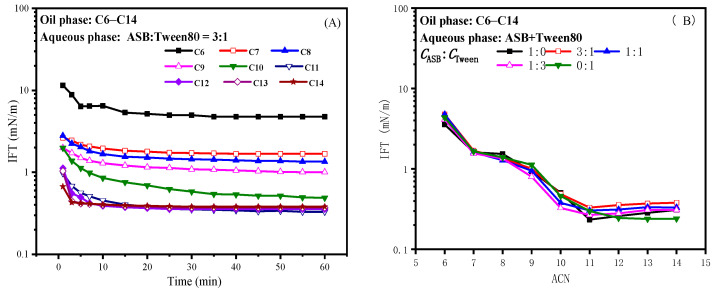 Figure 7
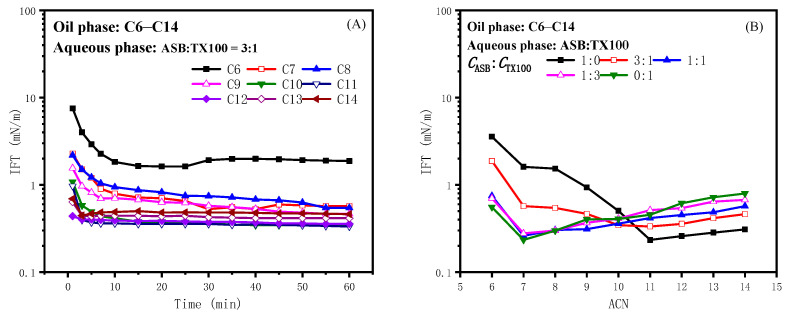 Figure 8
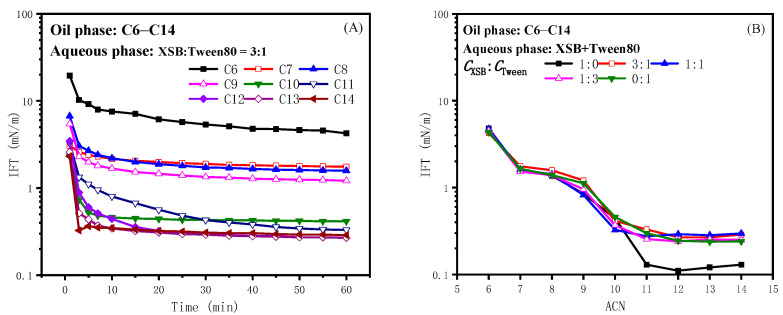 Figure 9
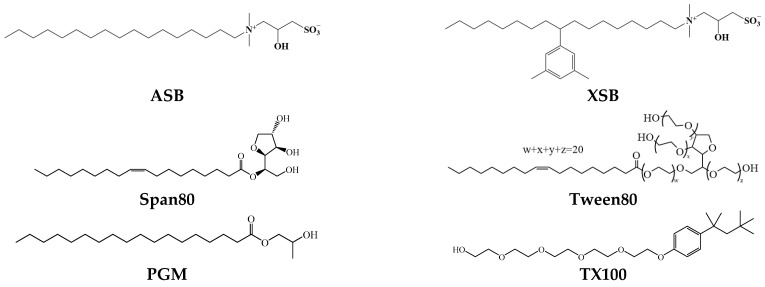 Figure 10
Peer Reviews
No public reviews on file for this paper yet. If you reviewed it on a platform where reviews are public (OpenReview, ICLR, NeurIPS, ICML), you can paste yours below so the community can read it here.
Videos
No videos yet. Explain this paper in a talk, walkthrough, or lecture? Add one.
Taxonomy
TopicsEnhanced Oil Recovery Techniques · Surfactants and Colloidal Systems · Petroleum Processing and Analysis