Construction of Triphenylamine-Based Aggregation-Induced Emission Luminogens for Lysosomes Imaging and Its Application in the Photodynamic Therapy of Cancer Cells
Zhanguo Sun, Bin Liu, Huijun Liu

TL;DR
This paper introduces new fluorescent compounds that target lysosomes in cancer cells for imaging and photodynamic therapy.
Contribution
The novel compounds TPAB-CF3 and TPAB-diCF3 combine lysosome targeting with aggregation-induced emission for cancer cell therapy.
Findings
TPAB-CF3 and TPAB-diCF3 exhibit bright yellow fluorescence and excellent lysosome-targeted imaging in HeLa cells.
The compounds show strong 1O2-generation ability and efficient photodynamic killing of cancer cells under white-light irradiation.
Abstract
Lysosomes are important acidic subcellular organelles whose dysfunction can lead to some related diseases. The development of new lysosome-imaging-guided AIEgens for the photodynamic therapy of cancer cells is important. In this work, two novel organic compounds with AIE characteristics, namely, TPAB-CF3 and TPAB-diCF3, were designed and synthesized by introducing the weakly basic morpholinyl moiety with lysosome-targeting ability into a triphenylamine-based luminogen. The distorted spatial feature of TPA and the D1-D2-π-A structure of these AIEgens prevented the aggregation-caused quenching of traditional fluorescent molecules and efficiently promoted the separation of the HOMO and LUMO. The outcomes were AIE features and a narrow single-triplet energy gap. Furthermore, TPAB-CF3 and TPAB-diCF3 showed bright yellow fluorescence emission peaks at 577 and 601 nm; large Stokes shifts of…
Genes, proteins, chemicals, diseases, species, mutations and cell lines named across the full text — each resolved to its canonical identifier and authoritative record.
Click any figure to enlarge with its caption.
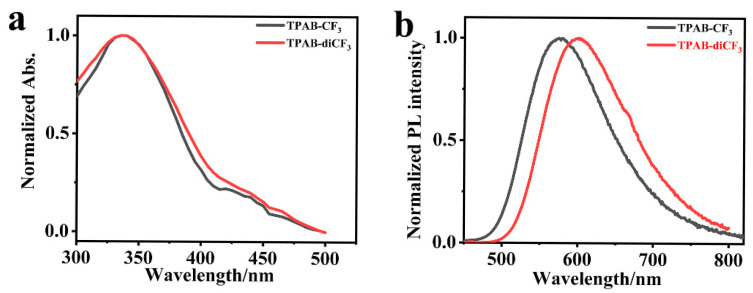 Figure 1
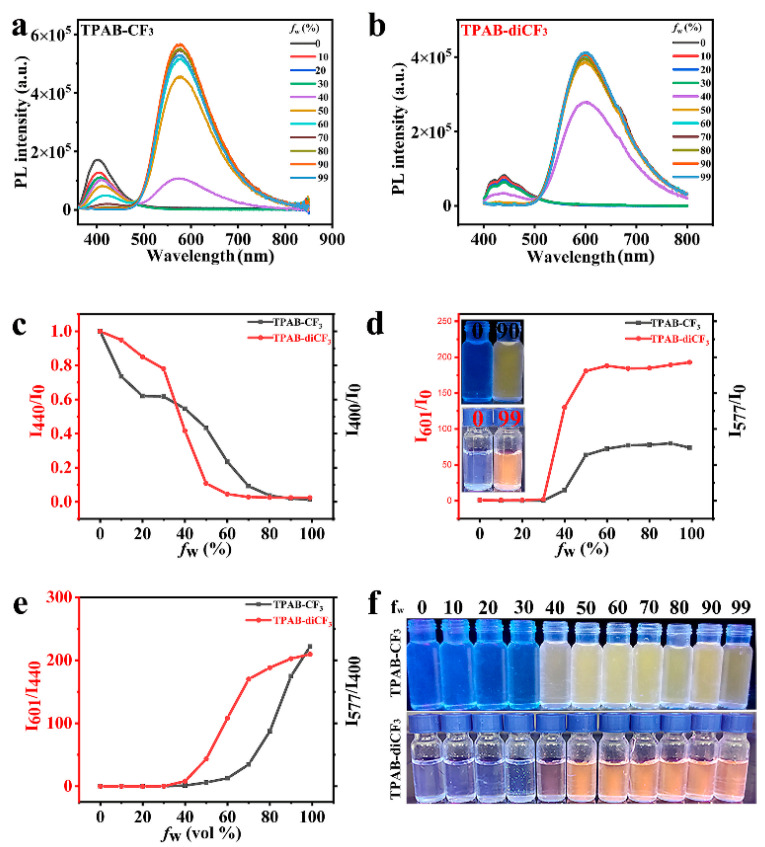 Figure 2
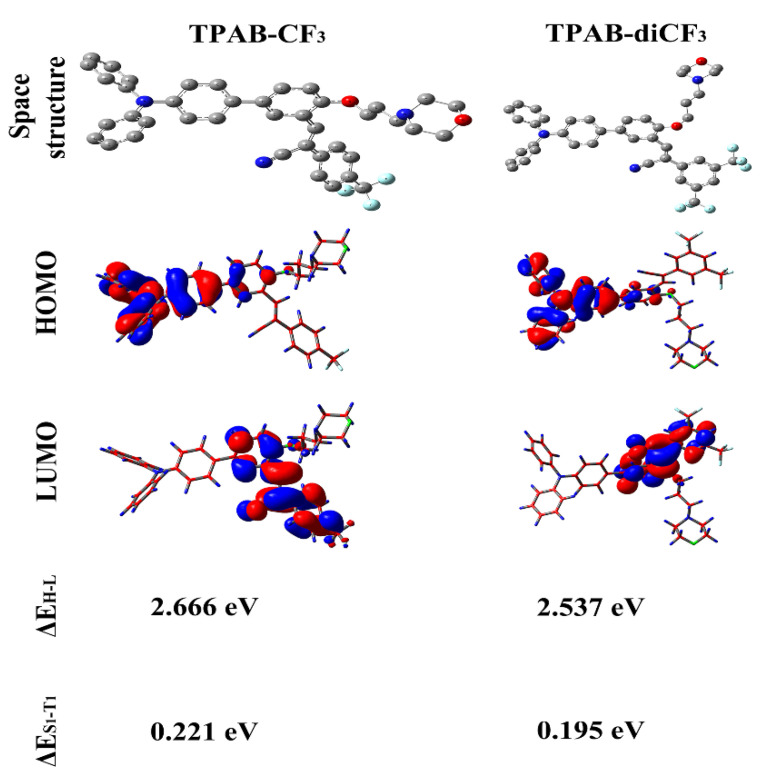 Figure 3
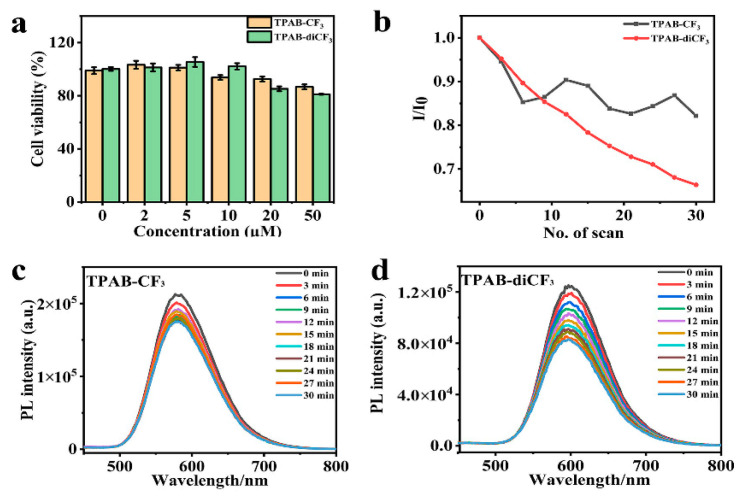 Figure 4
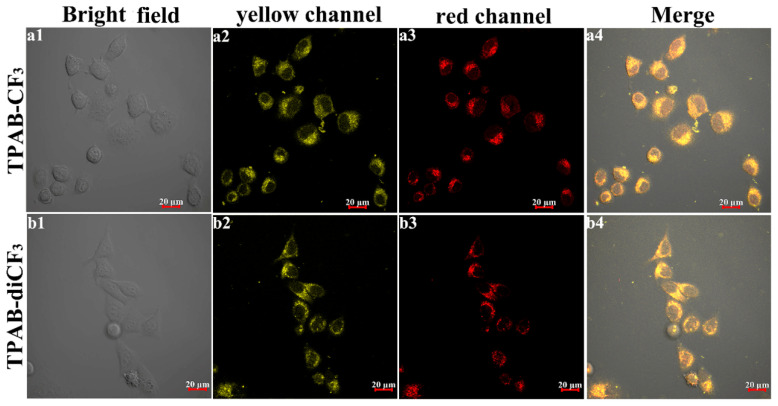 Figure 5
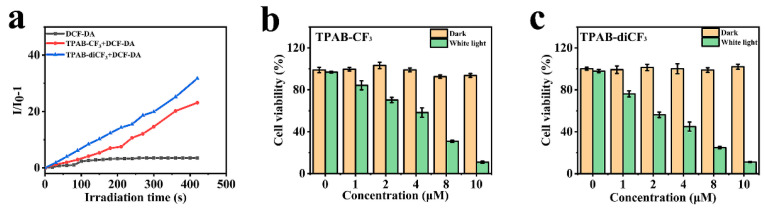 Figure 6
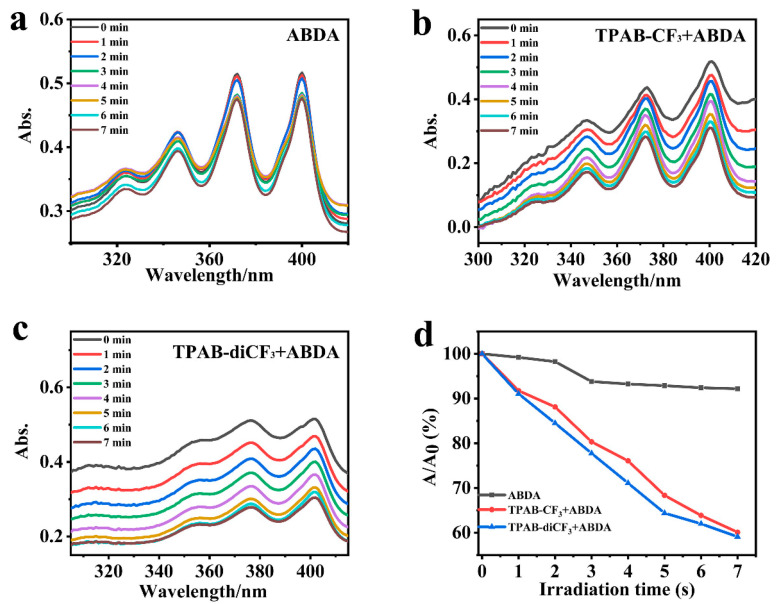 Figure 7
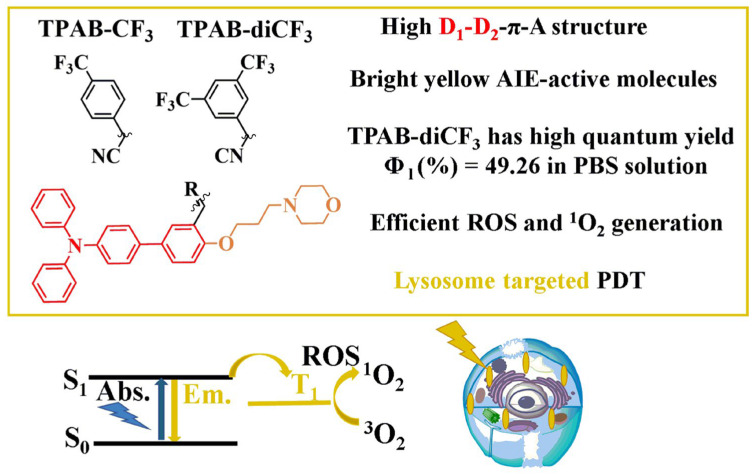 Figure 8
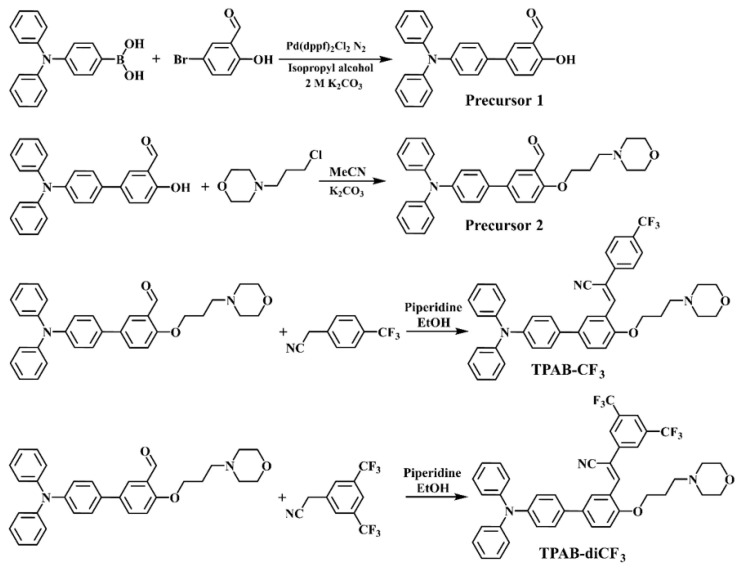 Figure 9
Peer Reviews
No public reviews on file for this paper yet. If you reviewed it on a platform where reviews are public (OpenReview, ICLR, NeurIPS, ICML), you can paste yours below so the community can read it here.
Videos
No videos yet. Explain this paper in a talk, walkthrough, or lecture? Add one.
Taxonomy
TopicsLuminescence and Fluorescent Materials · Nanoplatforms for cancer theranostics · Porphyrin and Phthalocyanine Chemistry