Mentalizing, Loneliness and Pain-Related Depressive Symptoms Are Associated with Pain Severity in Patients with Rheumatic Diseases: Results of a Cross-Sectional Secondary Analysis
David Riedl, Julia Karnik, Astrid Lampe, Christina Kirchhoff, Karin Labek, Michael Schirmer

TL;DR
This study finds that loneliness and mentalizing abilities are linked to pain severity in rheumatic disease patients, suggesting mentalizing could help reduce pain-related depression.
Contribution
The study identifies mentalizing as a novel mediator linking loneliness and pain severity in rheumatic disease patients.
Findings
Loneliness is significantly associated with increased pain severity (β = 0.34, p = 0.004).
Mentalizing and pain-related depressive symptoms mediate the relationship between loneliness and pain severity.
The explained variance of pain severity increased from 12% to 41% when mediators were included.
Abstract
Background/Objectives: Patients with rheumatic diseases often experience pain-related depressive symptoms, potentially exacerbated by feelings of loneliness and social isolation. This study explores the role of mentalizing, i.e., the understanding of inner mental states in oneself and others, as a protective factor in this context. Methods: In this secondary analysis, n = 76 patients completed the FESV depression scale, MZQ UCLA loneliness scale and pain severity items from the German Pain Questionnaire. Structural equation models and mediation analyses were employed to test different theoretical models. Results: The best model fit was found for Model 3, which described the association of loneliness with pain severity (β = 0.34, p = 0.004). The association was fully mediated by a sequential mediation of mentalizing and pain-related depression. Adding the mediators increased the overall…
Genes, proteins, chemicals, diseases, species, mutations and cell lines named across the full text — each resolved to its canonical identifier and authoritative record.
Click any figure to enlarge with its caption.
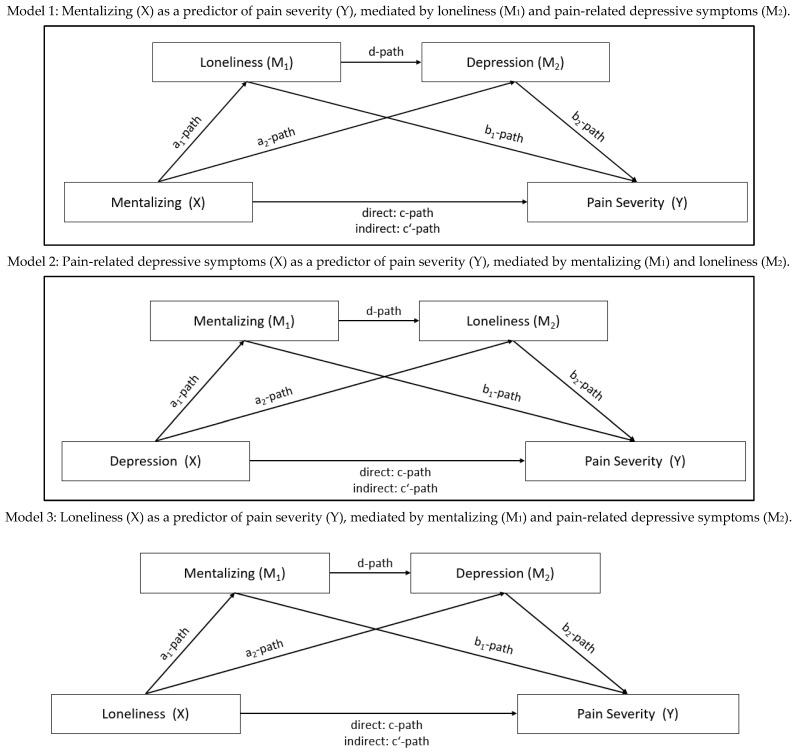 Figure 1
 Figure 2
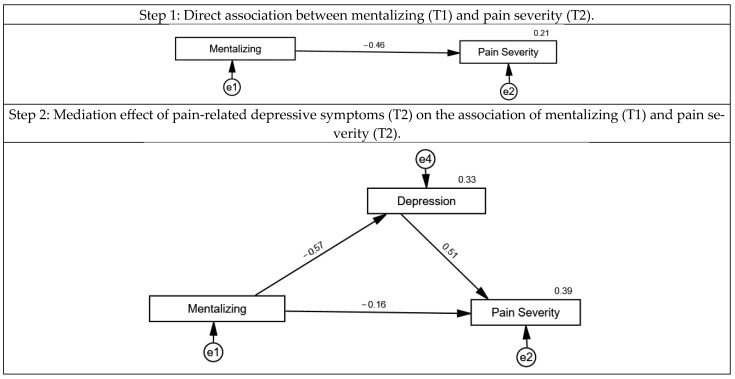 Figure 3
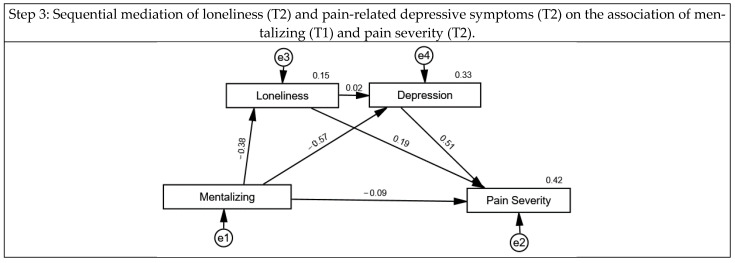 Figure 4
 Figure 5
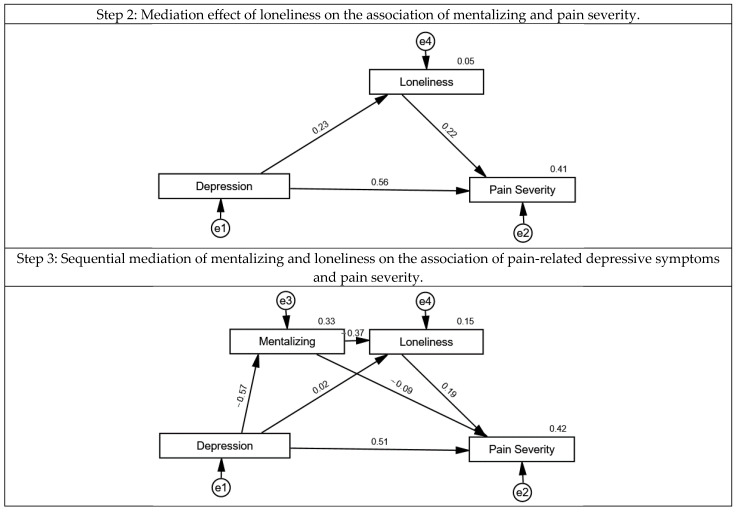 Figure 6
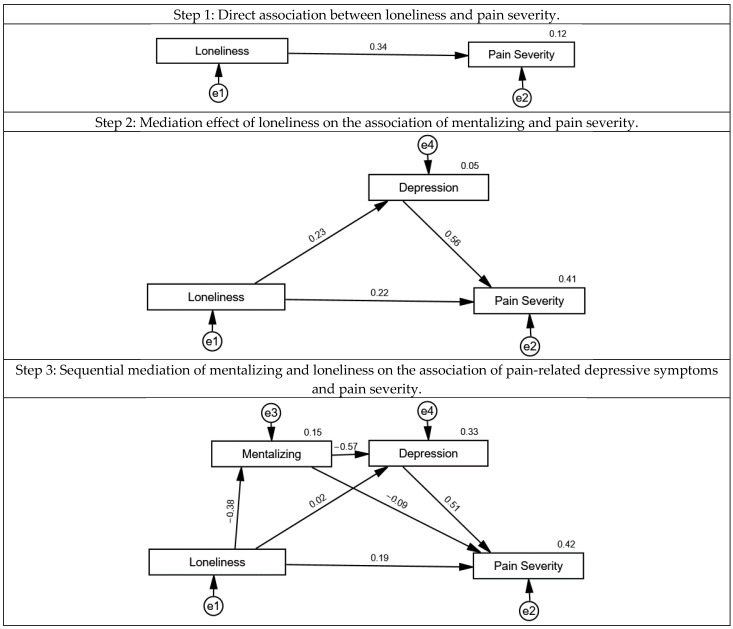 Figure 7
Peer Reviews
No public reviews on file for this paper yet. If you reviewed it on a platform where reviews are public (OpenReview, ICLR, NeurIPS, ICML), you can paste yours below so the community can read it here.
Videos
No videos yet. Explain this paper in a talk, walkthrough, or lecture? Add one.
Taxonomy
TopicsPsychosomatic Disorders and Their Treatments · Health, psychology, and well-being · Mental Health Treatment and Access