Diagnostic Accuracy of Bisphosphonate Scintigraphy in Glu54GlnATTR Cardiomyopathy
Claudiu Stan, Gabriela Neculae, Robert-Daniel Adam, Andreea Jercan, Sorina-Nicoleta Badelita, Mirela-Ramona Draghici, Camelia Dobrea, Sebastian Onciul, Razvan Capşa, Cristina Chirion, Dan Stanescu, Cipriana Stefanescu, Irena-Cristina Grierosu, Teodor-Marian Ionescu

TL;DR
This study shows that bisphosphonate scintigraphy is highly accurate for diagnosing a rare form of heart disease caused by the Glu54Gln TTR variant.
Contribution
The study introduces a new heart-to-liver uptake ratio as a novel semiquantitative tool for evaluating cardiac amyloidosis.
Findings
Bisphosphonate scintigraphy had 100% sensitivity in diagnosing Glu54GlnATTR-CA in symptomatic patients.
The proposed heart-to-liver uptake ratio strongly correlates with disease severity markers like septum thickness.
No false negatives were observed in asymptomatic carriers of the Glu54Gln variant.
Abstract
Background: Bisphosphonate scintigraphy (BS) is a recognized tool for diagnosing amyloid transthyretin cardiomyopathy (ATTR-CA). However, its sensitivity for rare transthyretin (TTR) variants, like Glu54Gln, remains underexplored. Methods: This was a retrospective descriptive study including all known patients with the Glu54Gln variant diagnosed between 2017 and 2023 in Romania, aiming to evaluate the diagnostic performance of BS in Glu54Gln ATTR–CA. Results: All symptomatic patients (n = 22) with histologically confirmed ATTR-CA had positive BS results (100% sensitivity). No false negatives were observed in asymptomatic carriers (n = 4). The Perugini visual score correlated with disease severity, with grade 3 scores associated with advanced cardiac involvement. We proposed a new parameter, heart-to-liver-uptake (H/L) ratio, which proved a strong positive correlation with both the…
Genes, proteins, chemicals, diseases, species, mutations and cell lines named across the full text — each resolved to its canonical identifier and authoritative record.
Click any figure to enlarge with its caption.
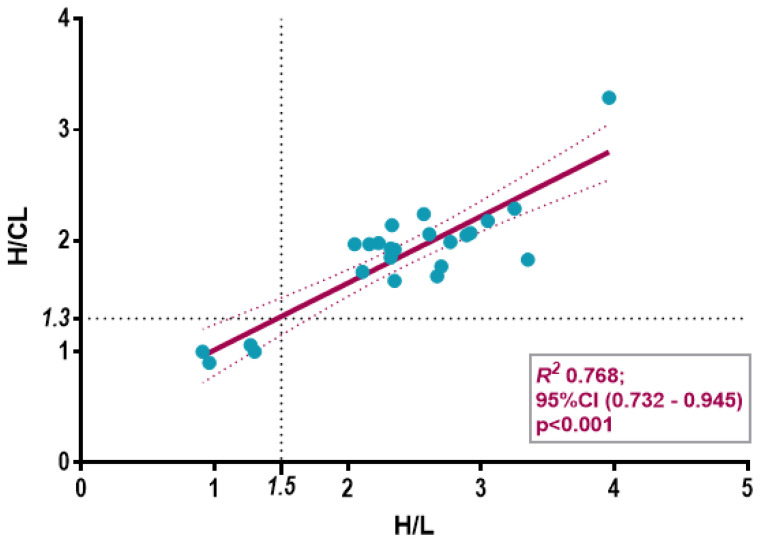 Figure 1
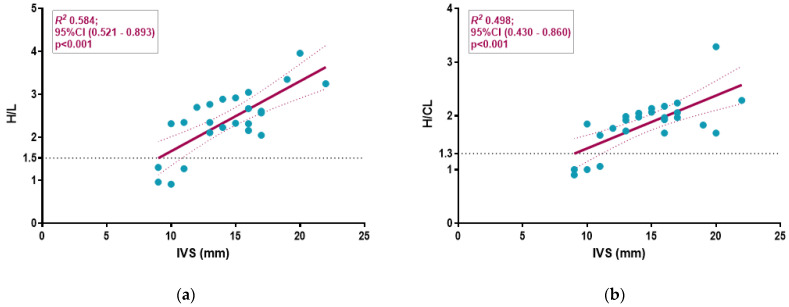 Figure 2
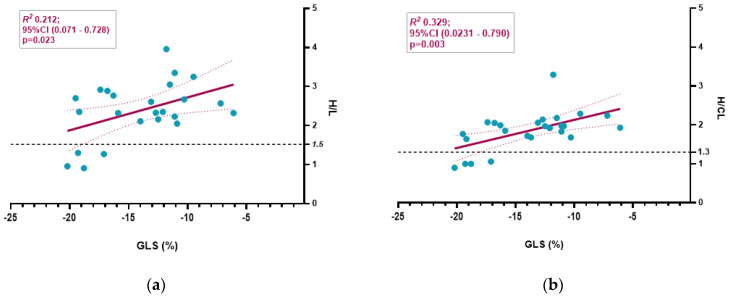 Figure 3
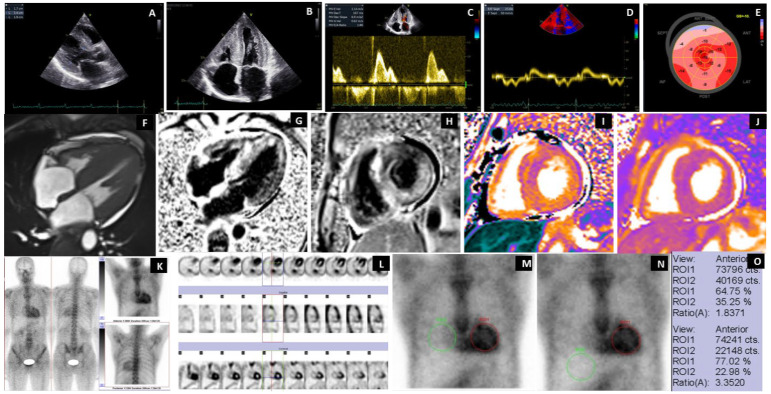 Figure 4
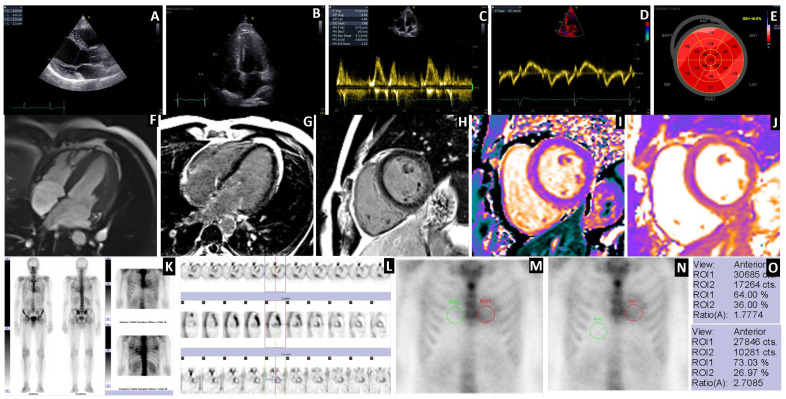 Figure 5
Peer Reviews
No public reviews on file for this paper yet. If you reviewed it on a platform where reviews are public (OpenReview, ICLR, NeurIPS, ICML), you can paste yours below so the community can read it here.
Videos
No videos yet. Explain this paper in a talk, walkthrough, or lecture? Add one.
Taxonomy
TopicsAmyloidosis: Diagnosis, Treatment, Outcomes · Parathyroid Disorders and Treatments · Sarcoidosis and Beryllium Toxicity Research