Comparison of Reduced-Port Totally Robotic Pancreaticoduodenectomy with Conventional Totally Robotic and Laparoscopic Pancreaticoduodenectomy
Boram Lee, Ho-Seong Han, Yoo-Seok Yoon, Jun Suh Lee

TL;DR
This study compares a new robotic surgery method for pancreaticoduodenectomy with conventional robotic and laparoscopic methods, finding it more efficient and safe.
Contribution
The study introduces and evaluates a reduced-port robotic approach for pancreaticoduodenectomy, demonstrating improved efficiency and consistency.
Findings
rpRPD had shorter operative time and lower blood loss compared to cRPD with similar outcomes in complications and hospital stay.
Learning curve analysis showed rpRPD had lower variance and more stable performance than cRPD.
Oncological equivalence was supported by comparable lymph node retrieval across all groups.
Abstract
Background: Reduced-port totally robotic pancreaticoduodenectomy (rpRPD) has been introduced to address limitations of conventional robotic pancreaticoduodenectomy (cRPD), particularly regarding assistant mobility and visualization. This study aimed to evaluate the clinical feasibility and procedural consistency of rpRPD in comparison with cRPD and laparoscopic pancreaticoduodenectomy (LPD). Methods: We conducted a retrospective cohort study of patients who underwent pancreaticoduodenectomy between January 2015 and December 2024. Patients were categorized into rpRPD (n = 40), cRPD (n = 60), and LPD (n = 262) groups. Clinical outcomes and learning curves were compared using regression and cumulative sum (CUSUM) analysis. Results: Baseline characteristics were similar across groups. The rpRPD group demonstrated significantly shorter operative time (p < 0.001) and lower blood loss (p <…
Genes, proteins, chemicals, diseases, species, mutations and cell lines named across the full text — each resolved to its canonical identifier and authoritative record.
Click any figure to enlarge with its caption.
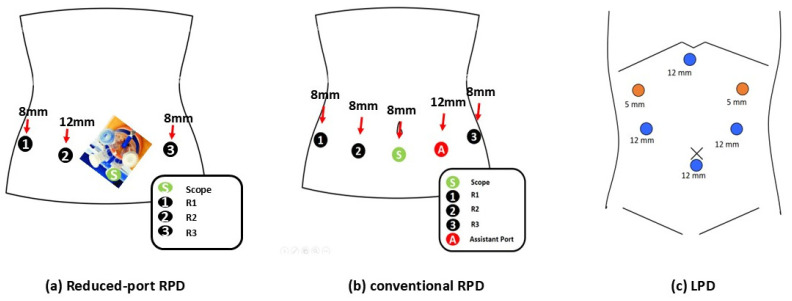 Figure 1
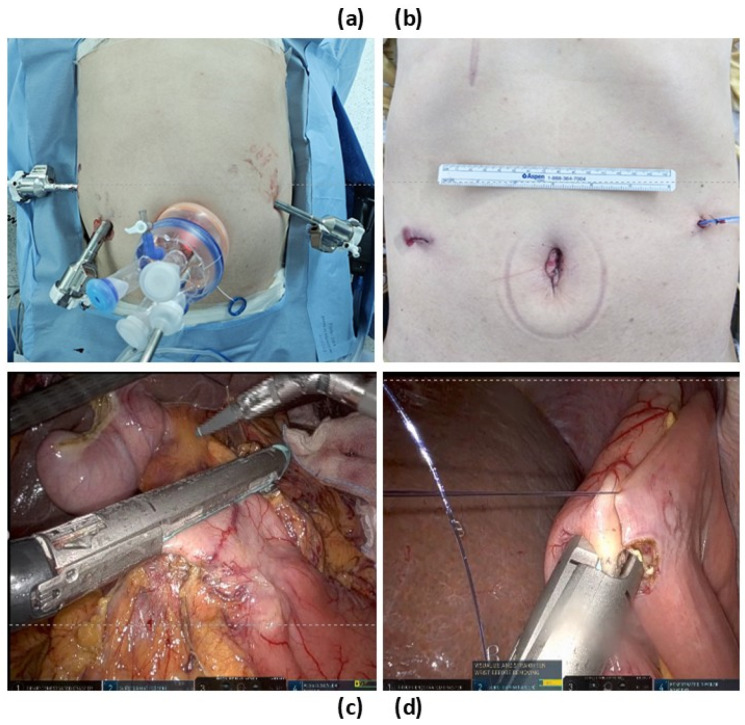 Figure 2
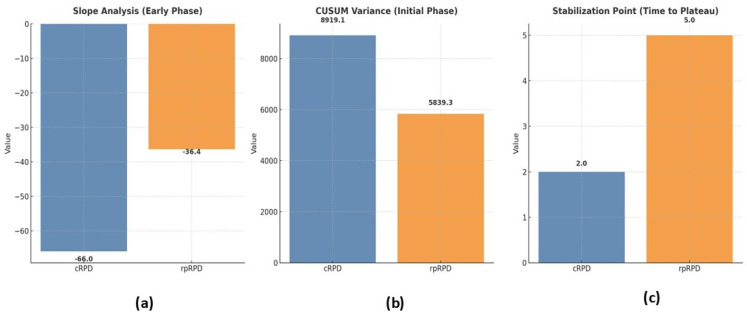 Figure 3
Peer Reviews
No public reviews on file for this paper yet. If you reviewed it on a platform where reviews are public (OpenReview, ICLR, NeurIPS, ICML), you can paste yours below so the community can read it here.
Videos
No videos yet. Explain this paper in a talk, walkthrough, or lecture? Add one.
Taxonomy
TopicsPancreatic and Hepatic Oncology Research · Cholangiocarcinoma and Gallbladder Cancer Studies · Gastrointestinal Tumor Research and Treatment