Comparison of the Isometric Position of the External Elbow Fixator: Self-Centering Versus Traditional Techniques, Postoperative CT Evaluation, and 3D Motion Analysis
Prospero Bigazzi, Chiara Suardi, Anna Rosa Rizzo, Irene Felici, Marco Biondi, Andrea Poggetti, Sandra Pfanner

TL;DR
This study compares a new self-centering elbow fixator to traditional ones, finding it easier to use and just as effective in aligning with the elbow's center of rotation.
Contribution
A self-centering external elbow fixator is introduced, simplifying surgical alignment and reducing the need for precise center-of-rotation pin placement.
Findings
The self-centering fixator achieved average alignment deviations of 2–3° across different views.
The device's average range of motion was 10–145 degrees, comparable to traditional methods.
It reduced surgical complexity, operating time, and radiographic exposure.
Abstract
Background/Objectives: The external hinged elbow fixator is a surgical choice both in the case of simple dislocations and elbow dislocation fractures. The correct positioning with respect to the elbow’s center of rotation is demanding. Authors developed a self-centering external fixator that does not require a pin in the elbow’s center of rotation. The aim of this study was to analyze the margin of error in its positioning. Methods: We subjected 16 patients to a CT-3D study reconstruction using 3D motion software to analyze the divergence angle and offset between the elbow’s center of rotation and that of the external fixator. The results were compared to those published on traditional implants. Results: All elbows were correctly reduced without re-dislocation. The average distance was 2° in relation to the center of rotation in the antero-posterior view, 3° in the cranio-caudal, and 2°…
Genes, proteins, chemicals, diseases, species, mutations and cell lines named across the full text — each resolved to its canonical identifier and authoritative record.
Click any figure to enlarge with its caption.
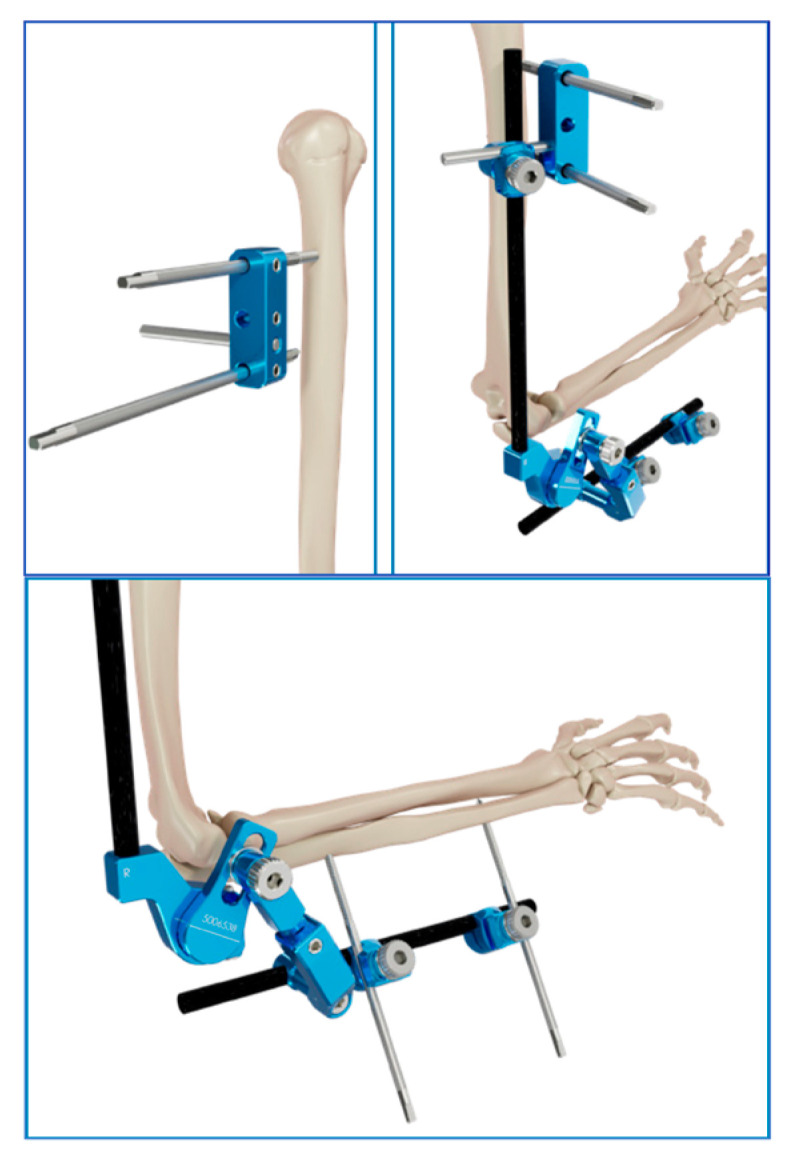 Figure 1
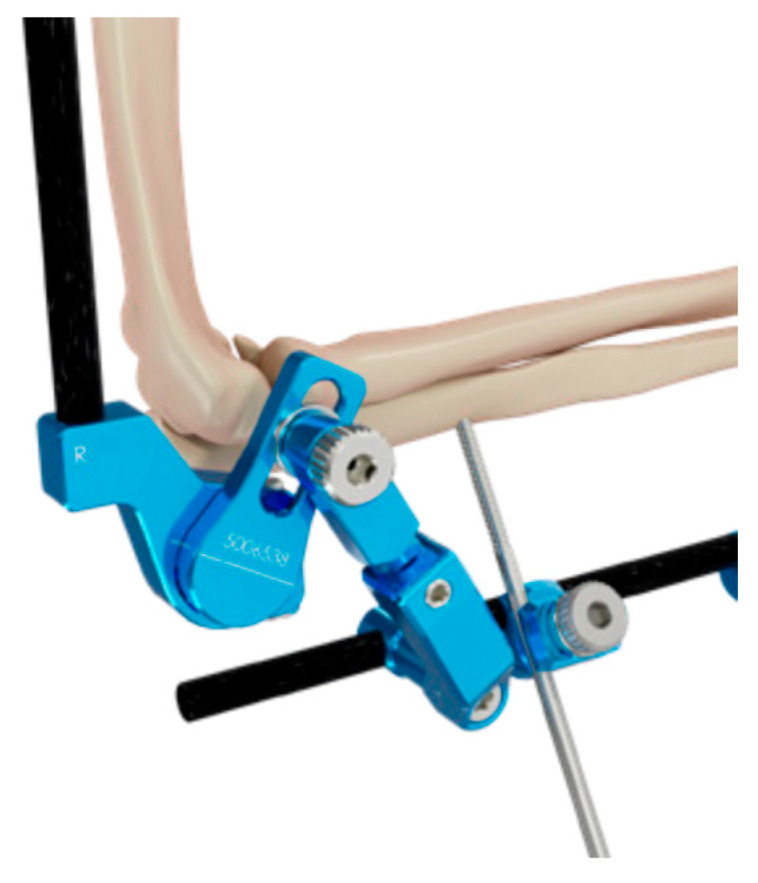 Figure 2
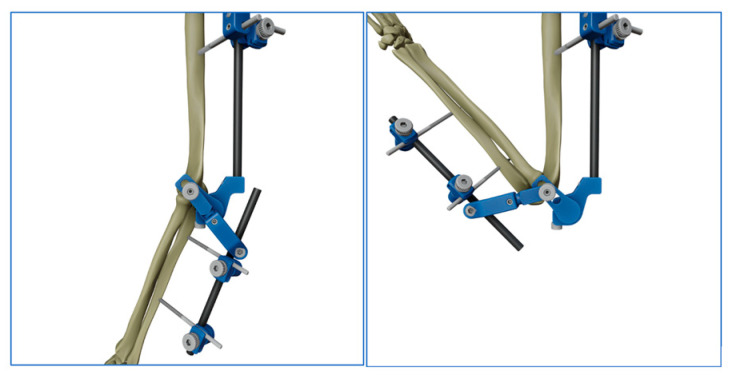 Figure 3
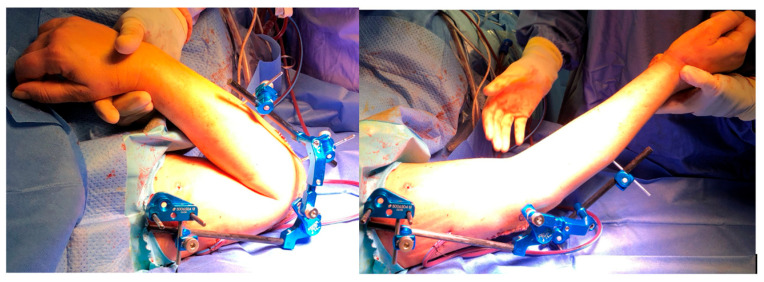 Figure 4
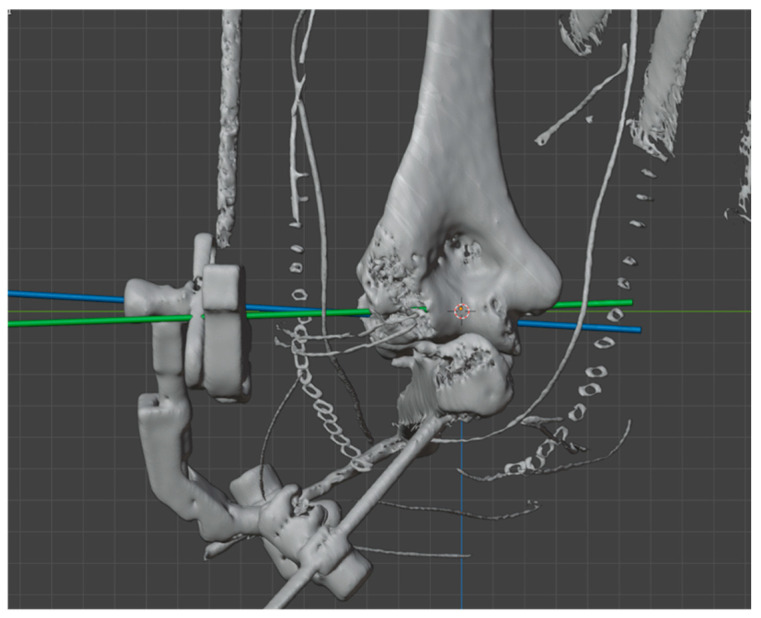 Figure 5
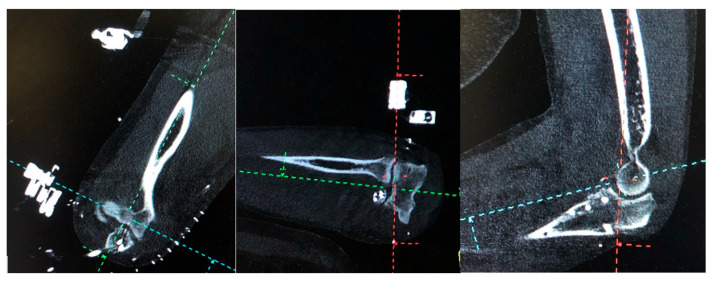 Figure 6
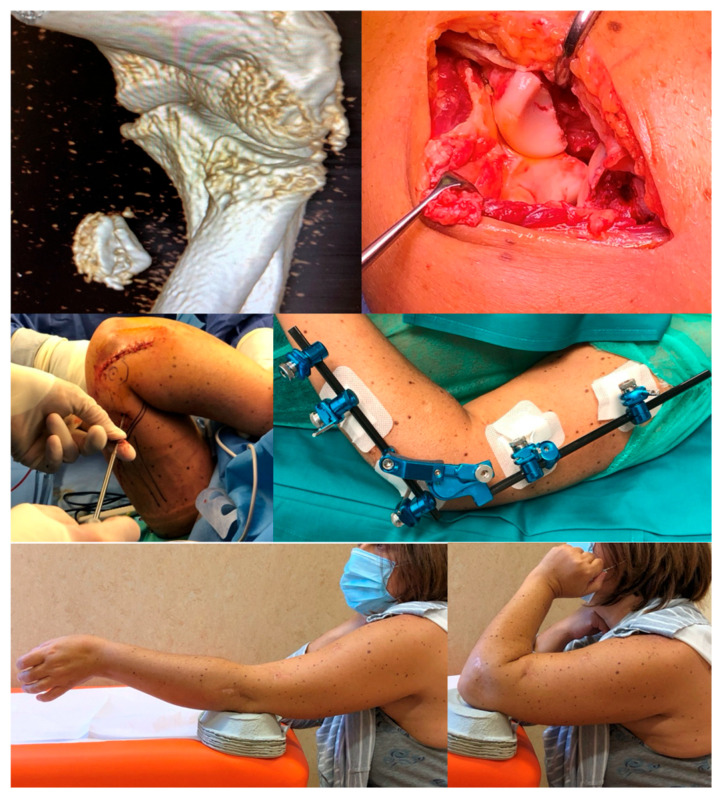 Figure 7
Peer Reviews
No public reviews on file for this paper yet. If you reviewed it on a platform where reviews are public (OpenReview, ICLR, NeurIPS, ICML), you can paste yours below so the community can read it here.
Videos
No videos yet. Explain this paper in a talk, walkthrough, or lecture? Add one.
Taxonomy
TopicsElbow and Forearm Trauma Treatment · Orthopedic Surgery and Rehabilitation · Shoulder Injury and Treatment