Ursolic Acid-Based Nutraceutical Mitigates Muscle Atrophy and Improves Exercise Performance in Mouse Model of Peripheral Neuropathy
Caterina Miro, Fortuna Iannuzzo, Lucia Acampora, Annunziata Gaetana Cicatiello, Serena Sagliocchi, Elisabetta Schiano, Annarita Nappi, Federica Restolfer, Mariano Stornaiuolo, Gian Carlo Tenore, Monica Dentice, Ettore Novellino

TL;DR
A natural compound from white grape pomace helps reduce muscle loss and improve physical performance in mice with nerve damage.
Contribution
WGPO, a source of ursolic acid, is shown to mitigate muscle atrophy and inflammation in a mouse model of peripheral neuropathy.
Findings
WGPO-fed mice had larger muscle fibers and reduced Atrogin-1 and Murf-1 expression.
WGPO improved exercise performance and reduced pro-inflammatory interleukins in injured mice.
Abstract
Peripheral nerve injuries, caused by trauma or iatrogenic damage, often lead to permanent disabilities with limited effectiveness of current therapeutic treatments. This has driven the growing interest toward natural bioactive molecules, including ursolic acid (UA). Literature studies have shown that white grape pomace oleolyte (WGPO), a natural source of UA, is a promising candidate for promoting peripheral nerve regeneration. Considering that many neurological injuries involve compression or partial damage, the present study examined the effects of WGPO on peripheral neuropathy using a neuropathic pain mouse model. Briefly, 14 days after starting the WGPO-enriched diet, mice underwent cuffing of the right sciatic nerve to induce nerve injury and inflammation. At sacrifice, the WGPO-fed mice exhibited reduced muscle atrophy, as indicated by a greater number and larger diameter of…
Genes, proteins, chemicals, diseases, species, mutations and cell lines named across the full text — each resolved to its canonical identifier and authoritative record.
Click any figure to enlarge with its caption.
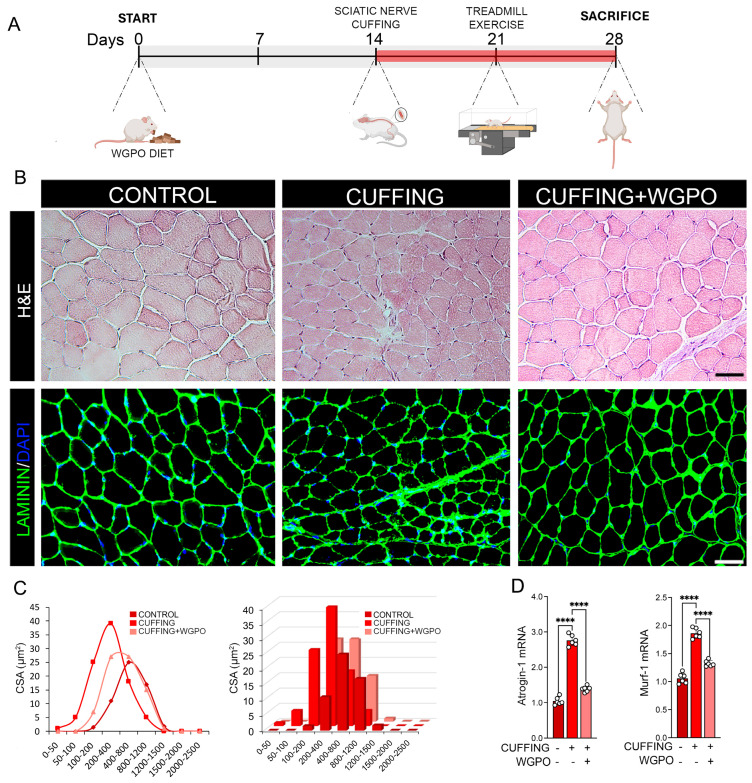 Figure 1
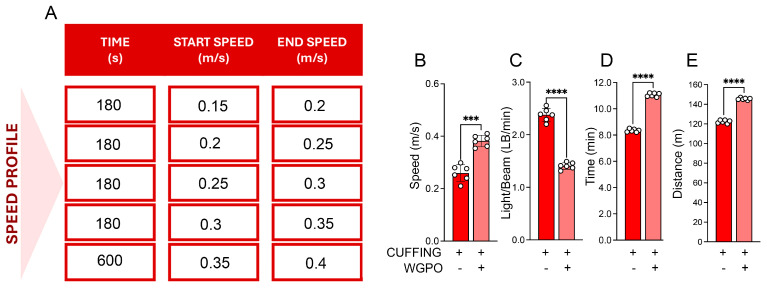 Figure 2
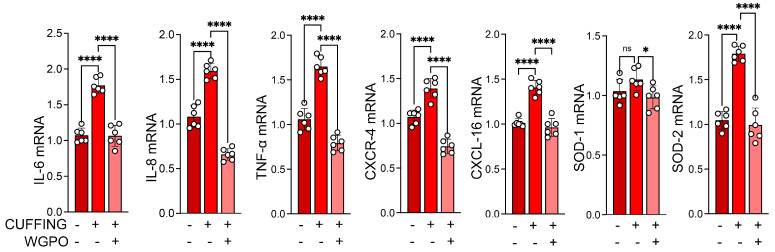 Figure 3
Peer Reviews
No public reviews on file for this paper yet. If you reviewed it on a platform where reviews are public (OpenReview, ICLR, NeurIPS, ICML), you can paste yours below so the community can read it here.
Videos
No videos yet. Explain this paper in a talk, walkthrough, or lecture? Add one.
Taxonomy
TopicsNatural product bioactivities and synthesis · Sirtuins and Resveratrol in Medicine · Antioxidant Activity and Oxidative Stress