Role of Electrically Evoked Muscle Hypertrophy on Spasticity in Persons with Spinal Cord Injury
Momal A. Wasim, Ahmad M. Alazzam, Ashraf S. Gorgey

TL;DR
This study found that electrically induced muscle growth in people with spinal cord injury did not worsen spasticity, suggesting it could be a safe way to build muscle without increasing stiffness.
Contribution
The study is the first to investigate whether electrically evoked muscle hypertrophy affects spasticity indices in individuals with chronic spinal cord injury.
Findings
Electrically induced muscle hypertrophy did not increase spasticity indices at different angular velocities.
Muscle hypertrophy was significantly greater in the NMES-RT+TT group compared to TT-only in leg lean mass and thigh CSA.
Extensor passive torque increased at higher angular velocities but did not significantly change spasticity indices.
Abstract
Study Design: Pilot randomized clinical trial. Objective: To examine the effect of electrically evoked muscle hypertrophy on indices of spasticity, as measured by Biodex after spinal cord injury (SCI). Setting: Medical research center. Methods: Thirteen males with chronic SCI were randomized into sixteen weeks of either surface neuromuscular resistance training (NMES-RT) + testosterone treatment (TT) (n = 7) or a TT-only group (n = 6). A Biodex isokinetic dynamometer was used to measure knee extensor and flexor muscle spasticity at the beginning (baseline; BL) and at the end (post-intervention; PI) of 16 weeks. The passive tension of the right knee extensor and flexor muscle groups were evaluated at angles of 5°, 30°, 60°, 90°, 180°, and 270° per second (sec). Dual energy X-ray absorptiometry and magnetic resonance imaging were used to measure leg lean mass and thigh muscle…
Genes, proteins, chemicals, diseases, species, mutations and cell lines named across the full text — each resolved to its canonical identifier and authoritative record.
Click any figure to enlarge with its caption.
 Figure 1
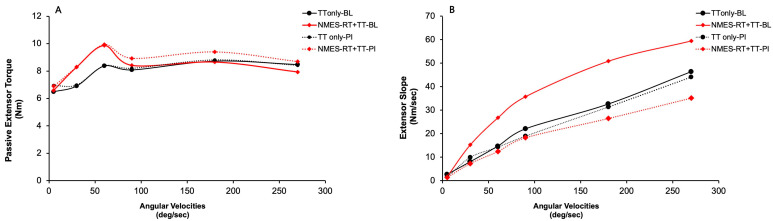 Figure 2
Peer Reviews
No public reviews on file for this paper yet. If you reviewed it on a platform where reviews are public (OpenReview, ICLR, NeurIPS, ICML), you can paste yours below so the community can read it here.
Videos
No videos yet. Explain this paper in a talk, walkthrough, or lecture? Add one.
Taxonomy
TopicsMuscle activation and electromyography studies · Cerebral Palsy and Movement Disorders · Botulinum Toxin and Related Neurological Disorders