SART1 uniquely localizes to spindle poles forming a SART1 cap and promotes spindle pole assembly
Hideki Yokoyama, Daniel Moreno-Andrés, Kaoru Takizawa, Zhenzhen Chu, Anja Scheufen, Tsumugi Funabashi, Jian Ma, Wolfram Antonin, Oliver J. Gruss, Yoshikazu Haramoto

TL;DR
SART1 is a protein that helps build spindle poles during cell division by recruiting specific proteins, both with and without centrosomes.
Contribution
SART1 is identified as a direct mitotic microtubule-associated protein that forms a novel 'SART1 cap' and promotes spindle pole assembly.
Findings
SART1 localizes to mitotic centrosomes and forms a unique 'SART1 cap' structure.
SART1 depletion causes spindle assembly defects and reduces PCM protein accumulation.
The N-terminus of SART1 is essential for microtubule binding and spindle assembly.
Abstract
The nuclear protein squamous cell carcinoma antigen recognized by T cells 1 (SART1) has been associated with pre-mRNA splicing, but SART1 RNAi knockdown results also in defects in mitotic progression, centrosome biogenesis, and chromosome cohesion. The mitotic roles of SART1 have not been characterized in detail, and it remains unclear whether SART1 functions in mitosis directly or indirectly via pre-mRNA splicing. Here, we identify SART1 as a direct, mitosis-specific microtubule-associated protein. SART1 downregulation in human cells leads to spindle assembly defects with reduced microtubule dynamics, end-on attachment defects, and checkpoint activation, while microtubule dynamics remain unaffected in interphase. SART1 uniquely localizes to the distal surface of mitotic centrosomes along the spindle axis, forming a previously not described structure we refer to as SART1 cap.…
Genes, proteins, chemicals, diseases, species, mutations and cell lines named across the full text — each resolved to its canonical identifier and authoritative record.
Click any figure to enlarge with its caption.
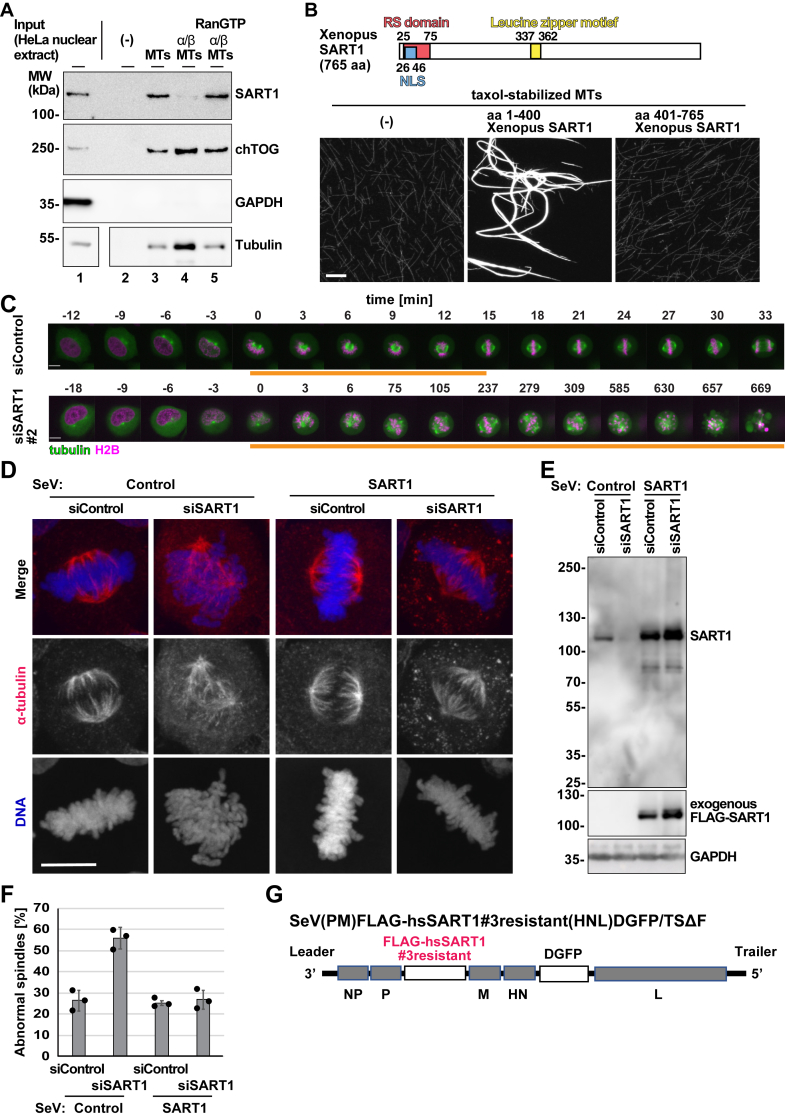 Figure 1
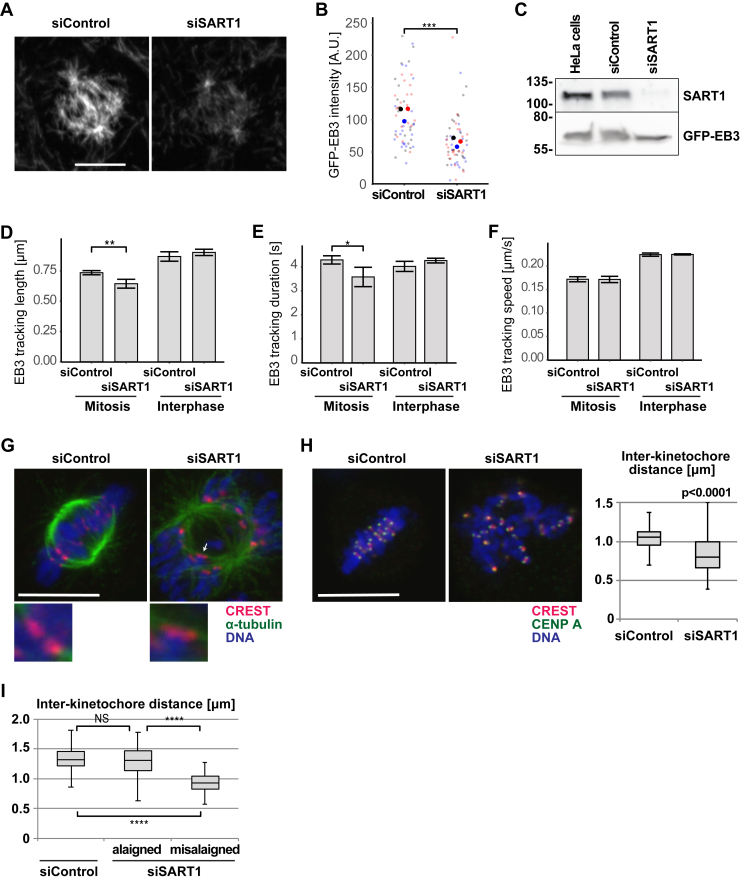 Figure 2
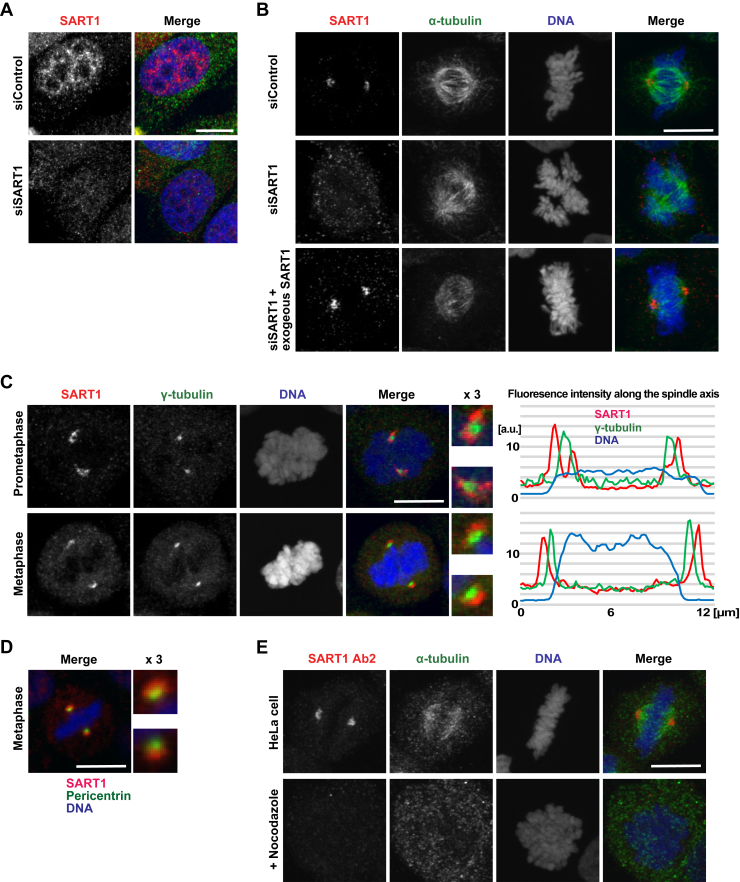 Figure 3
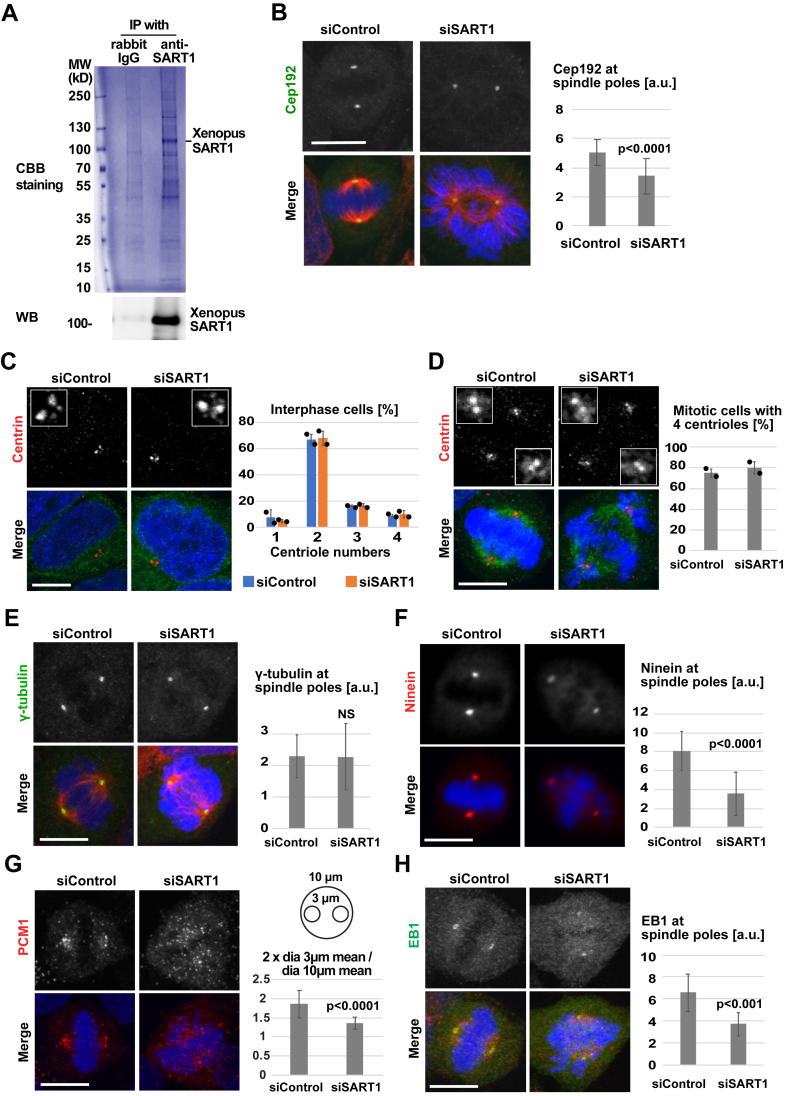 Figure 4
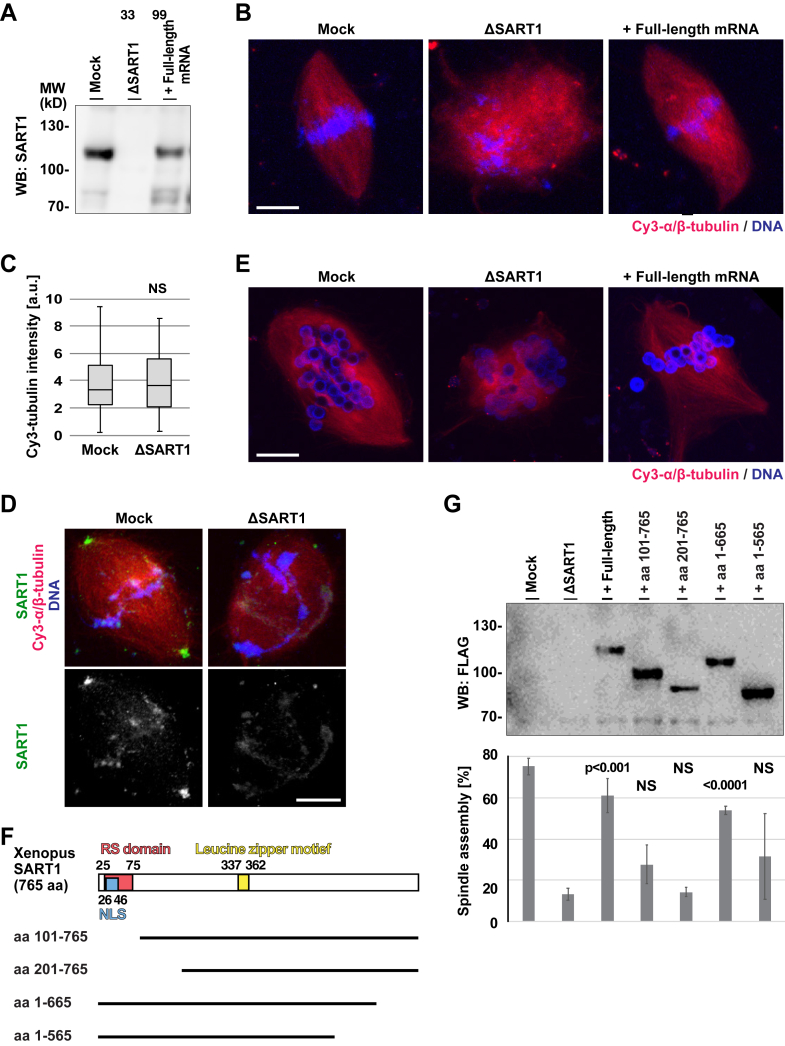 Figure 5
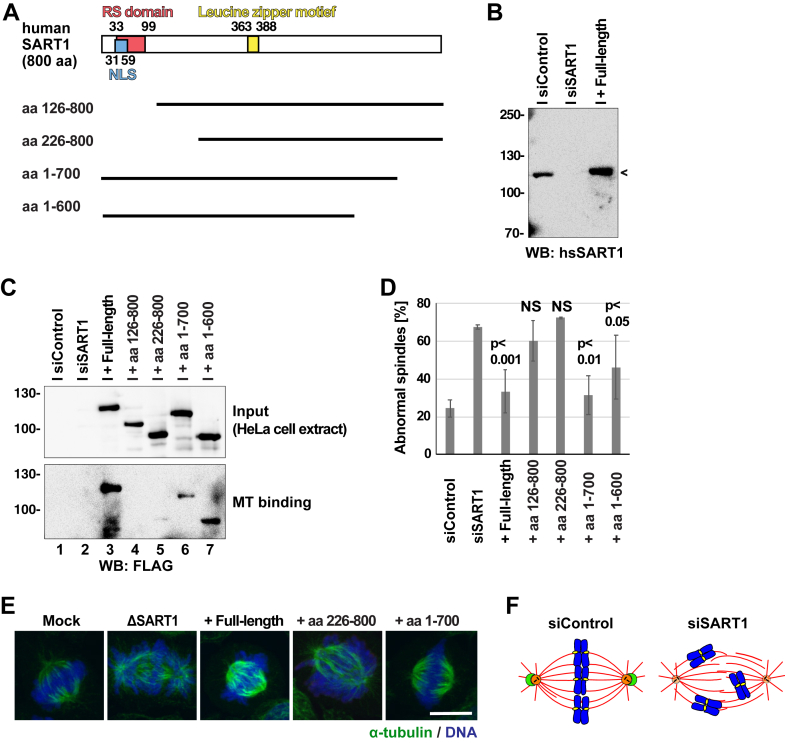 Figure 6
Peer Reviews
No public reviews on file for this paper yet. If you reviewed it on a platform where reviews are public (OpenReview, ICLR, NeurIPS, ICML), you can paste yours below so the community can read it here.
Videos
No videos yet. Explain this paper in a talk, walkthrough, or lecture? Add one.
Taxonomy
TopicsCellular Mechanics and Interactions · Cell Image Analysis Techniques · Microtubule and mitosis dynamics