The Prognostic Impact of Kidney Dysfunction in Unselected Patients Undergoing Coronary Angiography: In What Subgroups Does Kidney Dysfunction Matter?
Philipp Steinke, Ibrahim Akin, Lasse Kuhn, Thomas Bertsch, Kathrin Weidner, Mohammad Abumayyaleh, Jonas Dudda, Jonas Rusnak, Mahboubeh Jannesari, Fabian Siegel, Christel Weiß, Daniel Duerschmied, Michael Behnes, Tobias Schupp

TL;DR
This study shows that patients with kidney dysfunction who undergo coronary angiography face a higher risk of heart failure rehospitalization, especially in certain subgroups.
Contribution
The study identifies specific subgroups of patients with kidney dysfunction who are at increased risk of adverse outcomes after coronary angiography.
Findings
Patients with eGFR < 30 mL/min/1.73 m2 had an 80.1% prevalence of CAD and a 39.5% prevalence of three-vessel CAD.
Those with eGFR < 30 mL/min/1.73 m2 had a 3.2-fold higher risk of HF-related rehospitalization compared to those with eGFR ≥ 60.
The risk of HF rehospitalization was most pronounced in patients with eGFR < 30 and decompensated HF with LVEF < 35%.
Abstract
Background/Objectives: In recent decades, shifting demographics and advancements in treating cardiovascular disease have altered the types of patients receiving coronary angiography (CA). However, data investigating the impact of kidney dysfunction stratified by the indication for CA are limited. Methods: Consecutive patients who underwent invasive CA at one institution between 2016 and 2022 were included in this study. Firstly, the prevalence and extent of coronary artery disease (CAD) in patients with different levels of kidney function was assessed. Secondly, the study examined how impaired kidney function affected long-term outcomes—specifically the risk of rehospitalization for heart failure (HF), acute myocardial infarction (AMI), or the need for coronary revascularization—at 36 months of follow-up. Results: A total of 7624 patients undergoing CA were included with a median…
Genes, proteins, chemicals, diseases, species, mutations and cell lines named across the full text — each resolved to its canonical identifier and authoritative record.
Click any figure to enlarge with its caption.
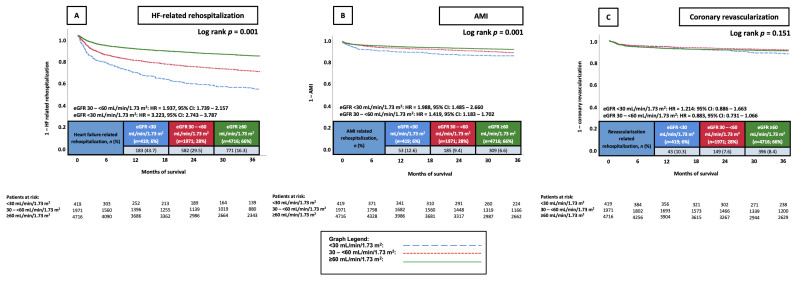 Figure 1
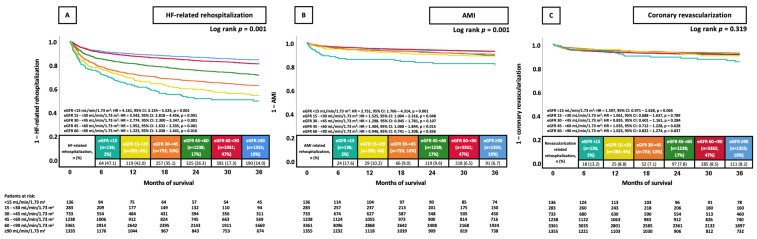 Figure 2
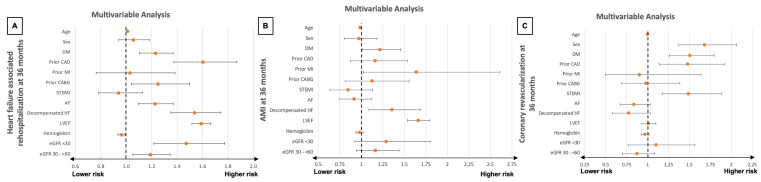 Figure 3
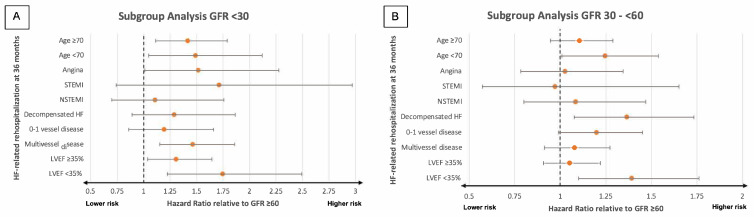 Figure 4
Peer Reviews
No public reviews on file for this paper yet. If you reviewed it on a platform where reviews are public (OpenReview, ICLR, NeurIPS, ICML), you can paste yours below so the community can read it here.
Videos
No videos yet. Explain this paper in a talk, walkthrough, or lecture? Add one.
Taxonomy
TopicsRenal and Vascular Pathologies · Cardiac Imaging and Diagnostics · Acute Kidney Injury Research