Identification of UDP-dependent glycosyltransferases in the wallflower cardenolide biosynthesis pathway
Owen S. Patrick, Gordon C. Younkin, Rebecca G. Brody, Jessica W. Hem, Georg Jander, Cynthia K. Holland

TL;DR
Researchers identified two enzymes involved in making cardenolides, plant compounds with potential medical uses, by studying a specific plant's genetic data.
Contribution
The first plant-derived UDP-dependent glycosyltransferases specific to cardenolide biosynthesis are identified.
Findings
UGT73C44 efficiently glucosylates digitoxigenin with a low Km value of 7.0 μM.
UGT73C45 shows broader substrate specificity, acting on steroids and flavonoids.
Structural differences in UGT73C44 and UGT73C45 explain their distinct substrate specificities.
Abstract
Cardenolides are potent plant-defensive metabolites that have been studied for decades for their significance in plant–insect interactions and their use in treating heart failure in humans. With recent advancements in genome and transcriptome sequencing, genes in the cardenolide biosynthetic pathway have begun to be identified. Here we employed gene co-expression network analysis using published data from the cardenolide-producing plant Erysimum cheiranthoides (wormseed wallflower) to identify two UDP-dependent glycosyltransferases, UGT73C44 and UGT73C45, that are capable of glucosylating the aglycone cardenolide digitoxigenin as well as other predicted cardenolide pathway intermediates. In vitro and in planta assays revealed that UGT73C44 acted on cardenolide pathway intermediates with a low Km value of 7.0 μM for digitoxigenin, while UGT73C45 displayed broader substrate specificity in…
Genes, proteins, chemicals, diseases, species, mutations and cell lines named across the full text — each resolved to its canonical identifier and authoritative record.
Click any figure to enlarge with its caption.
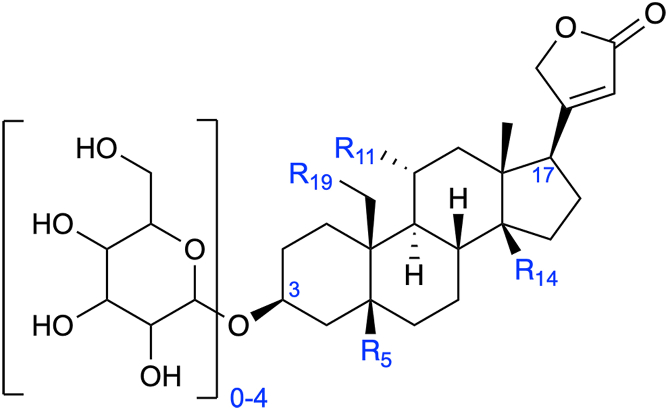 Figure 1
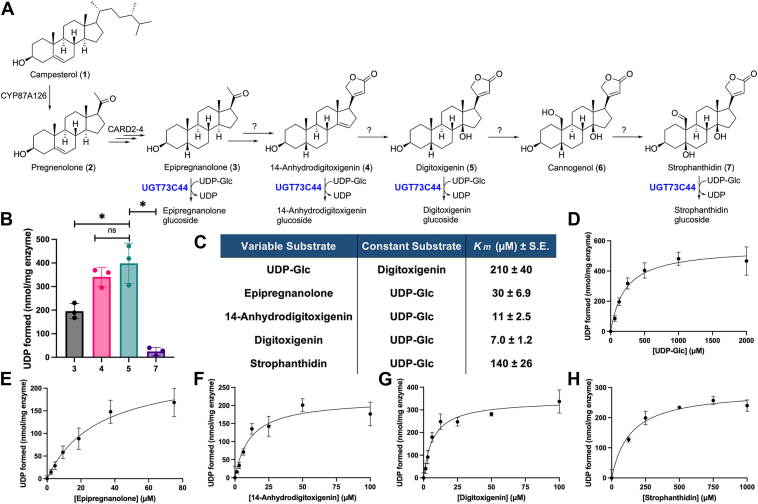 Figure 2
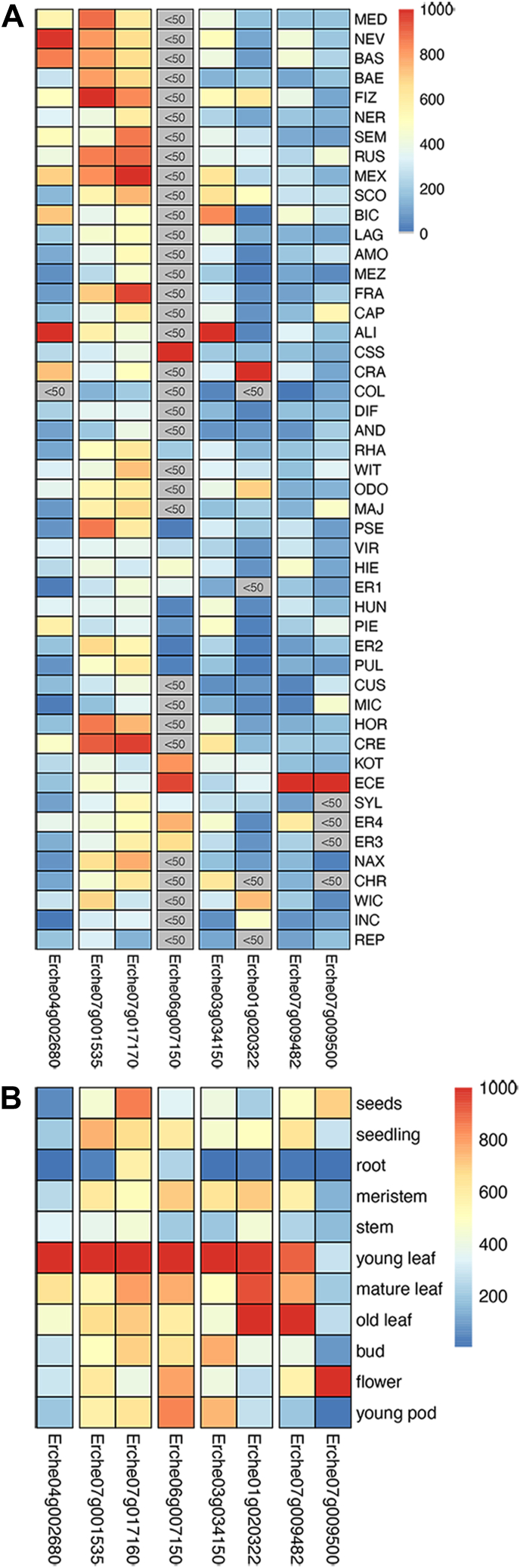 Figure 3
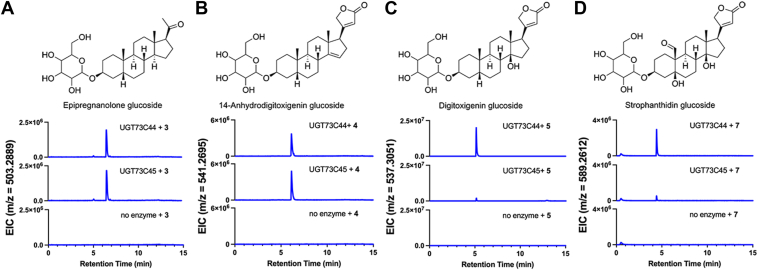 Figure 4
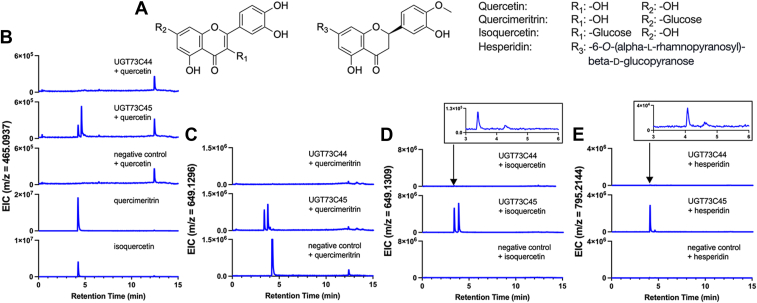 Figure 5
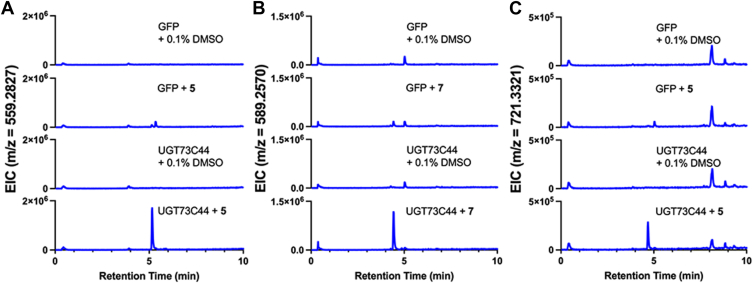 Figure 6
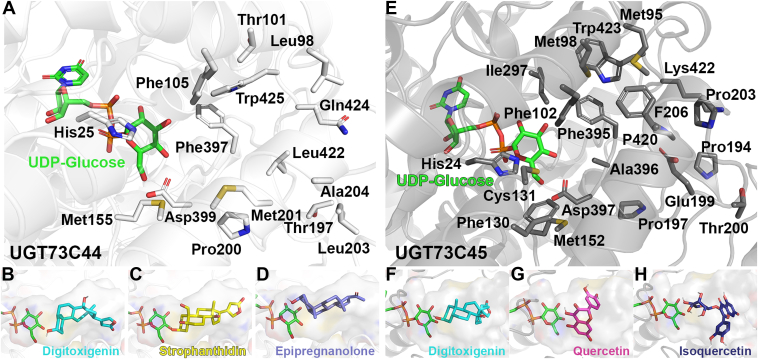 Figure 7
Peer Reviews
No public reviews on file for this paper yet. If you reviewed it on a platform where reviews are public (OpenReview, ICLR, NeurIPS, ICML), you can paste yours below so the community can read it here.
Videos
No videos yet. Explain this paper in a talk, walkthrough, or lecture? Add one.
Taxonomy
TopicsMicrobial Metabolites in Food Biotechnology · Plant biochemistry and biosynthesis · Phytochemistry and Biological Activities