A Novel Framework for the Design of Minimized Epigenetic Clocks Using the Analysis of DNA Methylation Heterogeneity
Stanislav E. Romanov, Dmitry I. Karetnikov, Darya A. Kalashnikova, Denis E. Polivcev, Yakov A. Osipov, Daniil A. Maksimov, Polina A. Antoshina, Viktor V. Shloma, Ekaterina M. Samoilova, Alina A. Ivanova, Rustam F. Karimov, Artem N. Tkalin, Alexander A. Shevchenko

TL;DR
This paper introduces a new framework for creating cost-effective, customized epigenetic clocks by analyzing DNA methylation heterogeneity in mesenchymal stem cells.
Contribution
The study proposes a novel strategy for designing epigenetic clocks using targeted bisulfite sequencing and methylation heterogeneity.
Findings
A minimized eAge model achieved good performance (MAE 1.094 and R2 0.897) in predicting cell passage.
Combining average methylation levels with heterogeneity scores improves epigenetic clock quality.
Targeted BS-seq enables analysis of longitudinal methylation changes for aging assessment.
Abstract
Despite the significant progress made in the development of epigenetic age (eAge) clocks designed to estimate the various aspects of aging, currently available models, generated using large DNA methylation microarray datasets, still cannot fully address the issues of batch effects and technical variation. This hinders the use of the publicly available eAge clocks in routine laboratory practice, and it motivates the development of cost-effective, custom epigenetic clocks that are tailored to the given biological subjects and research methods. In this study, we analyzed the local DNA methylation of mesenchymal stem cell samples during culture expansion using high-throughput targeted bisulfite sequencing (BS-seq). Using the obtained data, we trained a minimized eAge model based on a Random Forest Regression with Leave-One-Out Cross-Validation, which determines cell passage with good…
Genes, proteins, chemicals, diseases, species, mutations and cell lines named across the full text — each resolved to its canonical identifier and authoritative record.
Click any figure to enlarge with its caption.
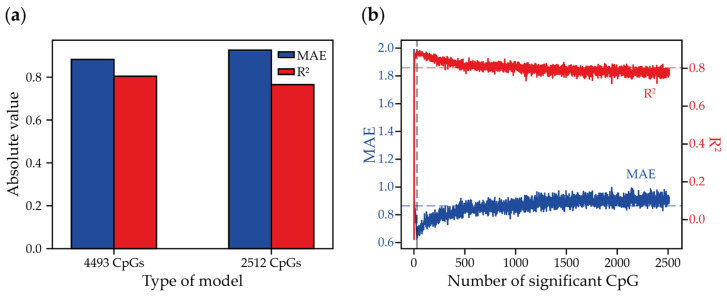 Figure 1
 Figure 2
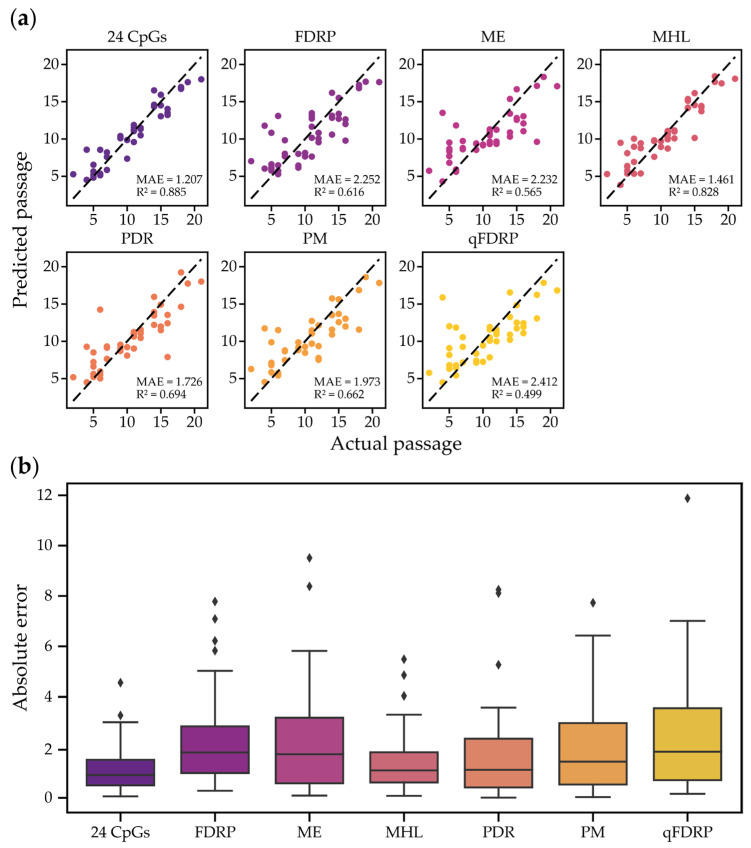 Figure 3
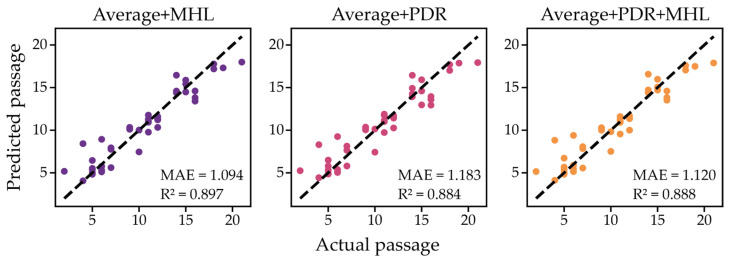 Figure 4
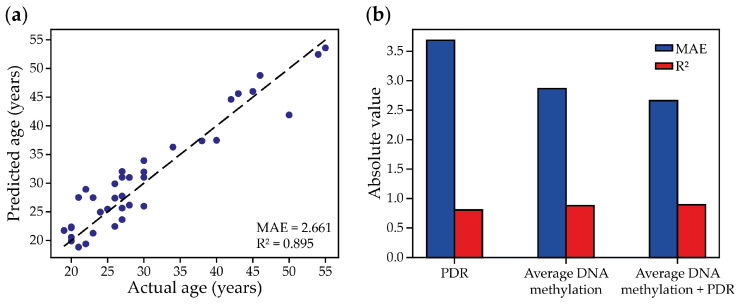 Figure 5
Peer Reviews
No public reviews on file for this paper yet. If you reviewed it on a platform where reviews are public (OpenReview, ICLR, NeurIPS, ICML), you can paste yours below so the community can read it here.
Videos
No videos yet. Explain this paper in a talk, walkthrough, or lecture? Add one.
Taxonomy
TopicsEpigenetics and DNA Methylation · Genetic Syndromes and Imprinting