Inhibiting the TGF-β1 Pathway Reduces the Aggressiveness of Intrahepatic CCA HuCCT1 CD90-Positive Cells
Elena Pizzuto, Serena Mancarella, Isabella Gigante, Grazia Serino, Francesco Dituri, Emanuele Piccinno, Isabel Fabregat, Gianluigi Giannelli

TL;DR
Inhibiting the TGF-β1 pathway reduces the aggressive behavior of CD90-positive intrahepatic cholangiocarcinoma cells and improves response to chemotherapy.
Contribution
The study identifies CD90 as a marker of aggressive cancer behavior and shows that combining TGF-β1 inhibition with chemotherapy enhances treatment effectiveness.
Findings
HuCCT1/CD90+ cells are more proliferative and resistant to Gemcitabine compared to CD90− cells.
Combining Gemcitabine with Galunisertib, a TGF-β1 inhibitor, synergistically reduces CD90+ cell proliferation.
CD90+ cells express lower TGF-β1 levels but show increased resistance to chemotherapy.
Abstract
Molecular mechanisms responsible for the poor prognosis in patients with intrahepatic cholangiocarcinoma (CCA) are still unknown, but stem cell marker Cluster Differentiation 90 (CD90) has been reported to be associated with a more aggressive cancer phenotype. In this scenario, the TGF-β1 signaling pathway likely has a role as master gene regulator. Aim of the study is to investigate the role of CD90 in iCCA aggressiveness. The molecular profile of HuCCT1/CD90+ and HuCCT1/CD90− cells was obtained through transcriptomic analysis (NGS). Bioinformatic data were confirmed in both cell lines by qRT-PCR and Western blot. Cells were treated with Gemcitabine in monotherapy or in combination with Galunisertib, a selective inhibitor of TGF-βRI, in 2D and 3D models. HuCCT1/CD90+ cells are more proliferative, less migratory, and resistant to Gemcitabine treatment. HuCCT1/CD90+ cells also express…
Genes, proteins, chemicals, diseases, species, mutations and cell lines named across the full text — each resolved to its canonical identifier and authoritative record.
Click any figure to enlarge with its caption.
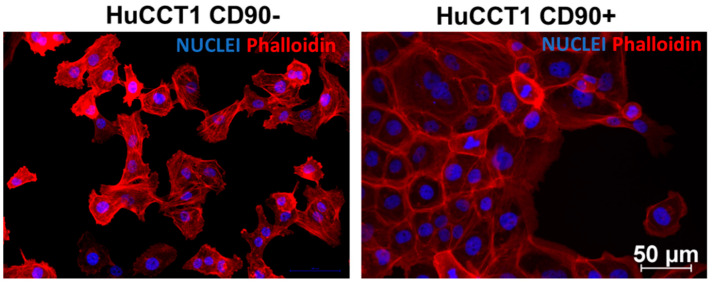 Figure 1
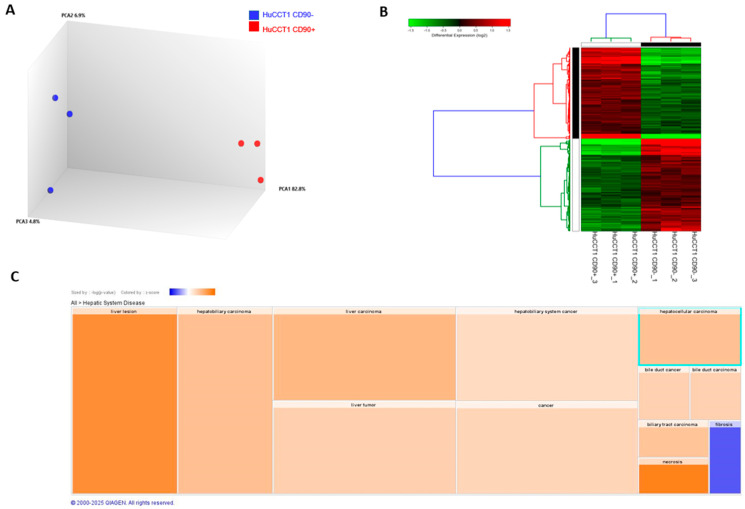 Figure 2
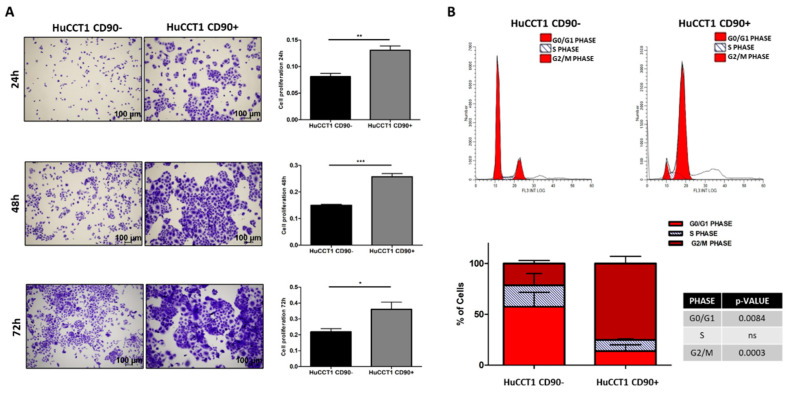 Figure 3
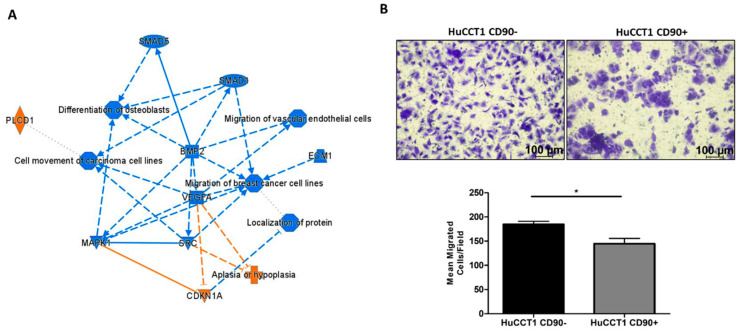 Figure 4
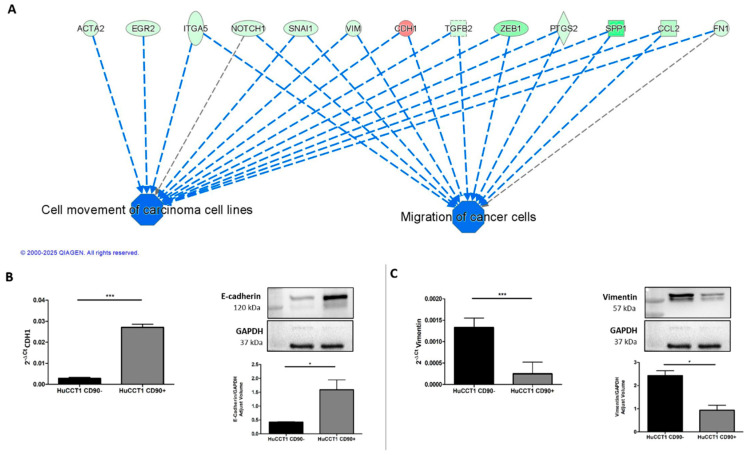 Figure 5
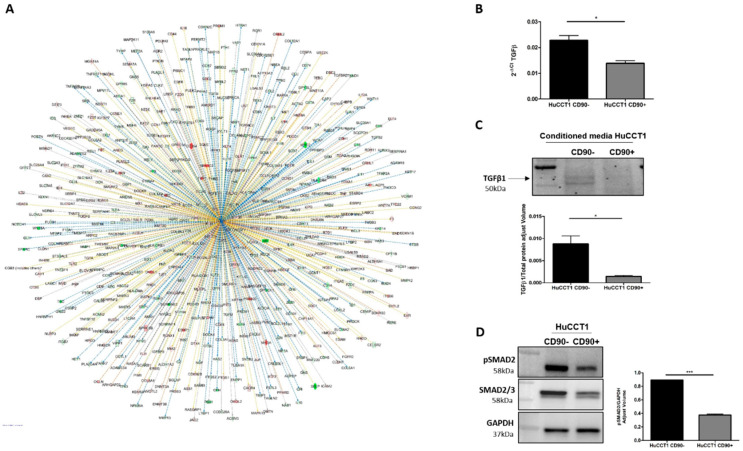 Figure 6
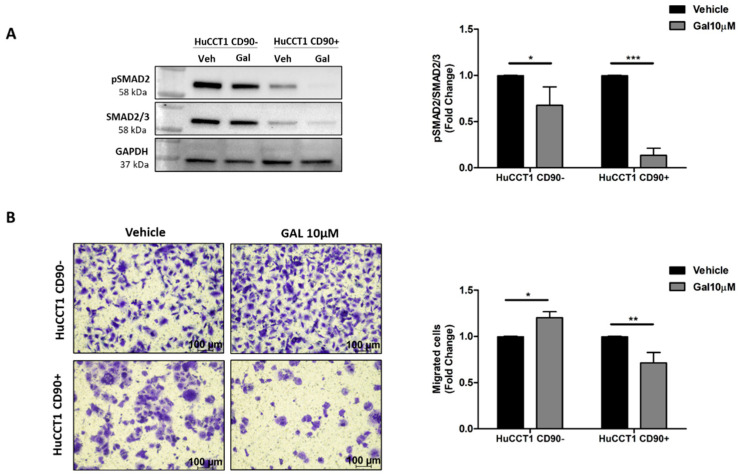 Figure 7
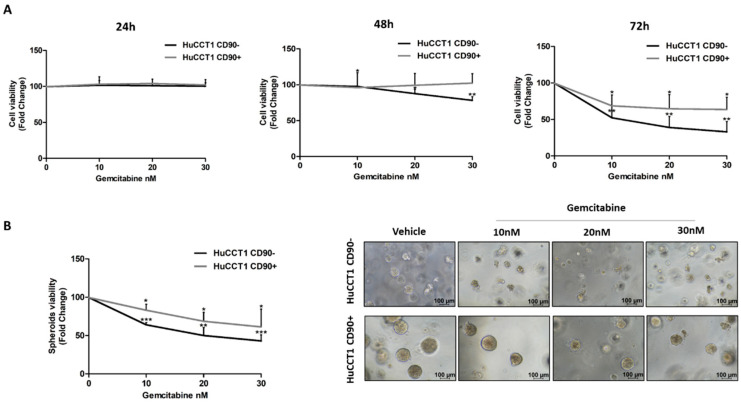 Figure 8
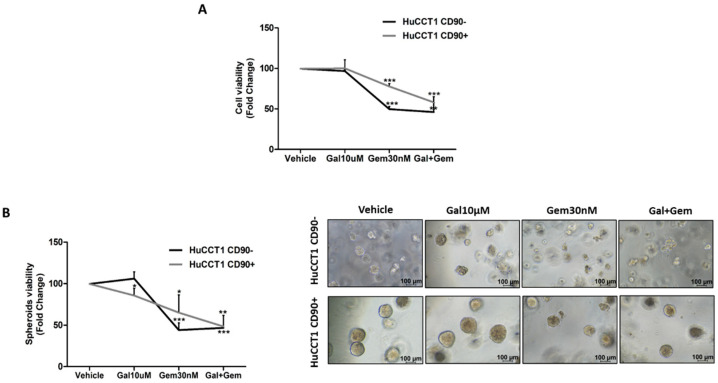 Figure 9
Peer Reviews
No public reviews on file for this paper yet. If you reviewed it on a platform where reviews are public (OpenReview, ICLR, NeurIPS, ICML), you can paste yours below so the community can read it here.
Videos
No videos yet. Explain this paper in a talk, walkthrough, or lecture? Add one.
Taxonomy
TopicsCholangiocarcinoma and Gallbladder Cancer Studies · Pancreatic and Hepatic Oncology Research · Cancer Mechanisms and Therapy