Phenethyl Acetate as an Agonist of Insect Odorant Receptor Co-Receptor (Orco): Molecular Mechanisms and Functional Insights
Myungmi Moon, Jihwon Yun, Minsu Pyeon, Jeongyeon Yun, Jaehui Yang, Hye Duck Yeom, Geonu Lee, Yong-Seok Choi, Jaehyeong Lee, Junho H. Lee

TL;DR
This study shows that phenethyl acetate activates insect odorant receptors, particularly the conserved Orco co-receptor, offering potential for pest control.
Contribution
The study identifies specific residues in Orco critical for phenethyl acetate binding and activation, revealing molecular mechanisms for a novel insect-specific agonist.
Findings
Phenethyl acetate activates Orco homomers and Ors/Orco heteromers in a concentration-dependent and reversible manner.
Molecular docking and mutagenesis identified W146 and E153 as key residues for phenethyl acetate binding and activation.
A double mutant of Orco (W146A + E153A) showed significantly reduced activation by phenethyl acetate.
Abstract
The insect olfactory system is vital for survival, enabling the recognition and discrimination of a wide range of odorants present in the environment. This process is mediated by odorant receptors (Ors) and the highly conserved co-receptor Orco. Insect Ors are structurally distinct from mammalian olfactory receptors, a divergence that presents unique advantages for developing insect-specific pest control strategies. In this study, we explored the molecular-level interactions between insect Ors and volatile organic compounds. Specifically, we investigated the response of Ors/Orco to phenethyl acetate (PA), a volatile compound found in the culture media of acetic acid bacteria. PA elicited activation in a concentration-dependent, reversible, and voltage-independent manner in Or1a, Or24a, and Or35a when combined with Orco, as well as in Orco homomers. Through molecular docking studies, we…
Genes, proteins, chemicals, diseases, species, mutations and cell lines named across the full text — each resolved to its canonical identifier and authoritative record.
Click any figure to enlarge with its caption.
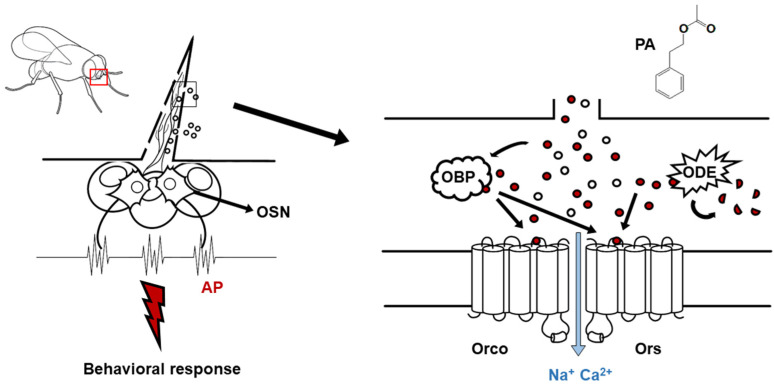 Figure 1
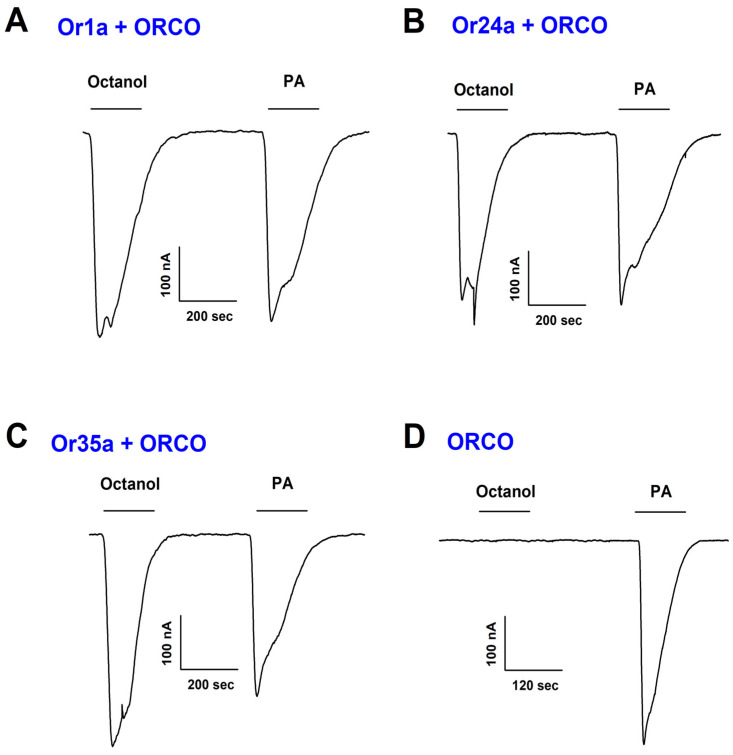 Figure 2
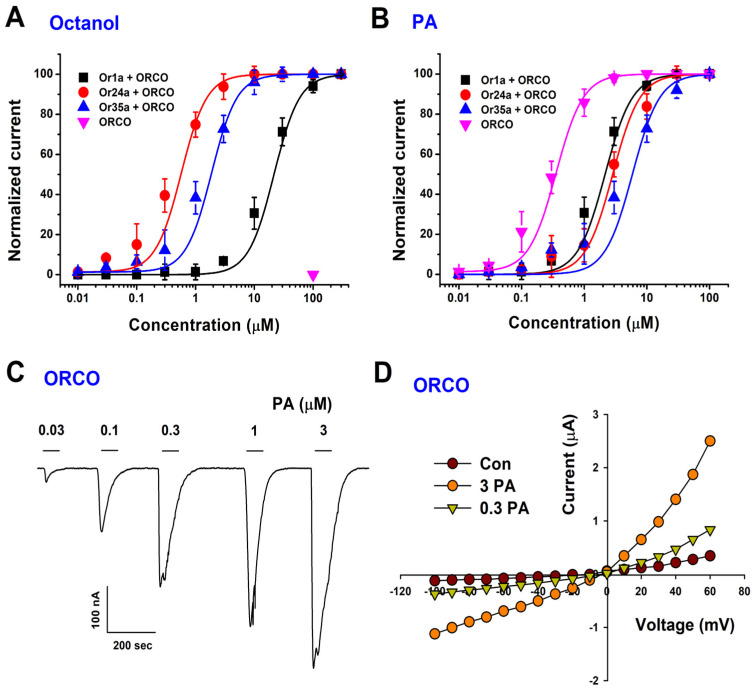 Figure 3
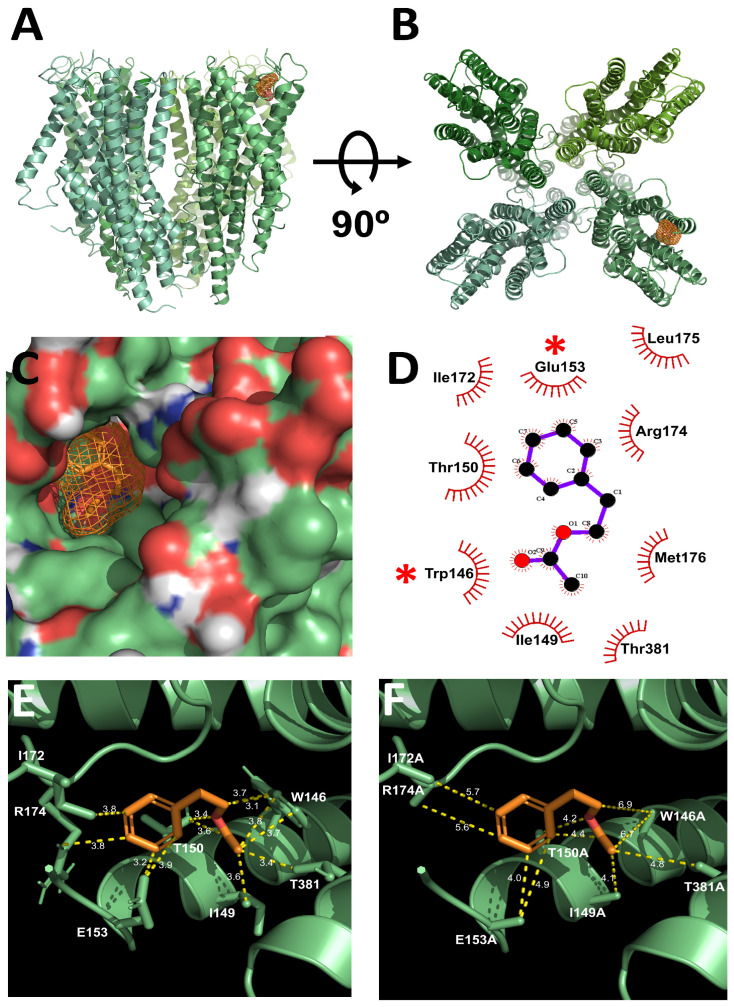 Figure 4
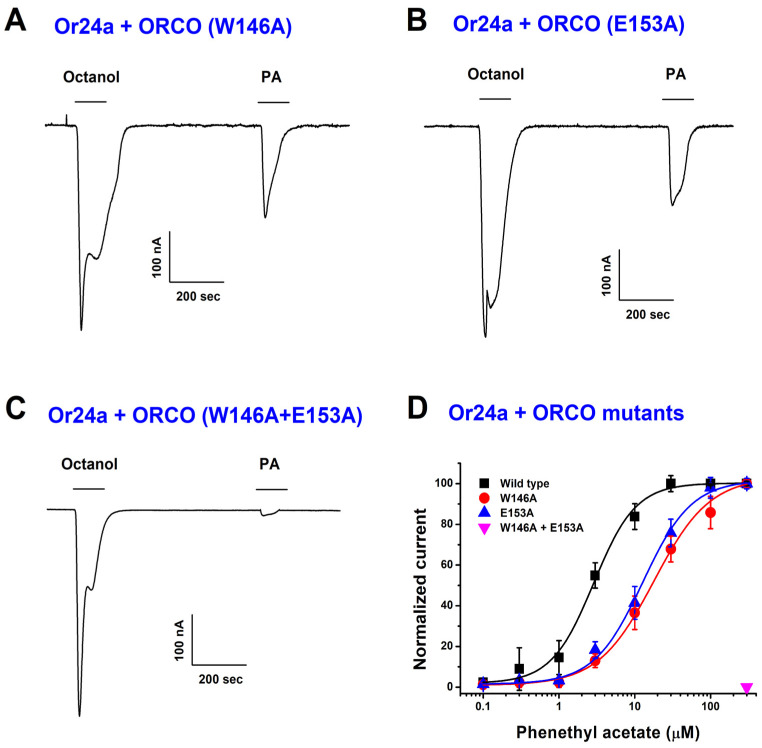 Figure 5
Peer Reviews
No public reviews on file for this paper yet. If you reviewed it on a platform where reviews are public (OpenReview, ICLR, NeurIPS, ICML), you can paste yours below so the community can read it here.
Videos
No videos yet. Explain this paper in a talk, walkthrough, or lecture? Add one.
Taxonomy
TopicsNeurobiology and Insect Physiology Research · Insect Utilization and Effects · Insect and Pesticide Research