Association of Functional Gene Variants in DYSF–ZNF638, MTSS1 and Ferroptosis-Related Genes with Multiple Sclerosis Severity and Target Gene Expression
Tamara Djuric, Ana Djordjevic, Jovana Kuveljic, Milan Stefanovic, Evica Dincic, Ana Kolakovic, Maja Zivkovic

TL;DR
This study explores how specific gene variants may influence the severity of multiple sclerosis and how they relate to gene expression and disease progression.
Contribution
The study identifies novel sex-specific associations between gene variants and MS progression, and links these variants to gene expression and clinical severity.
Findings
The rare MAP1B rs62363242 allele is significantly associated with progressive MS in females, independent of HLA-DRB1*15:01.
CDKN1A haplotypes are associated with mRNA levels in relapsing-remitting and secondary progressive MS patients.
Variants in RAB4B-EGLN2 and DYSF-ZNF638 are linked to clinical severity measures like EDSS and MSSS.
Abstract
Multiple sclerosis (MS) is a chronic inflammatory, neurodegenerative disease with yet-unresolved mechanisms of progression. To address MS severity and neurological deficits, we analyzed seven potentially functional genetic variants and their haplotypes in 845 MS patients. Based on our previous results of targeted RNAseq on ferroptosis-related genes in distinctive MS phenotypes, we selected putative regulatory variants in the top three DEGs (CDKN1A, MAP1B and EGLN2) and investigated their association with gene expression, plasma/serum parameters and disease severity (EDSS, MSSS, gARMSS). The study included 604 patients with relapsing–remitting (RR) and 241 with progressive (P) MS. The variants CDKN1A rs3176326 and rs3176336, EGLN2 rs111833532, MAP1B rs62363242 and rs1217817 with the previously reported DYSF-ZNF638 locus rs10191329, and MTSS1 rs9643199 were genotyped using TaqMan®, and…
Genes, proteins, chemicals, diseases, species, mutations and cell lines named across the full text — each resolved to its canonical identifier and authoritative record.
Click any figure to enlarge with its caption.
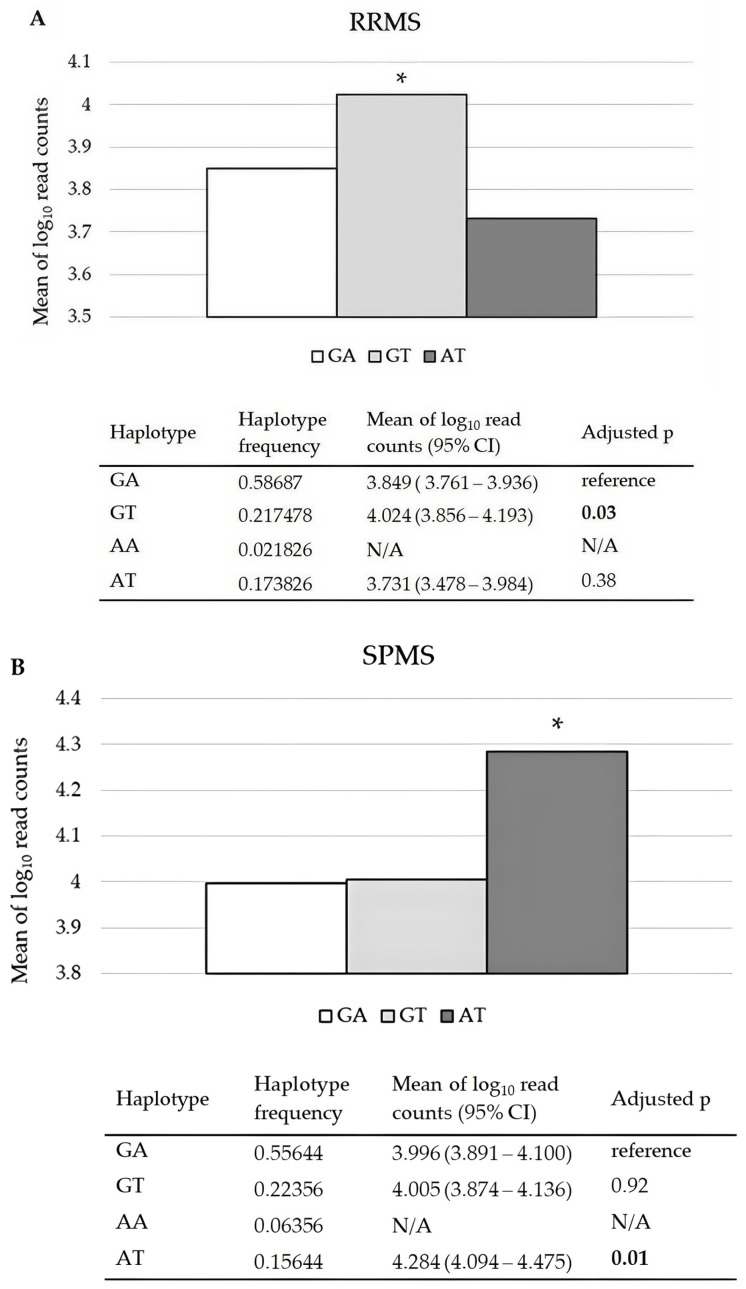 Figure 1
Peer Reviews
No public reviews on file for this paper yet. If you reviewed it on a platform where reviews are public (OpenReview, ICLR, NeurIPS, ICML), you can paste yours below so the community can read it here.
Videos
No videos yet. Explain this paper in a talk, walkthrough, or lecture? Add one.
Taxonomy
TopicsCancer-related molecular mechanisms research · RNA Research and Splicing · RNA modifications and cancer