Morphological Alterations of Conal Ridges and Differential Expression of AP2α in the Offspring Hearts of Experimental Diabetic Rats
Tania Cristina Ramírez-Fuentes, Ricardo Jaime-Cruz, Carlos César Patiño-Morales, Laura Villavicencio-Guzmán, Juan Carlos Corona, María Cristina Revilla-Monsalve, Rosa Adriana Jarillo-Luna, Marcela Salazar-García

TL;DR
This study shows that a high-glucose environment during pregnancy causes heart defects in rat offspring by altering conal ridge development and AP2α expression.
Contribution
The study identifies AP2α expression changes and conal ridge morphological alterations as novel indicators of heart defects caused by maternal hyperglycemia.
Findings
Hearts of offspring in the experimental group showed smaller dimensions compared to controls at 13, 15, and 17 DPC.
Hyperglycemia altered AP2α immunostaining in offspring hearts at all three developmental stages.
Conotruncal heart defects, including double outlet of the right ventricle and AV canal, were prominent in hyperglycemic offspring.
Abstract
Neural crest cells (NCCs) play a significant role in the development of ventricular outflow tracts (OFTs), and cardiac neural crest cells (cNCCs) are involved in the development of the embryonic conus, suggesting that these cell lineages may be a teratogenic target for the development of cardiopathies in offspring conceived under a hyperglycemic environment. We evaluate the effect of the hyperglycemic intrauterine environment on the morphological and anatomical changes in the conal ridges along with the alterations in the spatiotemporal expression of AP2α in offspring hearts at 13, 15, and 17 DPC. The anatomical and histological analysis of the hearts in the experimental group presented smaller dimensions compared to the control group in the offspring at the three ages studied. Consequently, this resulted in a hyperglycemic environment that altered the immunostaining of AP2α in the…
Genes, proteins, chemicals, diseases, species, mutations and cell lines named across the full text — each resolved to its canonical identifier and authoritative record.
Click any figure to enlarge with its caption.
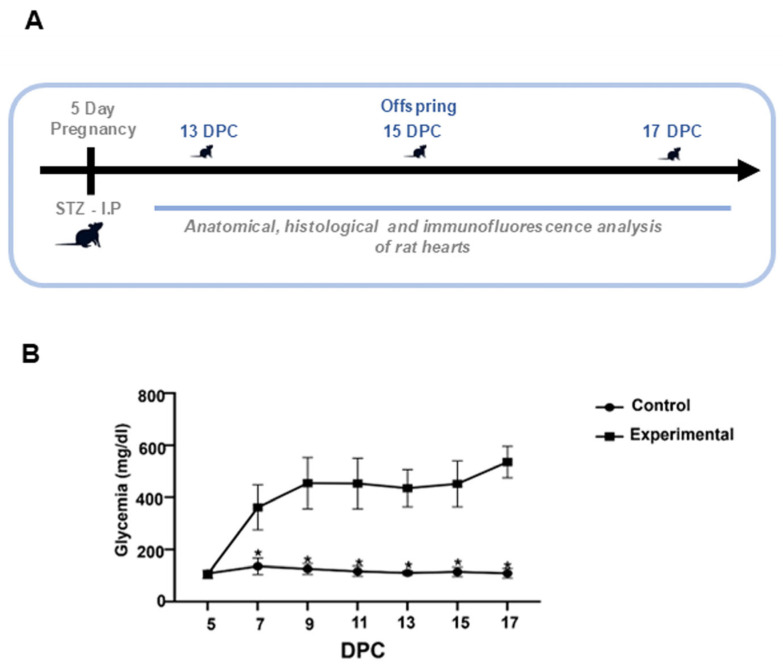 Figure 1
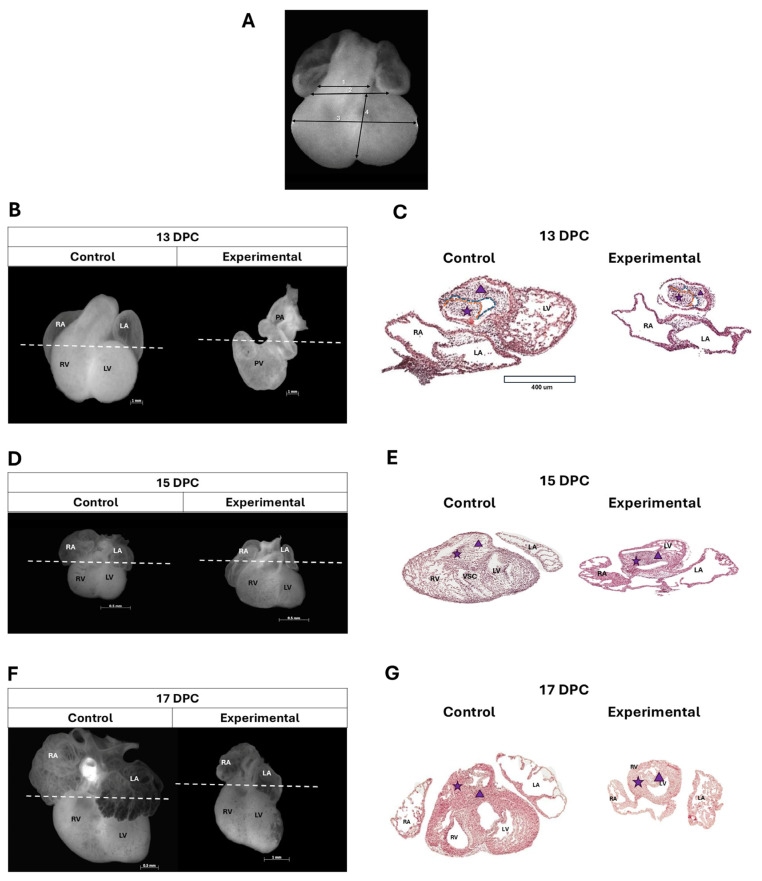 Figure 2
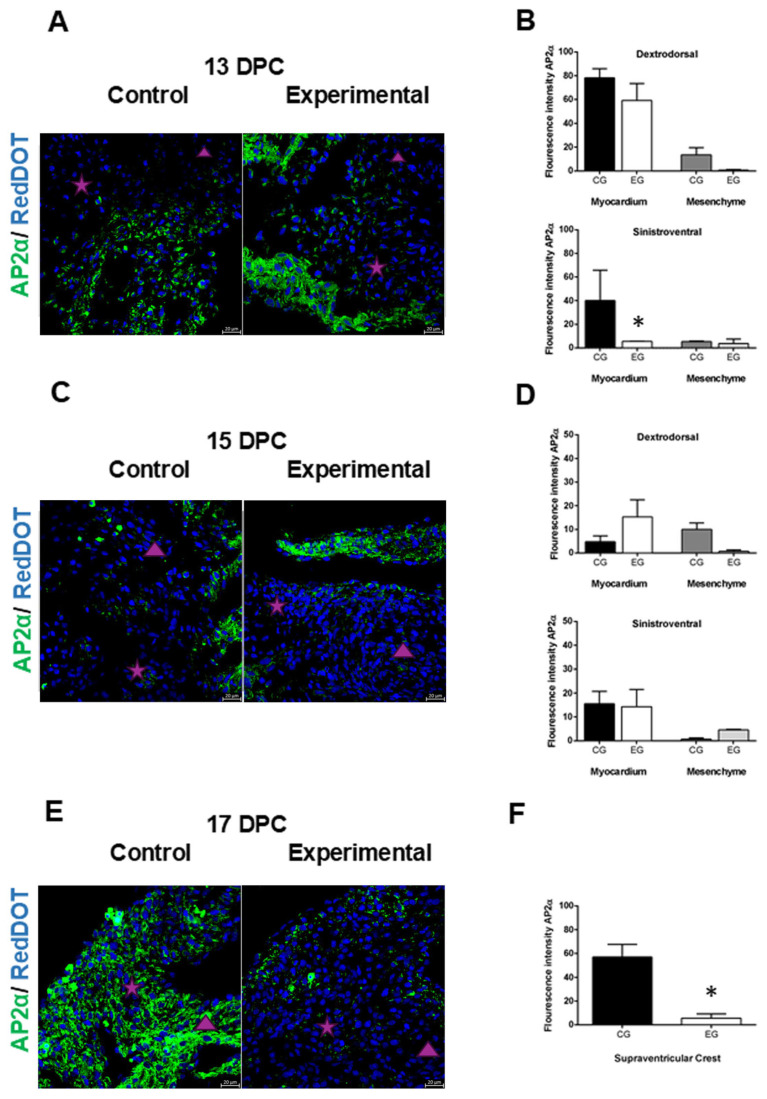 Figure 3
Peer Reviews
No public reviews on file for this paper yet. If you reviewed it on a platform where reviews are public (OpenReview, ICLR, NeurIPS, ICML), you can paste yours below so the community can read it here.
Videos
No videos yet. Explain this paper in a talk, walkthrough, or lecture? Add one.
Taxonomy
TopicsCongenital heart defects research · Congenital Heart Disease Studies · Congenital Anomalies and Fetal Surgery