The effects of broadband elicitor duration on transient-evoked otoacoustic emissions and a psychoacoustic measure of gain reduction
William B. Salloom, Hari Bharadwaj, Elizabeth A. Strickland

TL;DR
This study examines how the duration of broadband noise affects both auditory perception and otoacoustic emissions, revealing short time constants for cochlear gain reduction.
Contribution
The study provides new insights into the time constants of MOCR gain reduction using both psychoacoustic and OAE measures with varying elicitor durations.
Findings
Average time constants for gain reduction were similarly short (<100 ms) for both psychoacoustic and TEOAE measures.
Near-maximal effects were observed with 200 ms elicitor durations.
Individual comparisons between TEOAE and psychoacoustic measures showed mixed results.
Abstract
Measures of the human medial olivocochlear reflex (MOCR) typically rely on long duration (>100 ms) or continuously presented broadband elicitors. MOCR gain reduction measured by otoacoustic emissions (OAE) exhibits multiple time constants, including in the hundreds of milliseconds, when elicited by broadband noise. Psychoacoustic studies of gain reduction have largely adopted these elicitor characteristics, but less is known about how broadband elicitor duration affects auditory perception. Additionally, the literature on the relationship between psychoacoustic and OAE measures of gain reduction has yielded mixed results, which is counterintuitive if both measures reflect the same mechanism. In this study, the effects of ipsilateral broadband elicitor duration were evaluated using forward masking psychoacoustic and transient-evoked OAE (TEOAE) paradigms in individuals with normal…
Genes, proteins, chemicals, diseases, species, mutations and cell lines named across the full text — each resolved to its canonical identifier and authoritative record.
Click any figure to enlarge with its caption.
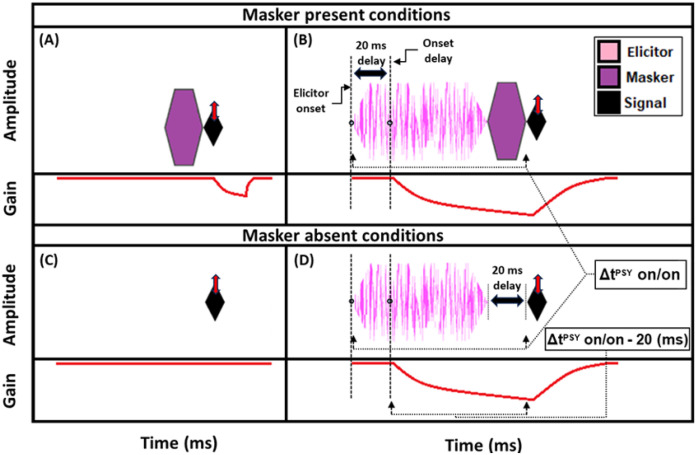 Figure 1
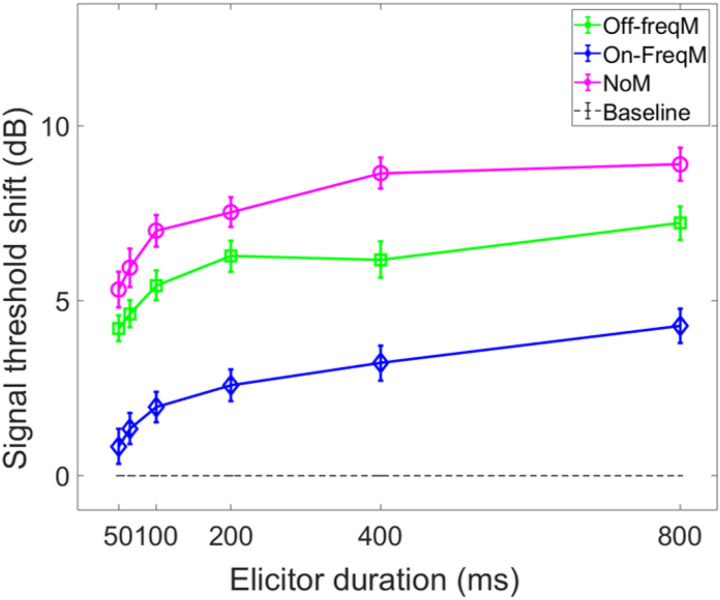 Figure 2
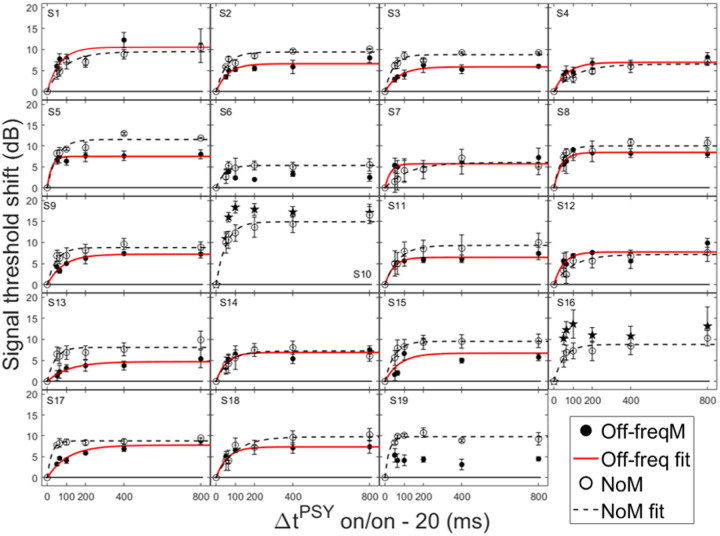 Figure 3
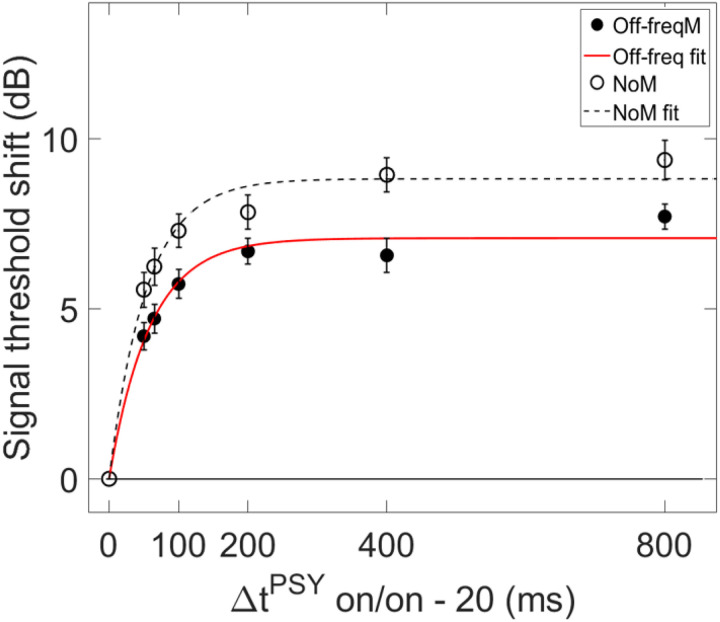 Figure 4
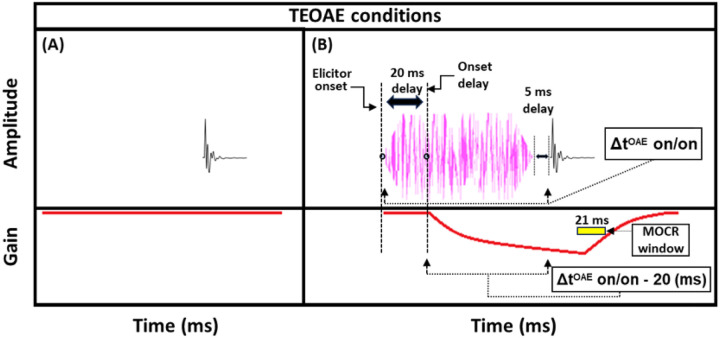 Figure 5
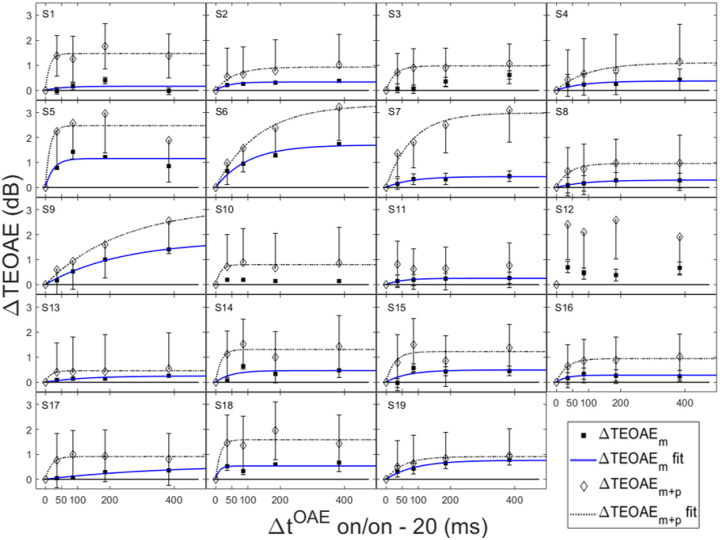 Figure 6
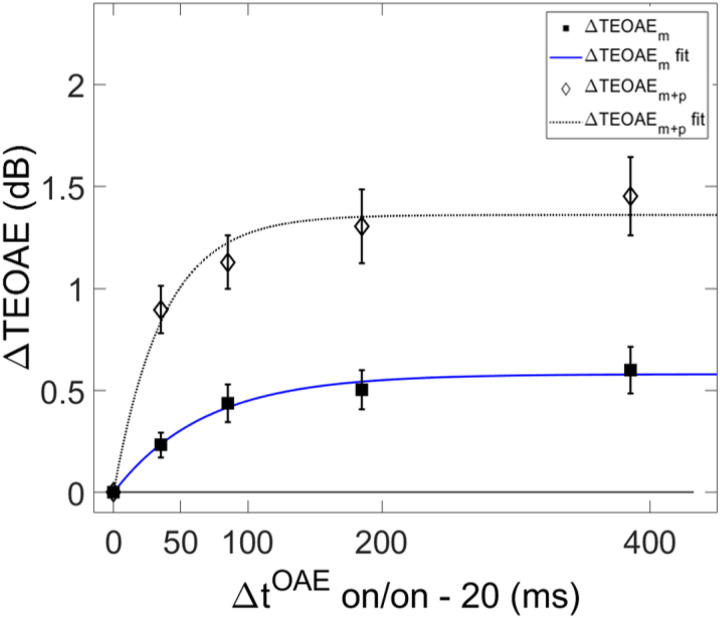 Figure 7
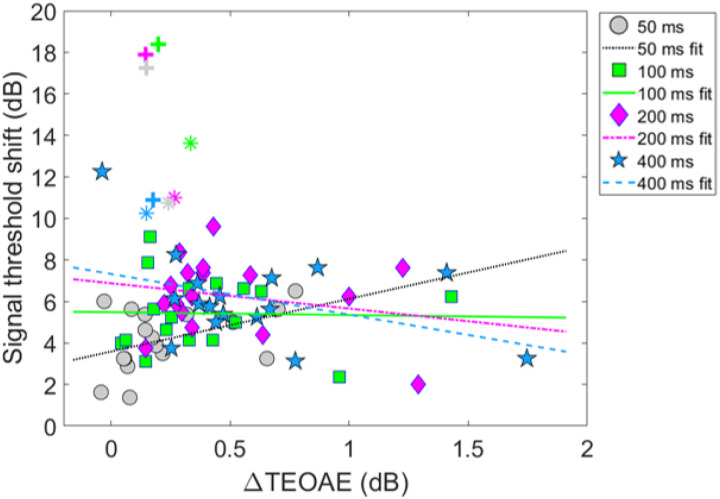 Figure 8
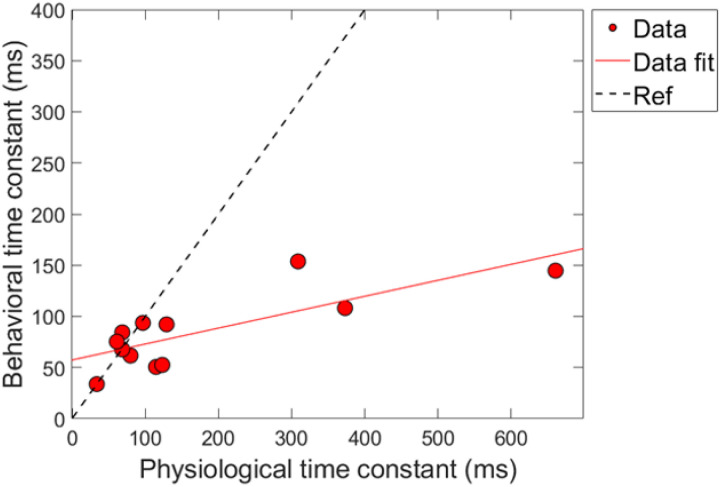 Figure 9
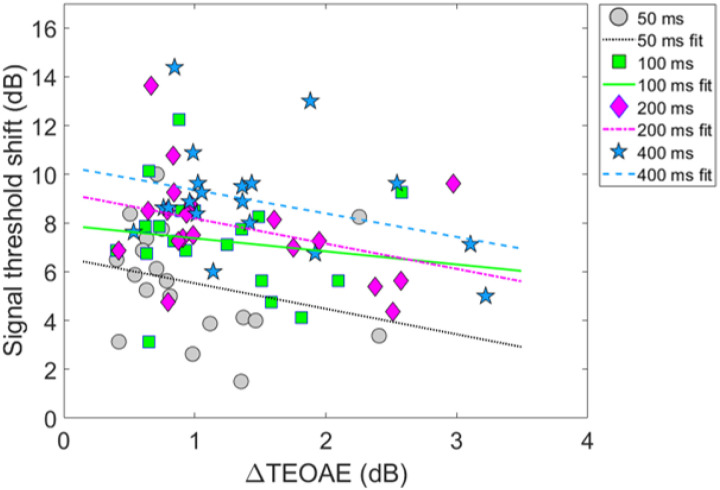 Figure 10
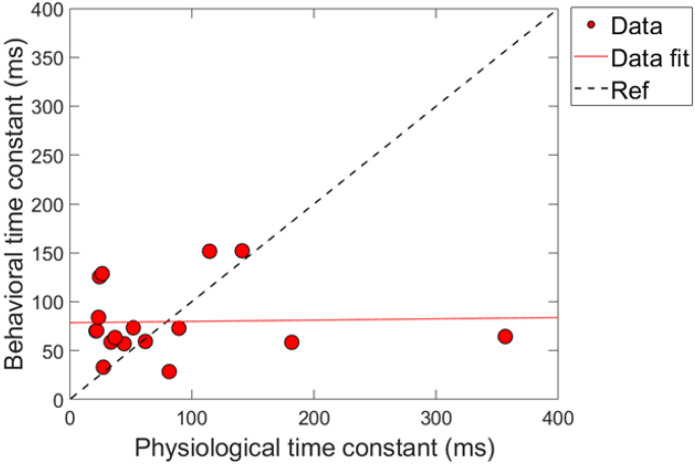 Figure 11
Peer Reviews
No public reviews on file for this paper yet. If you reviewed it on a platform where reviews are public (OpenReview, ICLR, NeurIPS, ICML), you can paste yours below so the community can read it here.
Videos
No videos yet. Explain this paper in a talk, walkthrough, or lecture? Add one.
Taxonomy
TopicsNoise Effects and Management · Hearing Loss and Rehabilitation · Hearing, Cochlea, Tinnitus, Genetics