Brain Region-specific Accumulation of Amyloidosis-associated Proteins in Postmortem Brain Tissues of Alzheimer’s Disease Patients
Wangchen Tsering, Jennifer L. Philips, Todd E. Golde, Jonathan A. Villareal, Stefan Prokop

TL;DR
This study examines how specific proteins linked to amyloidosis accumulate in different brain regions of Alzheimer's patients, revealing patterns that could help in diagnosing or treating the disease.
Contribution
The study identifies region-specific accumulation patterns of matrisome proteins in Alzheimer’s disease brains, offering new insights into their potential as biomarkers and therapeutic targets.
Findings
MDK protein accumulation in plaques increases consistently with Alzheimer’s disease severity across all brain regions.
SPOCK3, COL25A1, EGFL8, and SDC4 show significant accumulation only in the occipital cortex and hippocampus.
Some matrisome proteins associate with specific types of Aβ deposits or tau pathology, indicating diverse roles in disease progression.
Abstract
Numerous extracellular matrix (ECM) proteins, referred to as the matrisome, are increased in Alzheimer’s disease (AD). We recently demonstrated that many of these proteins colocalize with Aβ plaques and cerebral amyloid angiopathy (CAA), and some are present in dystrophic cellular processes within and around plaques. However, their precise roles in AD pathogenesis and their spatial and temporal distribution in postmortem brain tissue remain incompletely understood. Here, we performed a comprehensive immunohistochemistry analysis on postmortem brain samples spanning the spectrum of AD neuropathological change (ADNC: low, intermediate, and high). We assessed the accumulation of five matrisome proteins (MDK, SPOCK3, COL25aA1, SDC4, and EGFL8) across four brain regions differentially affected in AD (occipital cortex, hippocampus, striatum, and cerebellum), and examined their association…
Genes, proteins, chemicals, diseases, species, mutations and cell lines named across the full text — each resolved to its canonical identifier and authoritative record.
Click any figure to enlarge with its caption.
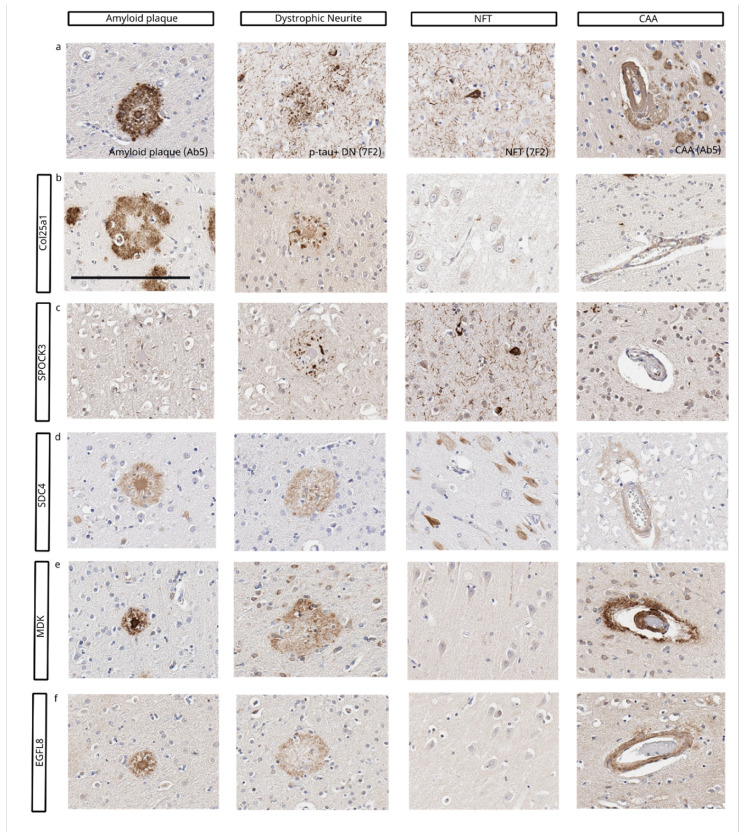 Figure 1
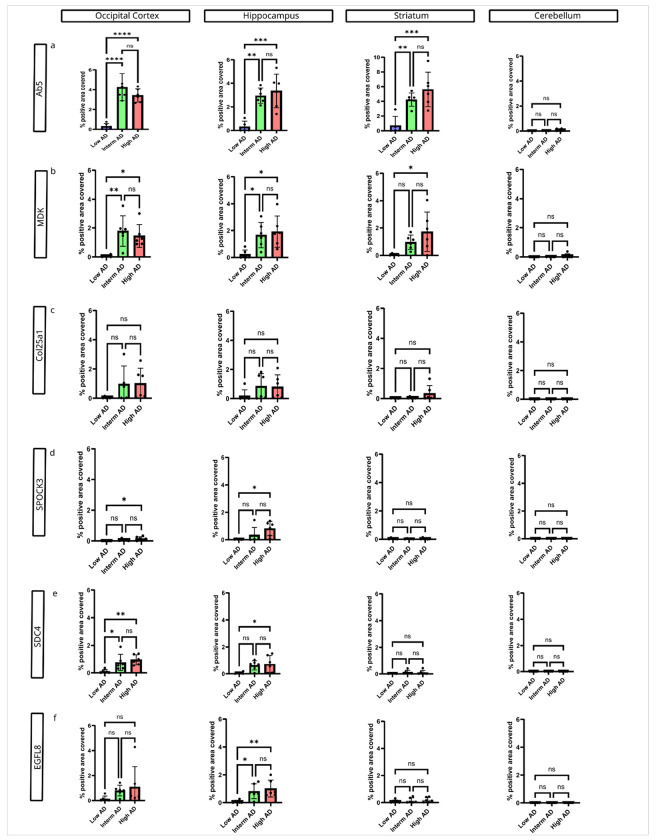 Figure 2
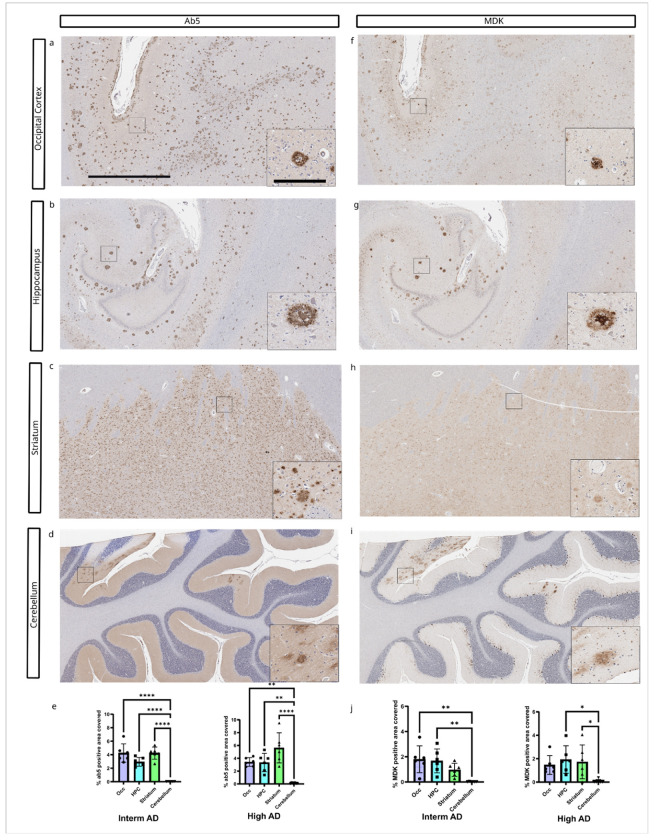 Figure 3
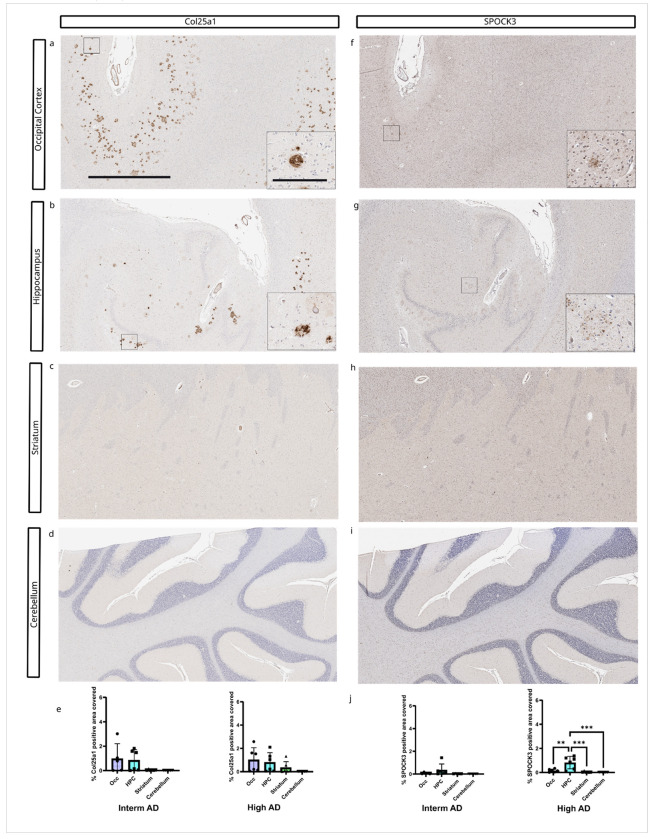 Figure 4
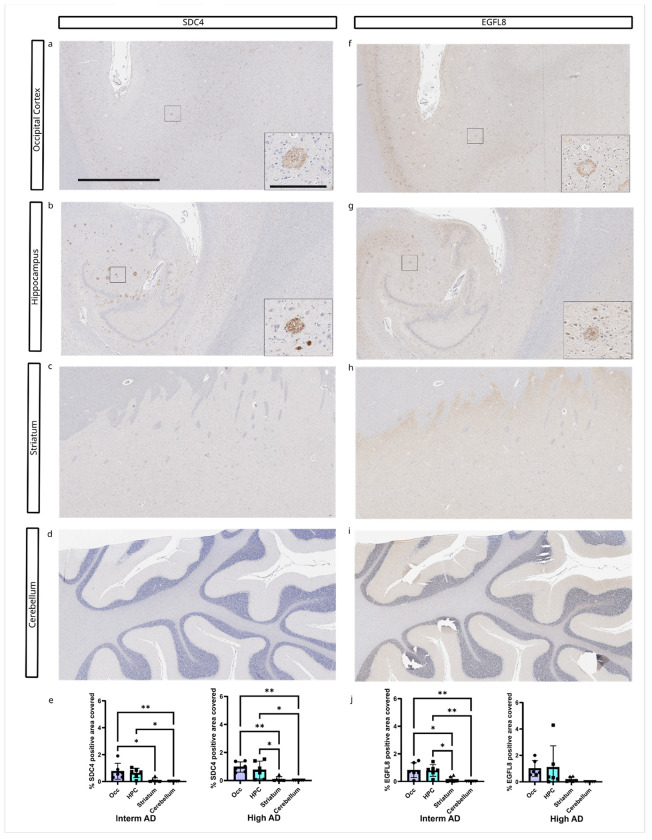 Figure 5
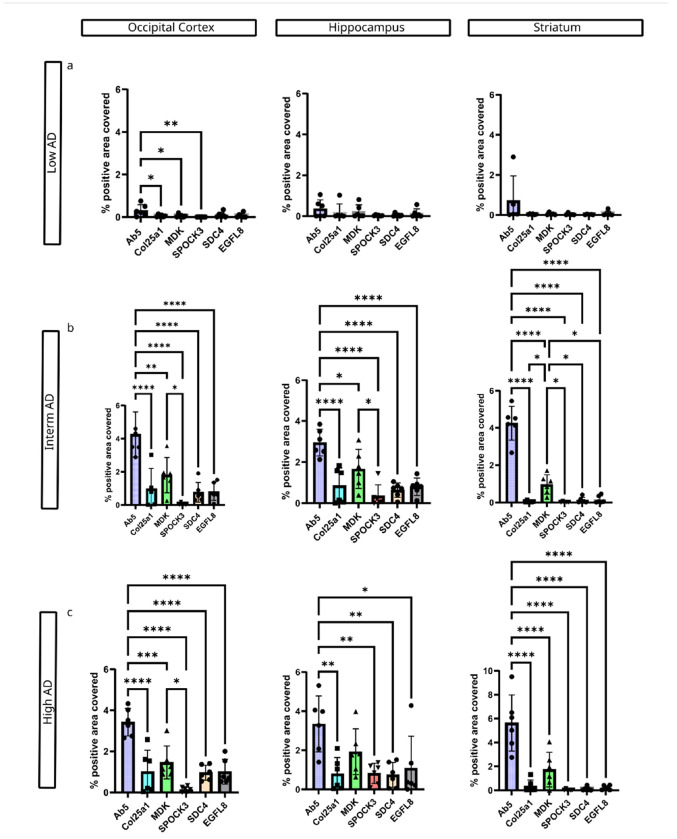 Figure 6
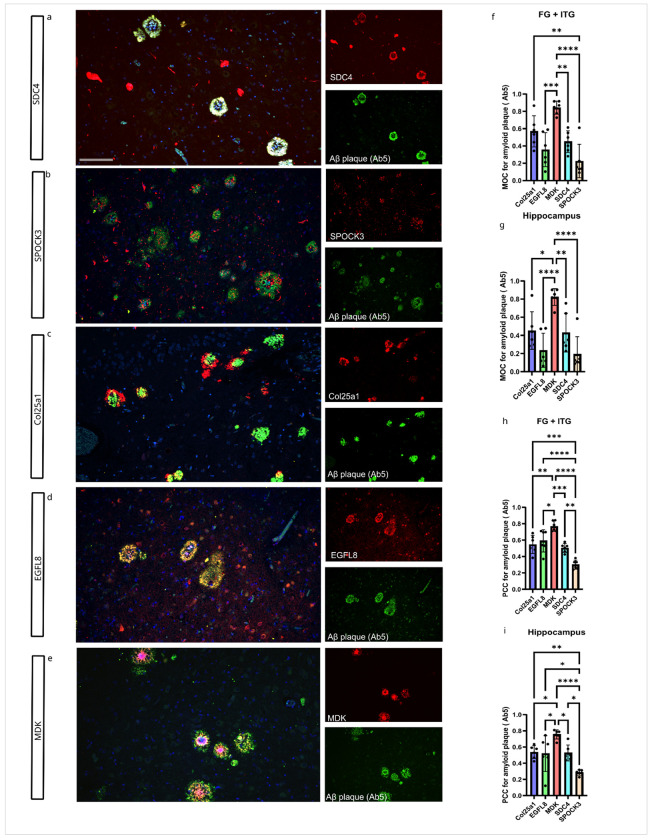 Figure 7
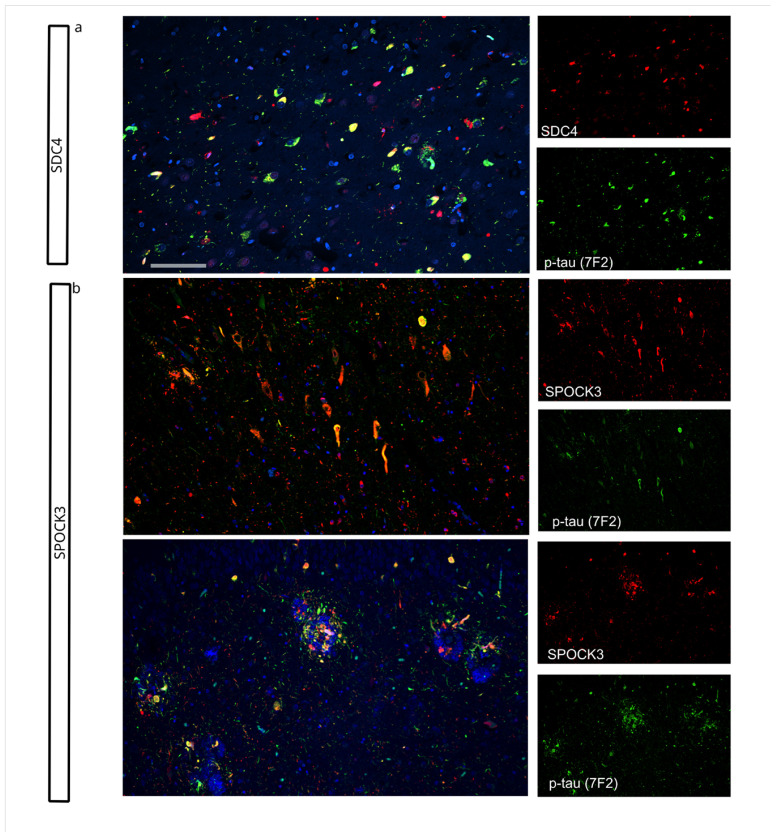 Figure 8
Peer Reviews
No public reviews on file for this paper yet. If you reviewed it on a platform where reviews are public (OpenReview, ICLR, NeurIPS, ICML), you can paste yours below so the community can read it here.
Videos
No videos yet. Explain this paper in a talk, walkthrough, or lecture? Add one.
Taxonomy
TopicsAlzheimer's disease research and treatments · Dementia and Cognitive Impairment Research · Neurological Disease Mechanisms and Treatments