Host-Derived Geranylgeraniol Shields Intraerythrocytic Stages of Malaria Parasites from Fosmidomycin
Ignasi Verdaguer, Cathy Chen, Maurício Mazzine Filho, Matheus Santos, Gabriela Castro, Lydia Yamaguchi, Sandra de Oliveira, Manoel Peres, Agustín Hernández, Thales Kronenberger, Daniel Bargieri, Claudia Angeli, Dana Hodge, Giuseppe Palmisano, Luis Izquierdo, Luciana Azevedo

TL;DR
The study shows that malaria parasites can use host-derived geranylgeraniol to resist the antimalarial drug fosmidomycin, explaining its limited effectiveness.
Contribution
The study identifies a prenol salvage pathway in malaria parasites that modulates drug resistance and metabolic homeostasis.
Findings
Host-derived geranylgeraniol can rescue malaria parasites from fosmidomycin effects.
Geraniol inhibits prenol kinase and enhances fosmidomycin's antimalarial activity.
ΔPfPolK strains show metabolic dysregulation and increased drug sensitivity.
Abstract
Fosmidomycin was proposed as an antimalarial drug but failed in clinical trials due to recrudescence, a phenomenon whose causes remain poorly understood. The mechanism of action of fosmidomycin is the inhibition of the methylerythritol 4-phosphate (MEP) pathway, essential for producing isoprenoids in Plasmodium parasites. The key isoprenoids produced by the MEP pathway are farnesyl and geranylgeranyl pyrophosphates (FPP and GGPP), vital for protein isoprenylation, ubiquinone, and dolichol biosynthesis. In vitro studies have demonstrated that prenols, like farnesol (FOH) and geranylgeraniol (GGOH), can temporarily circumvent the MEP pathway, rescuing parasites from fosmidomycin effects. Our group identified a parasitic prenol kinase (PolK), responsible for converting FOH and GGOH into their active pyrophosphate forms. Additionally, GGOH’s human plasma concentration is sufficient to…
Genes, proteins, chemicals, diseases, species, mutations and cell lines named across the full text — each resolved to its canonical identifier and authoritative record.
Click any figure to enlarge with its caption.
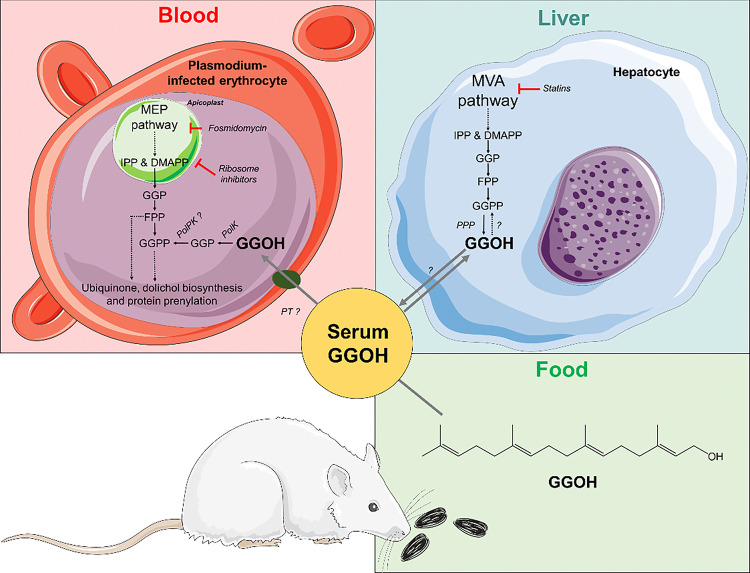 Figure 1
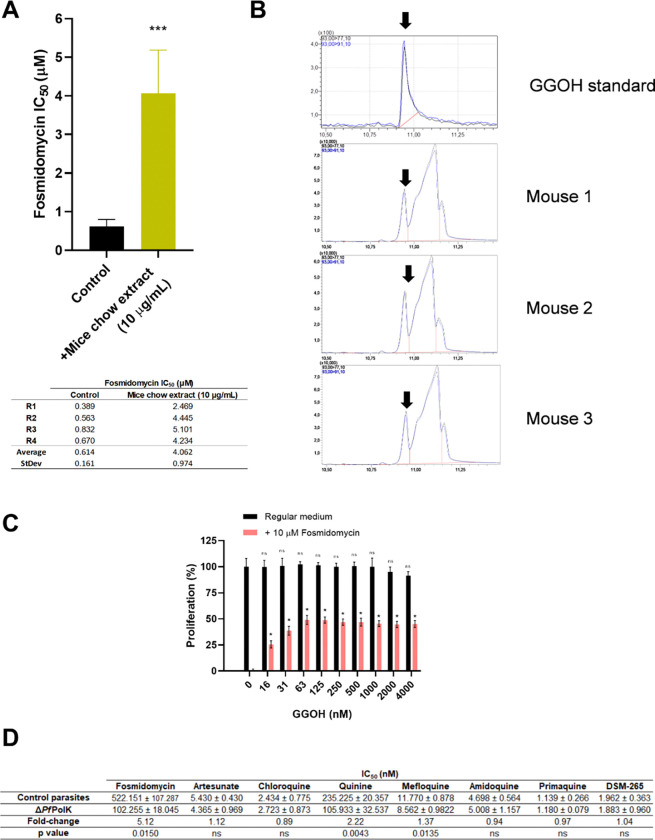 Figure 2
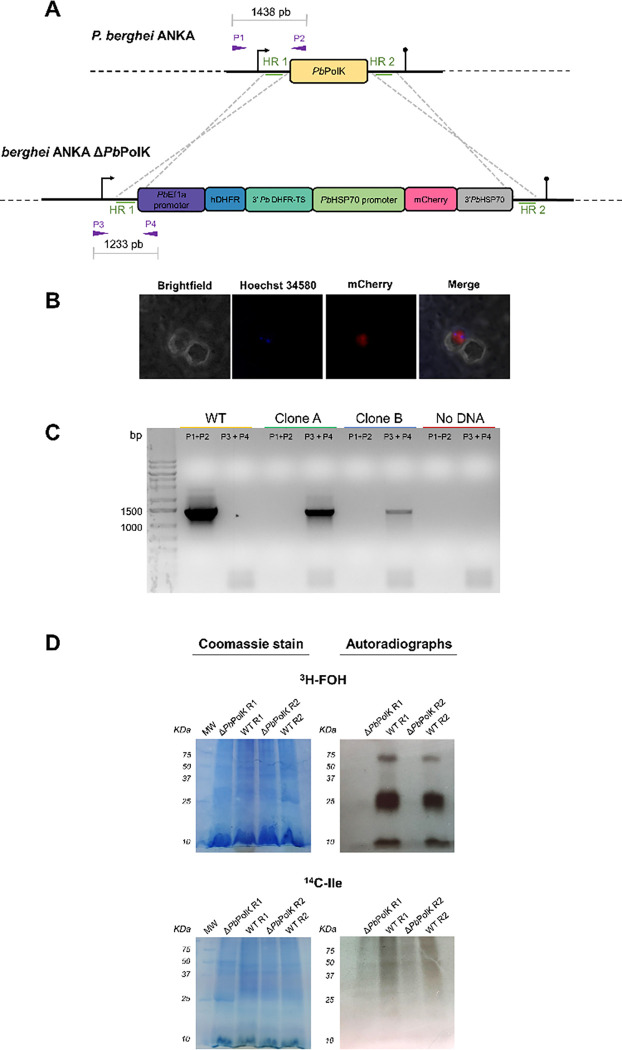 Figure 3
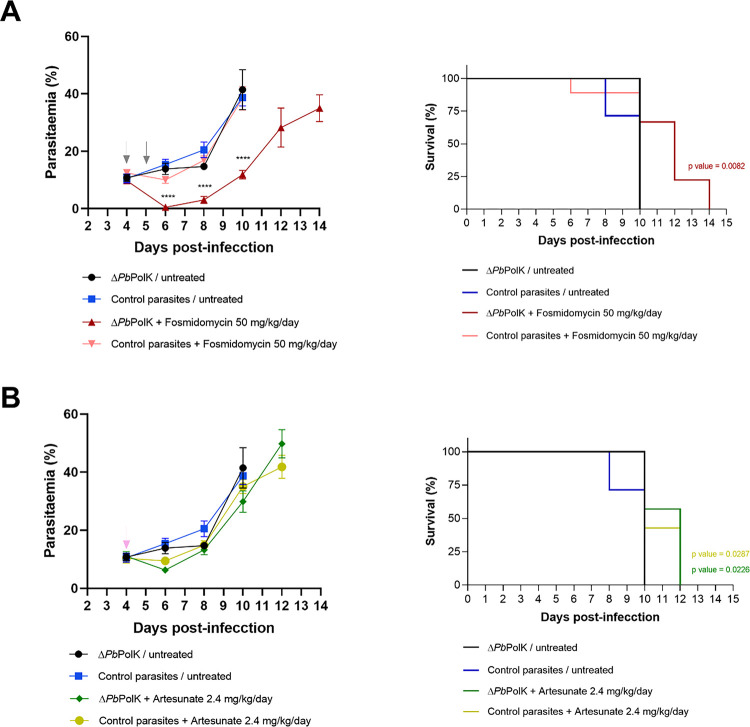 Figure 4
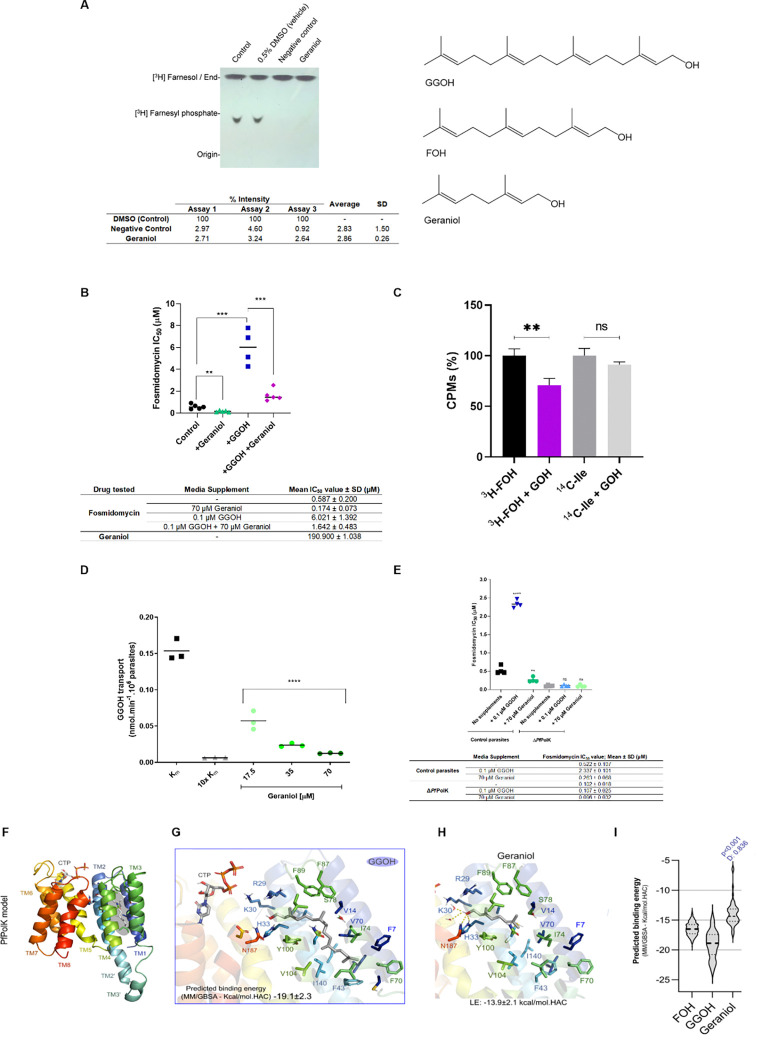 Figure 5
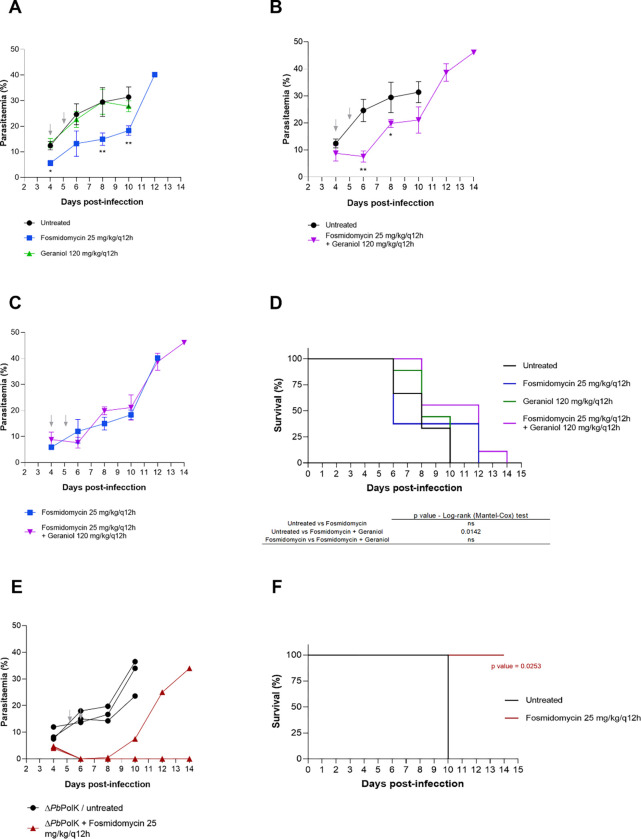 Figure 6
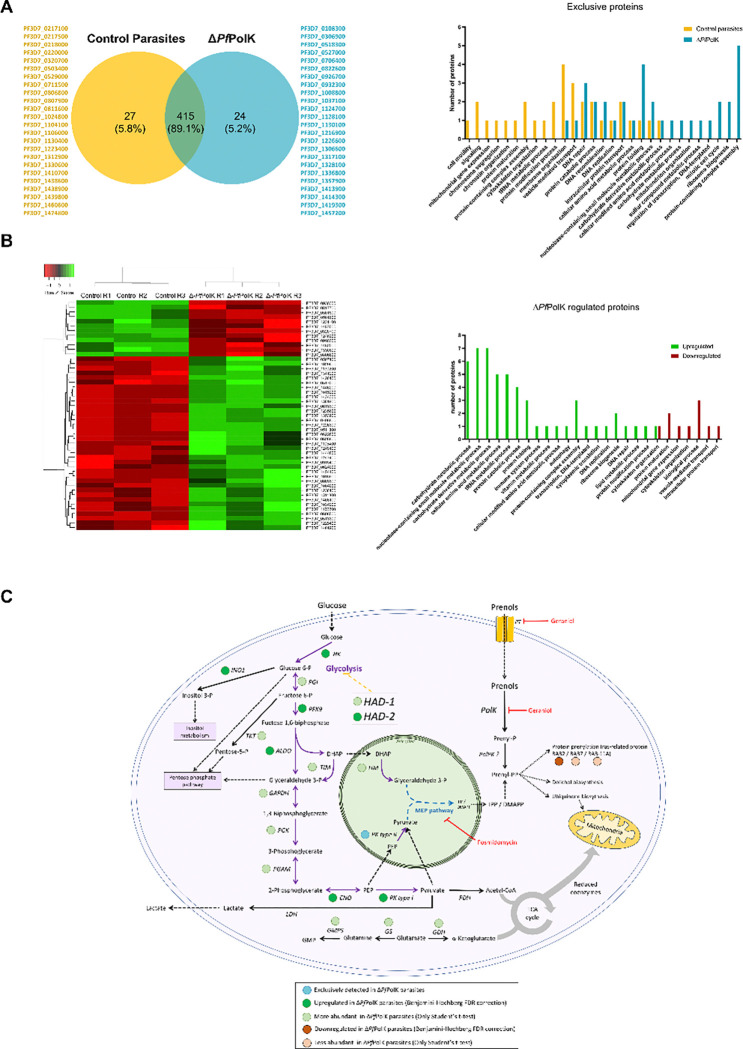 Figure 7
Peer Reviews
No public reviews on file for this paper yet. If you reviewed it on a platform where reviews are public (OpenReview, ICLR, NeurIPS, ICML), you can paste yours below so the community can read it here.
Videos
No videos yet. Explain this paper in a talk, walkthrough, or lecture? Add one.
Taxonomy
TopicsMalaria Research and Control · Pharmacological Effects of Natural Compounds · Plant biochemistry and biosynthesis