Modulation of the Antitumor Response to Metformin, Caffeine, and Sodium Dichloroacetate by the Hypoxic Microenvironment in Lung Cancer Cells
Misael Osmar Garcia-Martin, Manuel Castillejos-Lopez, Heriberto Prado-Garcia, Susana Romero-Garcia, Juan Carlos Huerta-Cruz, José Alberto Choreño-Parra, Georgina Gonzalez-Avila, Luz A. Colín-Godínez, Daniel Paz-Gomez, Ángeles Carlos-Reyes, Victor Ruiz, Yair Romero

TL;DR
This study shows that the effectiveness of combining metformin with caffeine or DCA in lung cancer cells is reduced under low oxygen conditions, which are common in tumors.
Contribution
The study reveals that hypoxia in tumors causes antagonism in drug combinations of metformin with caffeine or DCA, despite additive effects under normal oxygen conditions.
Findings
Under normoxia, metformin combined with DCA or caffeine showed additive effects on lung cancer cell viability.
In hypoxia, the same drug combinations exhibited significant antagonism, reducing their therapeutic potential.
Hypoxia alters the pharmacological interaction of metformin with caffeine or DCA, highlighting the need to consider tumor oxygenation in treatment design.
Abstract
Metformin, caffeine, and dichloroacetate (DCA) have shown antitumor effects. The hypoxic tumor microenvironment can modulate drug response. We aimed to analyze the interaction of metformin with caffeine or DCA in lung cancer cells (HCC827) under normoxia and hypoxia conditions. Cell viability was evaluated using the crystal violet assay after individual and combined drug treatment under normoxia (21% O2) and hypoxia (1% O2) conditions. Combination effects were analyzed using isobolographic analysis. The results show that under normoxia conditions, the combination of metformin with DCA (γ = 0.98 ± 0.35, p > 0.05) or caffeine (γ = 0.90 ± 0.34, p > 0.05) revealed additivity. However, in hypoxia, both combinations exhibited significant antagonism, with γ values appearing greater than one for metformin + DCA (γ = 4.20 ± 1.44, p < 0.05) and metformin + caffeine (γ = 2.88 ± 0.90, p < 0.05).…
Genes, proteins, chemicals, diseases, species, mutations and cell lines named across the full text — each resolved to its canonical identifier and authoritative record.
Click any figure to enlarge with its caption.
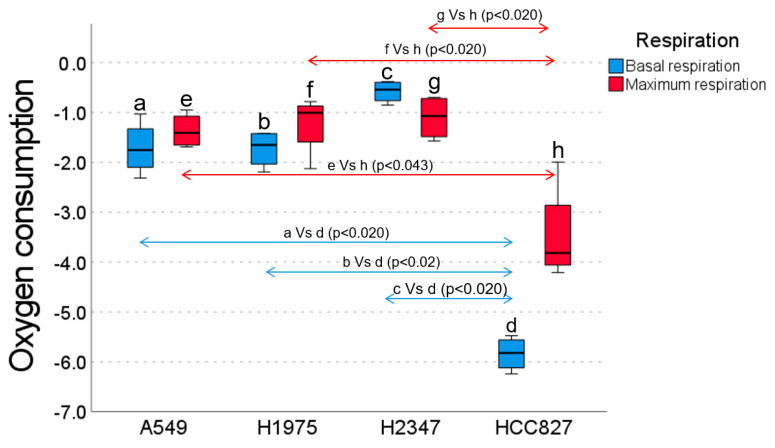 Figure 1
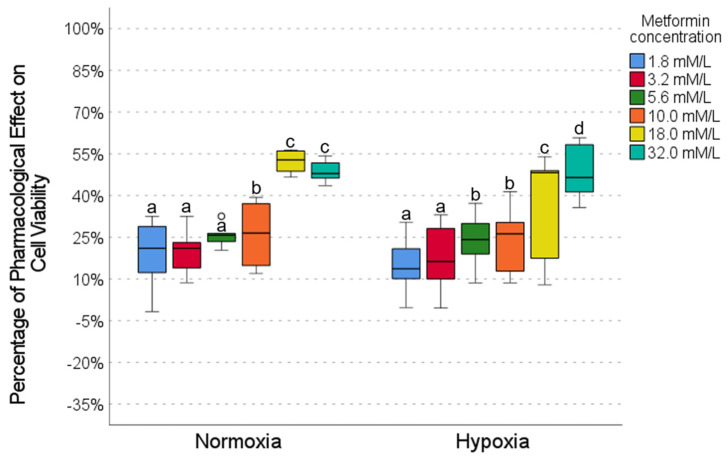 Figure 2
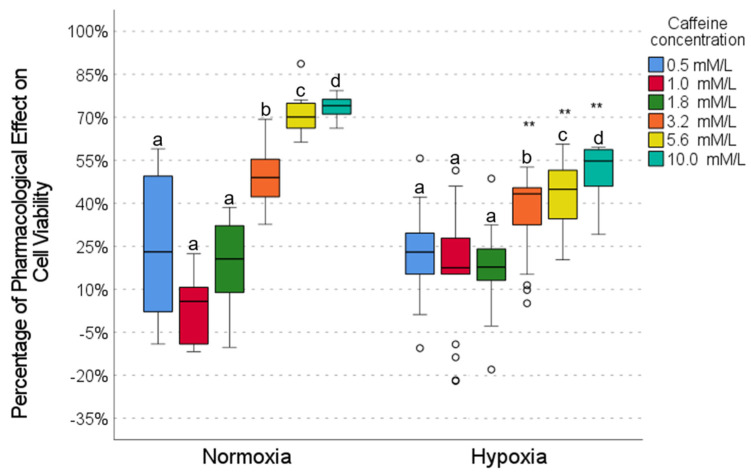 Figure 3
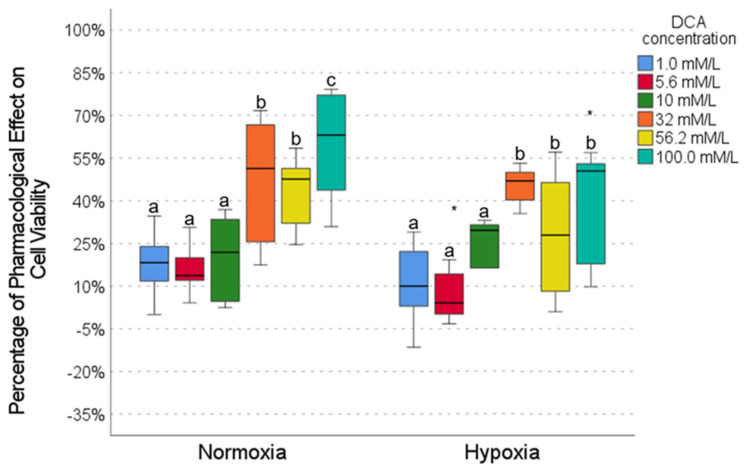 Figure 4
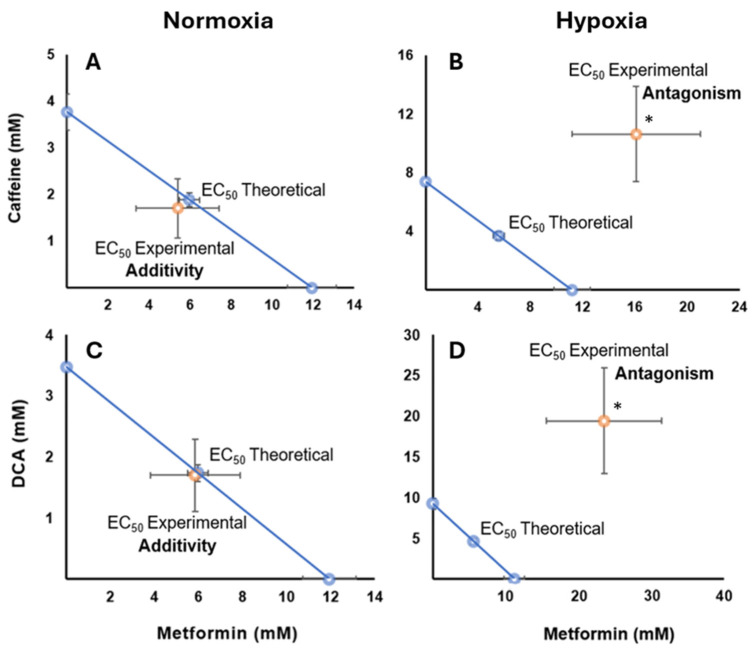 Figure 5
Peer Reviews
No public reviews on file for this paper yet. If you reviewed it on a platform where reviews are public (OpenReview, ICLR, NeurIPS, ICML), you can paste yours below so the community can read it here.
Videos
No videos yet. Explain this paper in a talk, walkthrough, or lecture? Add one.
Taxonomy
TopicsCancer, Hypoxia, and Metabolism · Metabolism, Diabetes, and Cancer · Cancer-related Molecular Pathways