Plakophilin 3 Is Involved in Basal Body Docking in Multiciliated Cells
Panagiota Louka, Chrysovalantou Kyriakou, Ioanna Diakourti, Paris Skourides

TL;DR
This study shows that plakophilin 3 helps anchor cilia in multiciliated cells, and its absence causes defects in fluid flow and cilia positioning.
Contribution
The novel finding is that plakophilin 3, a desmosomal protein, is essential for basal body docking and ciliary function in multiciliated cells.
Findings
Plakophilin 3 localizes to the striated rootlet in Xenopus laevis multiciliated cells.
Knockdown of plakophilin 3 causes defects in cilia-generated fluid flow and basal body docking.
The defects are cell-autonomous and not due to changes in the actin cytoskeleton or cell intercalation.
Abstract
Multiciliated cells generate fluid flow along epithelial surfaces, and defects in their development or function cause primary ciliary dyskinesia. The fluid flow is generated by the coordinated beating of motile cilia, which are microtubule-based organelles. The base of each cilium, the basal body, is anchored to the apical cell membrane and surrounded by a dense apical cytoskeleton of actin, microtubules, and intermediate filaments. Several cell adhesion proteins play a role in the connection of the basal body to the apical cytoskeleton. Here, we show that the desmosomal protein plakophilin3, a member of the armadillo family of proteins, localizes to the striated rootlet in Xenopus laevis multiciliated cells. Knockdown of plakophilin 3 leads to significant defects in cilia-generated fluid flow and basal body docking. These defects are cell-autonomous and independent of cell…
Genes, proteins, chemicals, diseases, species, mutations and cell lines named across the full text — each resolved to its canonical identifier and authoritative record.
Click any figure to enlarge with its caption.
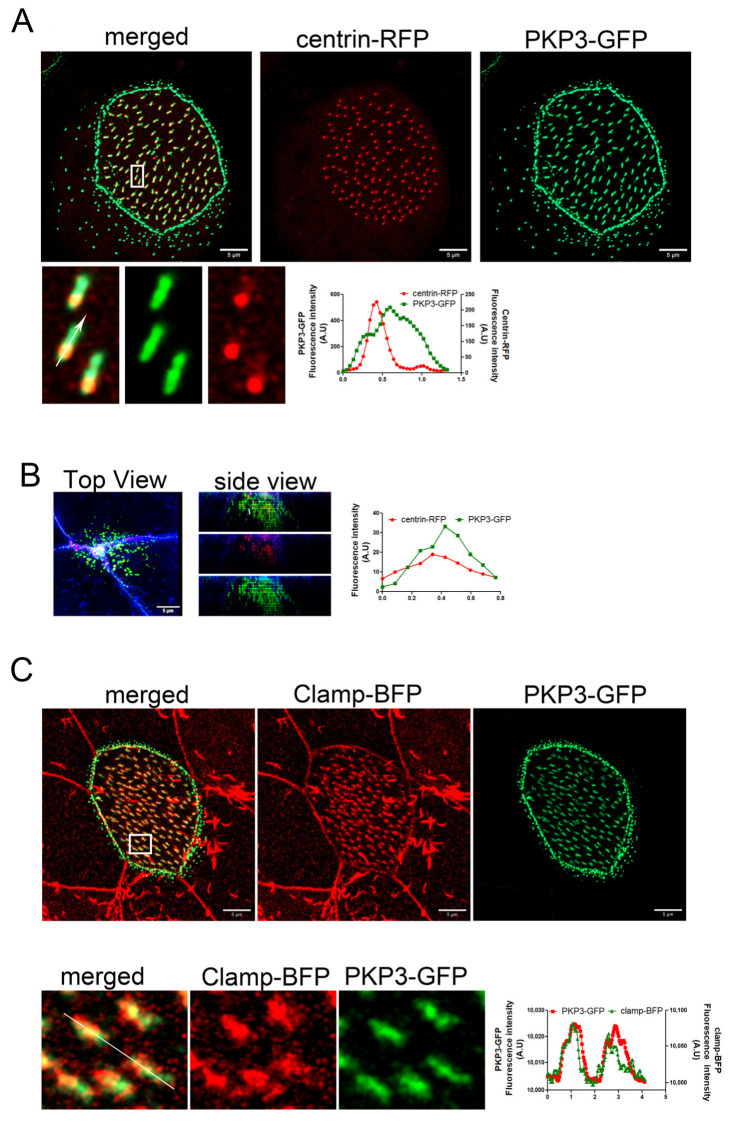 Figure 1
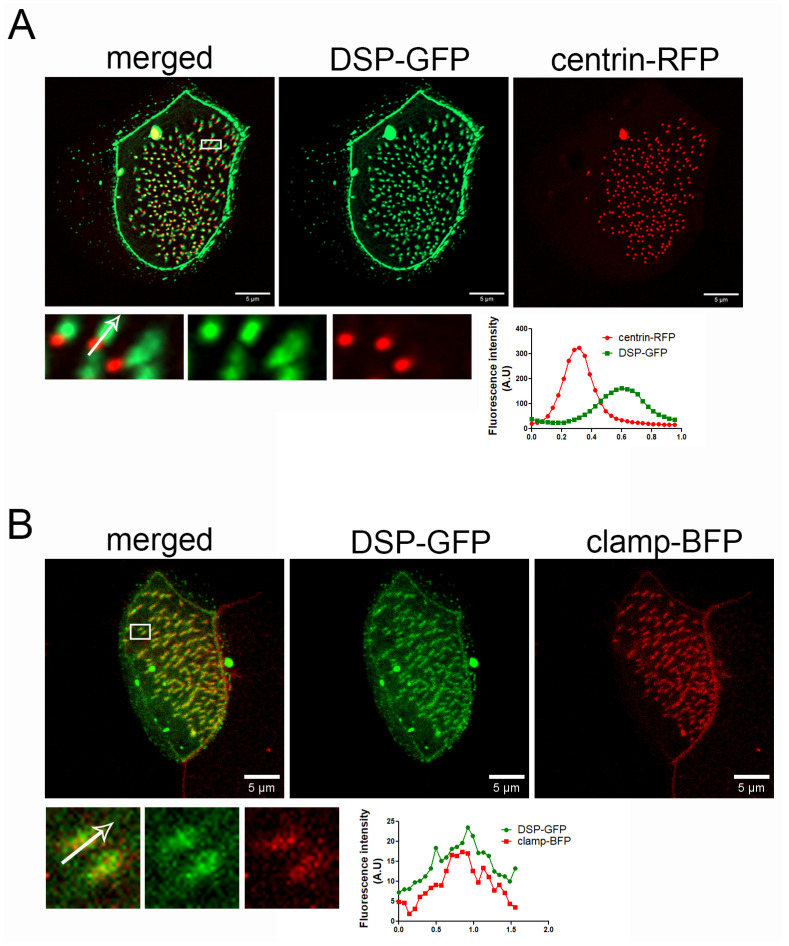 Figure 2
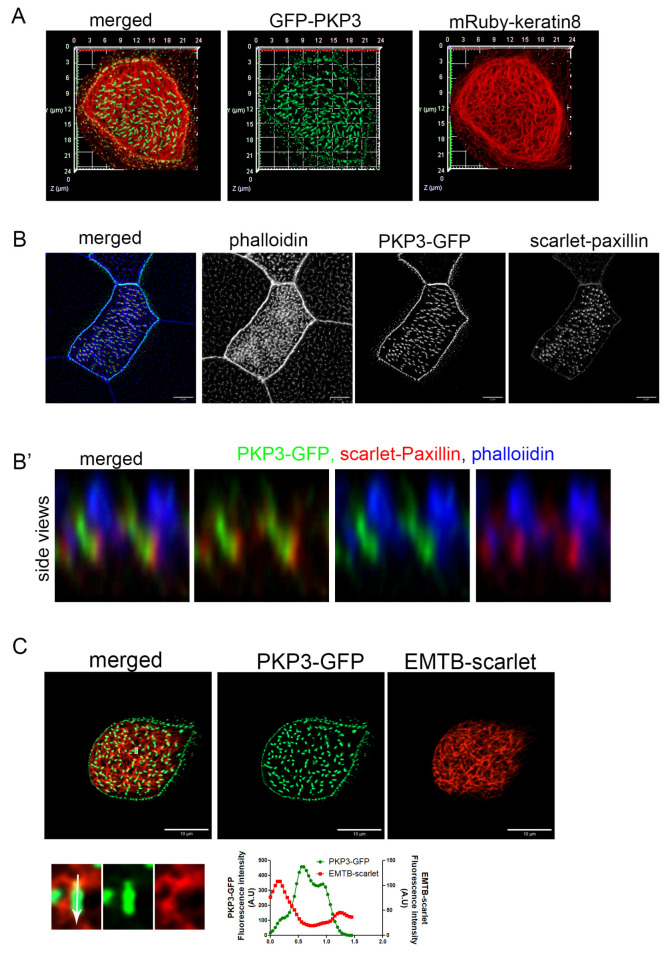 Figure 3
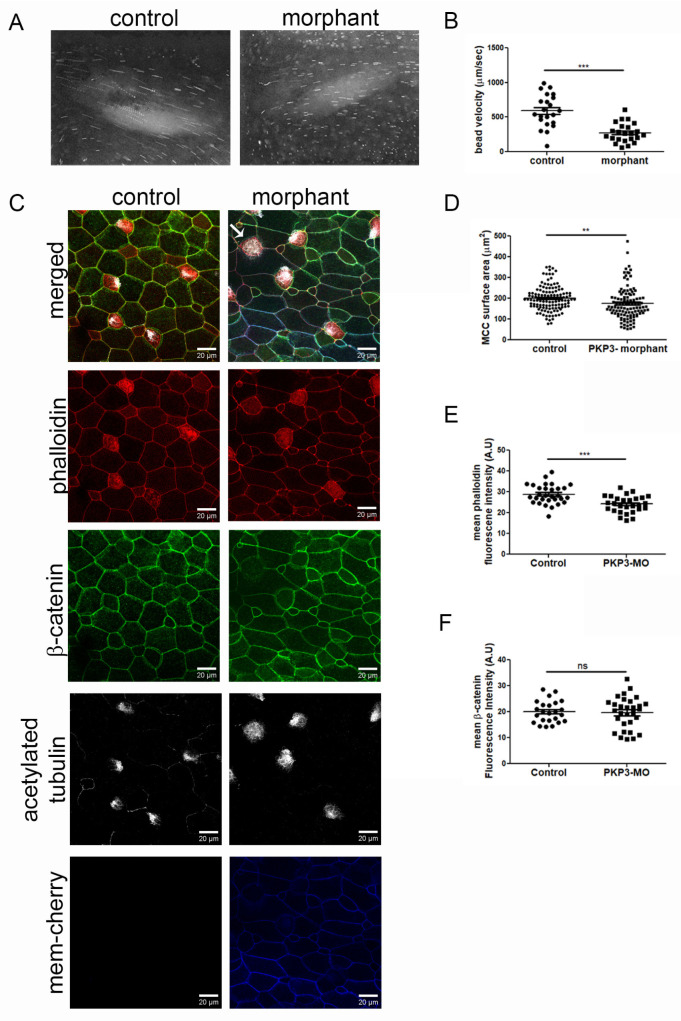 Figure 4
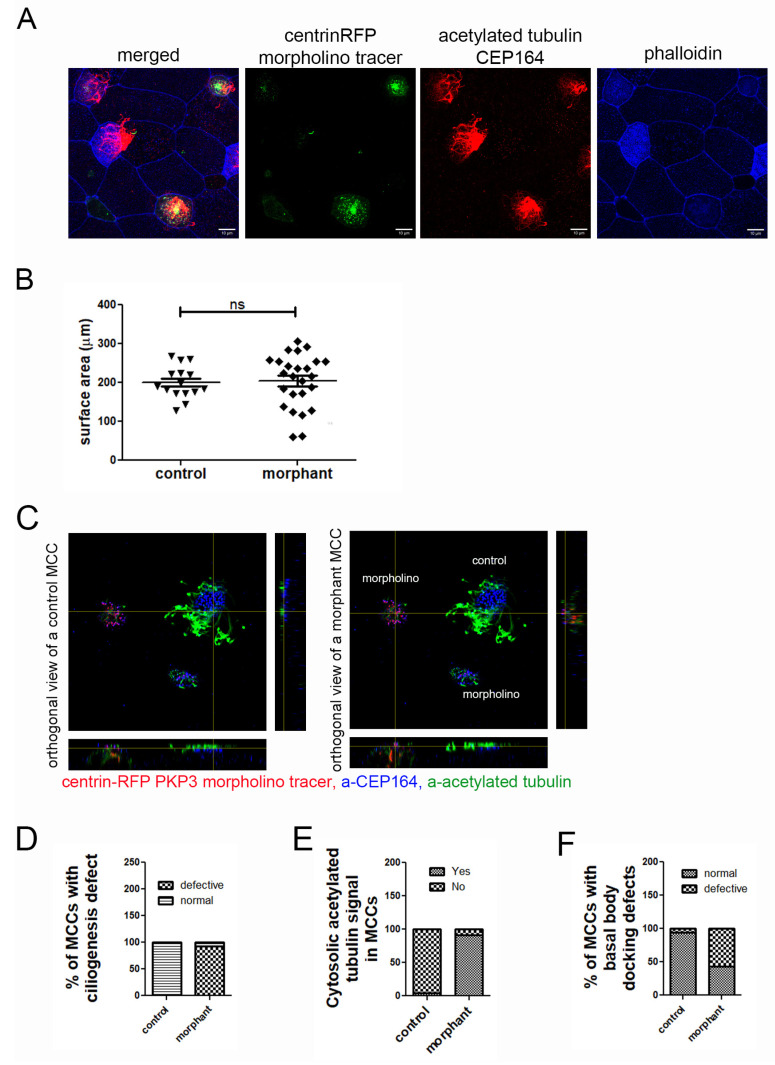 Figure 5
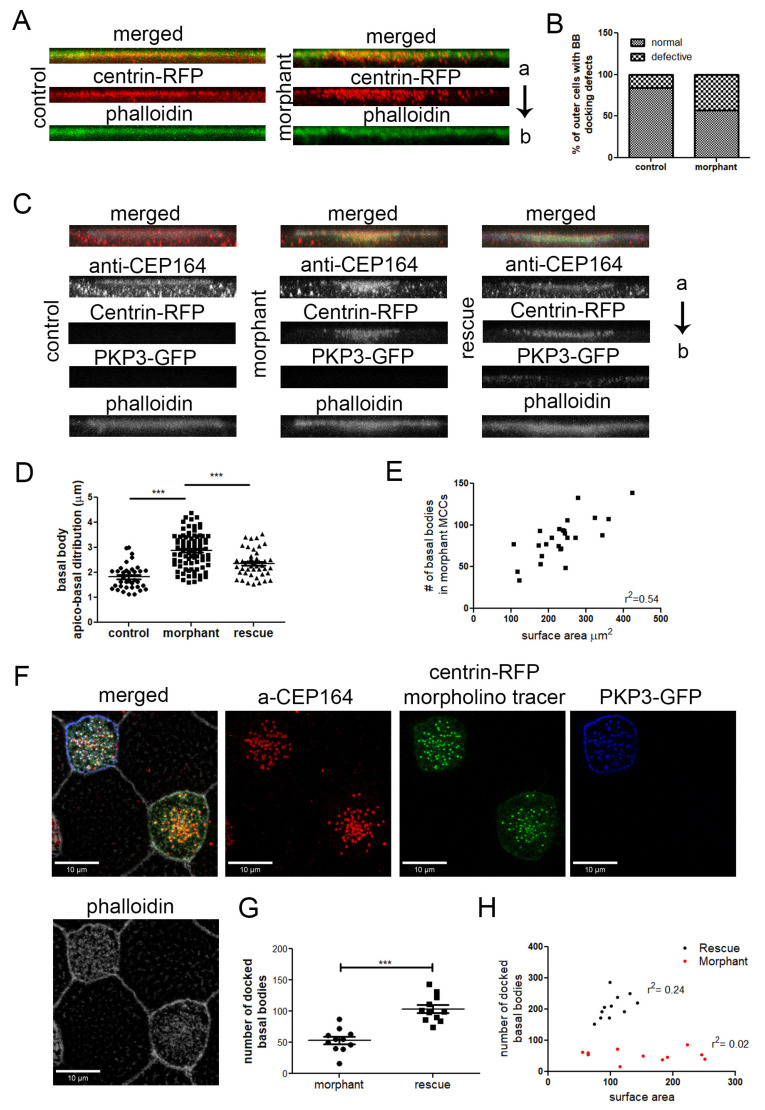 Figure 6
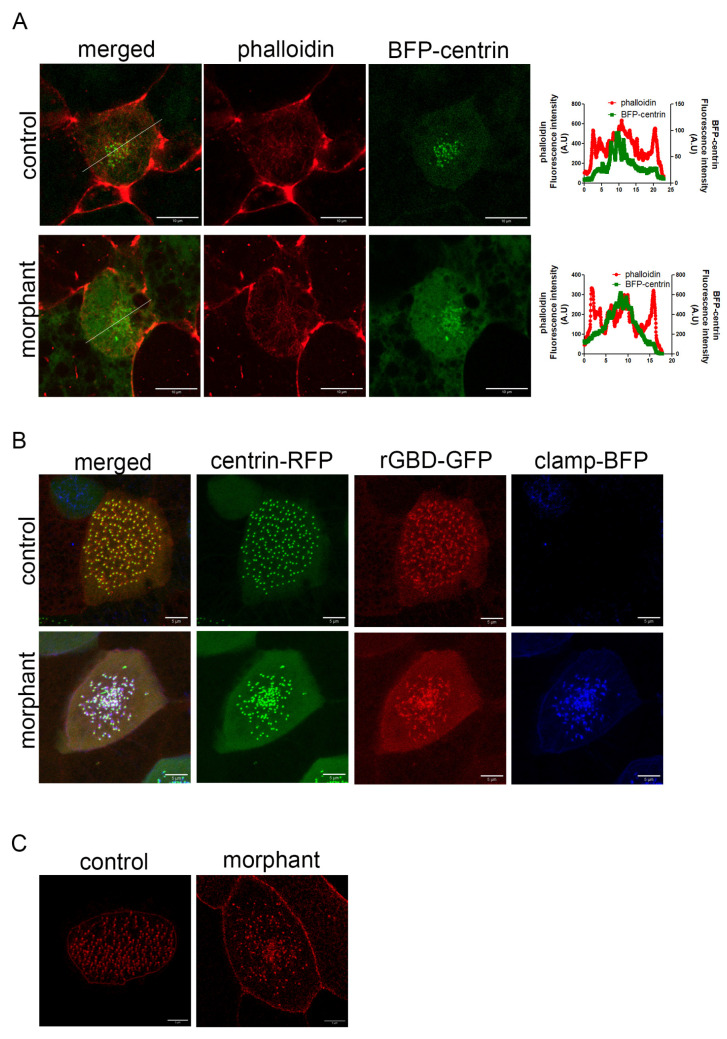 Figure 7
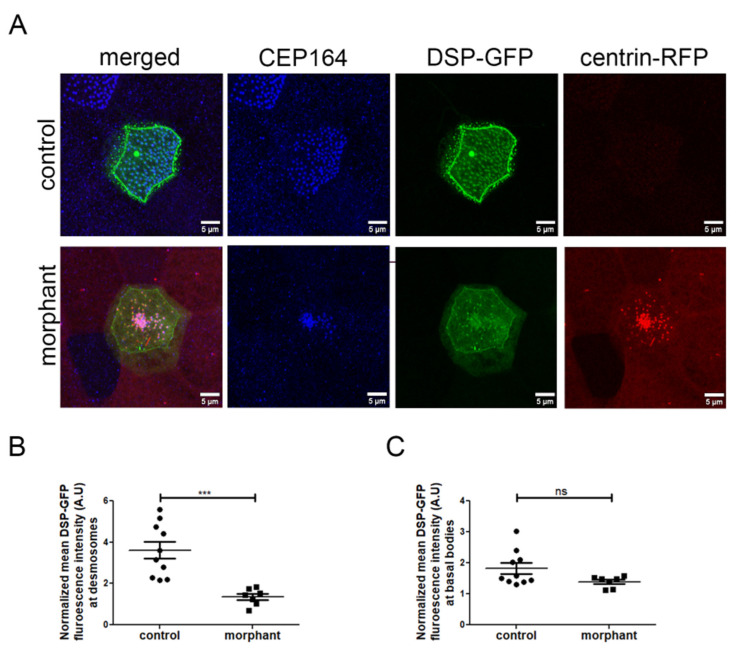 Figure 8
Peer Reviews
No public reviews on file for this paper yet. If you reviewed it on a platform where reviews are public (OpenReview, ICLR, NeurIPS, ICML), you can paste yours below so the community can read it here.
Videos
No videos yet. Explain this paper in a talk, walkthrough, or lecture? Add one.
Taxonomy
TopicsGenetic and Kidney Cyst Diseases · Microtubule and mitosis dynamics · Protist diversity and phylogeny