Using an Innovative Bifunctional Siloxane to Protect Cement Composite Surfaces from Biological Corrosion
Marta Thomas, Joanna Karasiewicz, Paulina Nowicka-Krawczyk, Rafał M. Olszyński, Łucja Balcerzak, Miłosz Frydrych, Bogna Sztorch, Agnieszka Ślosarczyk

TL;DR
A new siloxane compound effectively protects cement from biological damage without harming the environment.
Contribution
A bifunctional siloxane compound was developed to prevent biological corrosion in cement without using harmful biocides.
Findings
L43-coated cement achieved compressive strengths over 70 MPa and 33 MPa after freeze–thaw tests.
L43 reduced microalgae photosynthetic activity by up to 71.4%, indicating effective biocorrosion prevention.
The compound's structure provides biocidal effects without requiring added harmful chemicals.
Abstract
This study tested the effectiveness of a bifunctional polysiloxane (L43) as a means of protecting concrete surfaces from biocorrosion. L43 was designed to contain two types of functional groups in its structure: surface-active hydrophobic chains and hydrophilic groups that allow the coating to permanently bond to the concrete. L43-coated cement samples achieved compressive strengths exceeding 70 MPa, while samples subjected to cyclic freeze–thaw tests achieved compressive strengths exceeding 33 MPa. In addition, compound L43 at a concentration of 5% reduced the photosynthetic activity of microalgae cells on the concrete surface. The maximum value of chlFI decreased by 69.5%, while the average value decreased by 71.4%. Thus, it was proven that compound L43 effectively counteracts biological corrosion without deteriorating the structure of the impregnated substrate. It should be…
Genes, proteins, chemicals, diseases, species, mutations and cell lines named across the full text — each resolved to its canonical identifier and authoritative record.
Click any figure to enlarge with its caption.
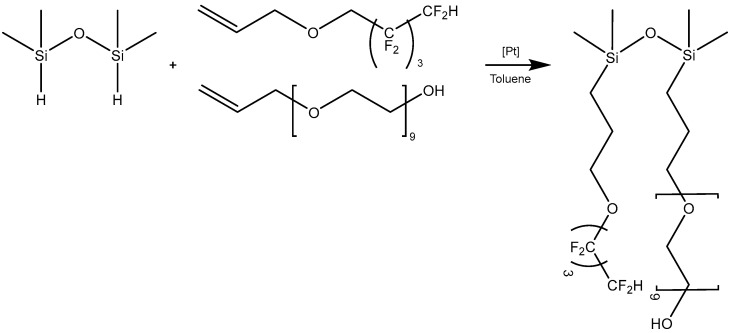 Figure 1
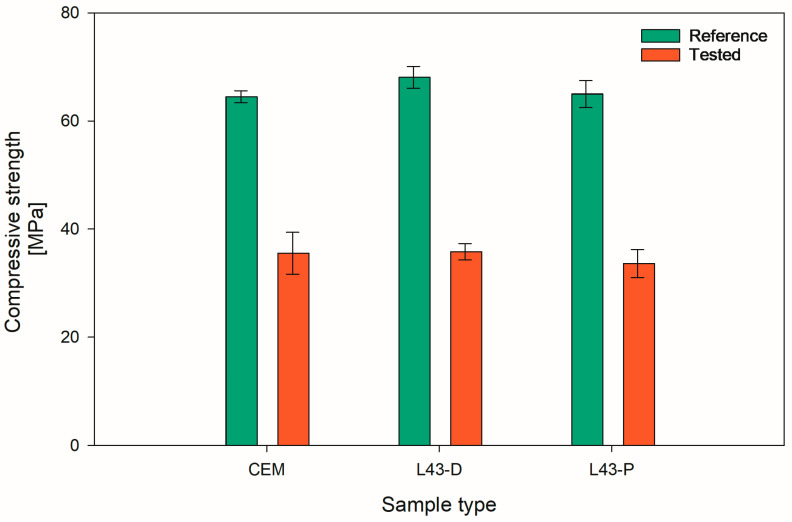 Figure 2
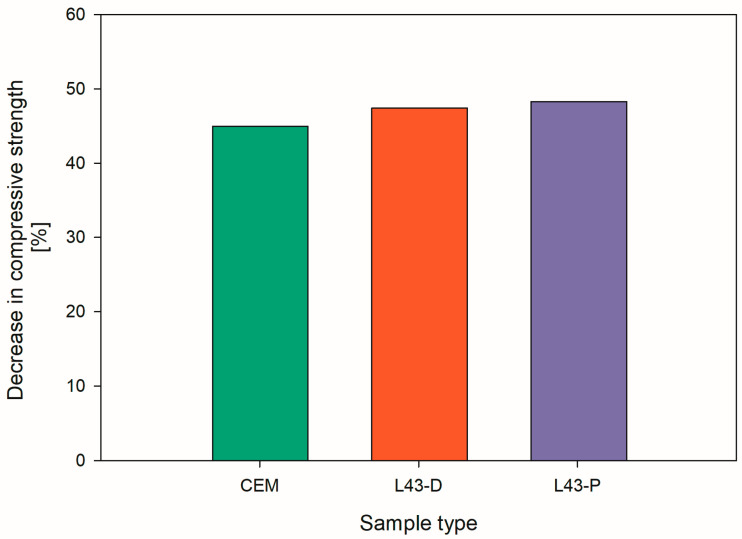 Figure 3
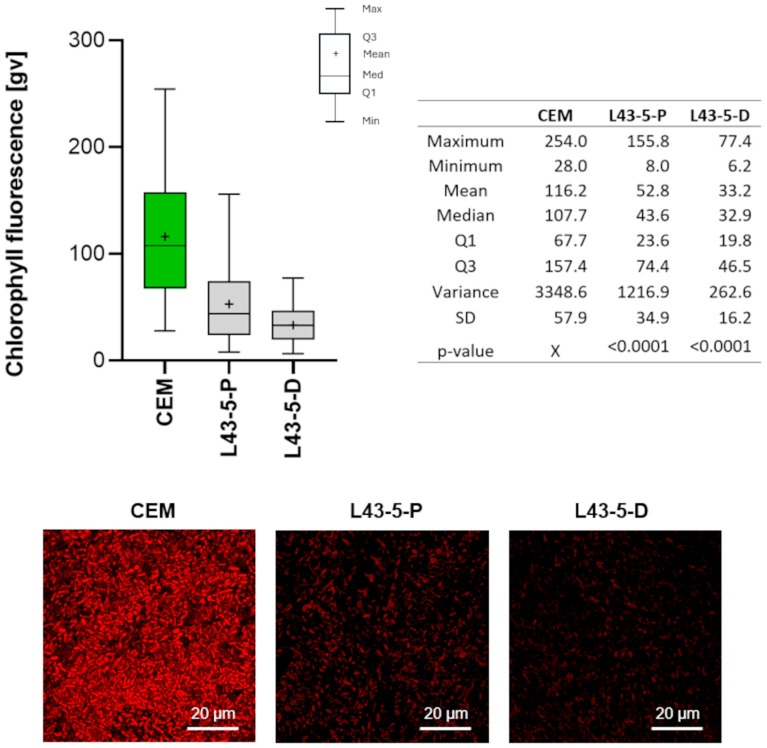 Figure 4
 Figure 5
 Figure 6
 Figure 7
Peer Reviews
No public reviews on file for this paper yet. If you reviewed it on a platform where reviews are public (OpenReview, ICLR, NeurIPS, ICML), you can paste yours below so the community can read it here.
Videos
No videos yet. Explain this paper in a talk, walkthrough, or lecture? Add one.
Taxonomy
TopicsMarine Biology and Environmental Chemistry · Odor and Emission Control Technologies · Environmental Toxicology and Ecotoxicology