Preoperative Hyperlactatemia Predicts Mortality in Acute Stanford Type A Dissection: A 16-Year-Period, Single-Center, Retrospective Study
Nazan Puluca, Christian König, Gunther Wiesner, Birgit Waschulzik, Keti Vitanova, Markus Krane, Johannes Böhm

TL;DR
High preoperative lactate levels in patients with aortic dissection are strongly linked to higher early mortality after surgery.
Contribution
This study identifies preoperative lactate levels > 3.71 mmol/L as the strongest predictor of 30-day mortality in acute aortic dissection patients.
Findings
Patients with lactate > 3.71 mmol/L had 51.5% 30-day mortality versus 18.7% in others.
Lactate > 3.71 mmol/L had the highest odds ratio for 30-day mortality (OR = 7.292).
Lactate levels remained a significant predictor of overall mortality (HR = 2.772).
Abstract
Background: Acute Stanford Type A aortic dissection (ATAAD) is a devastating disease requiring immediate surgery. A life-threatening complication hereby represents organ malperfusion. Lactate is a product of anaerobic glycolysis indicating organ malperfusion. The current study analyzes preoperative lactate acidosis as a surrogate marker for patients’ outcome after surgery for ATAAD over a 15-year period. Methods: In a single-center setting, 306 consecutive patients, who underwent surgery for ATAAD between 2000 and 2016, were analyzed retrospectively. Serum lactate measurements were taken before surgery. To define a simple cut-point of the predictor lactate, the maximally selected rank statistics method was used. Results: Median survival was 9.3 ± 0.5 and CI 95% [8.3–10.2] years. Mean lactate levels were 1.95 mmol/L ± 2.19 mmol/L (range: 0.15–19.27 mmol/L). Patients with a lactate level…
Genes, proteins, chemicals, diseases, species, mutations and cell lines named across the full text — each resolved to its canonical identifier and authoritative record.
Click any figure to enlarge with its caption.
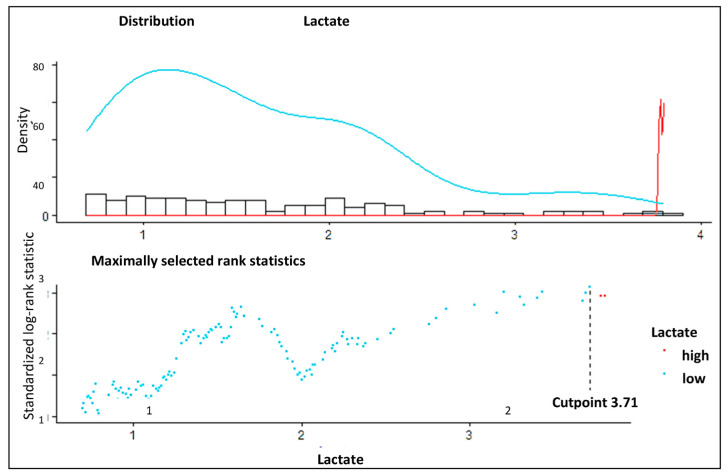 Figure 1
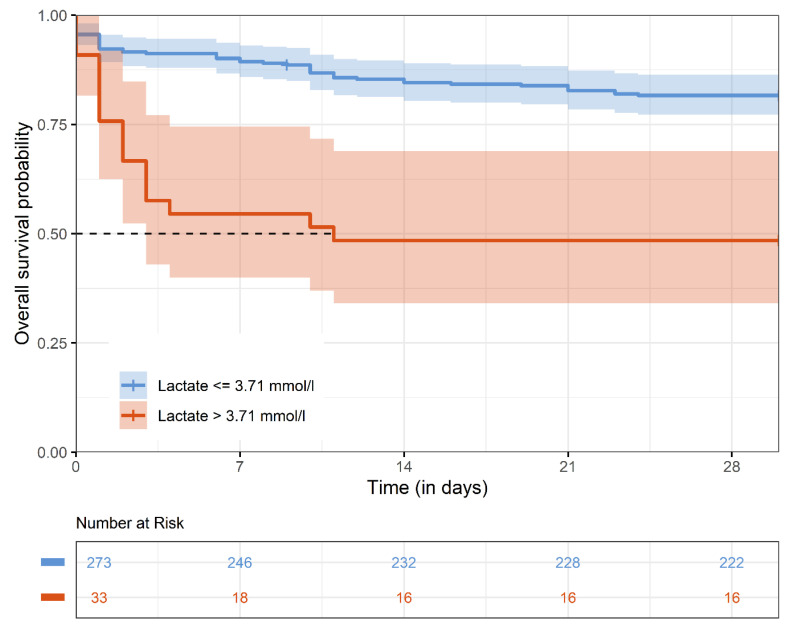 Figure 2
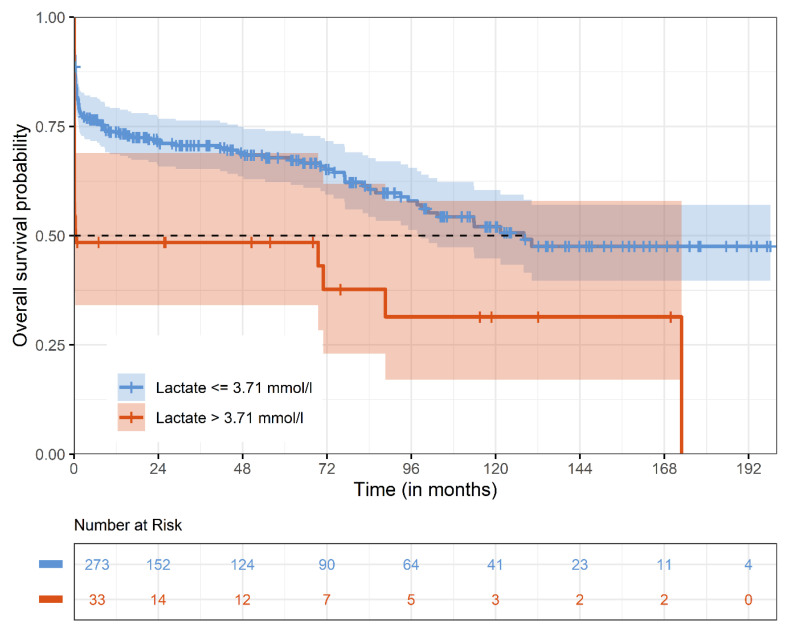 Figure 3
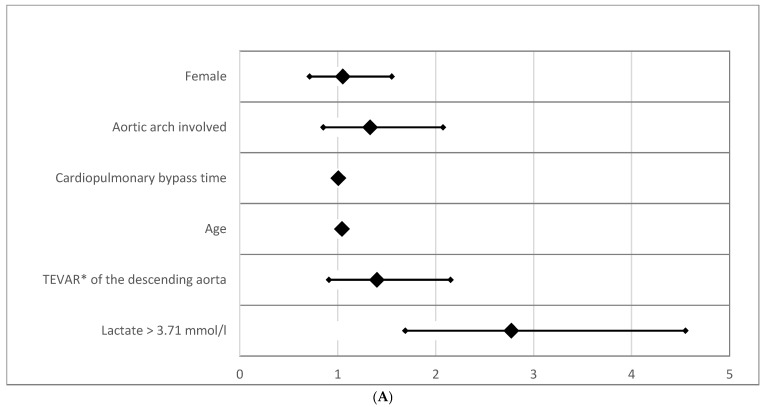 Figure 4
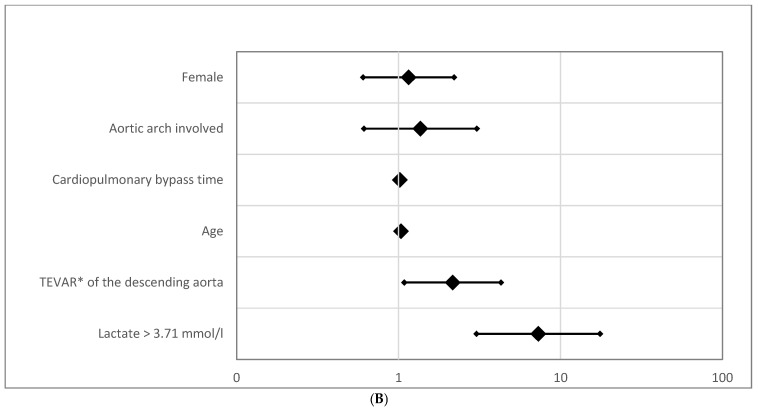 Figure 5
Peer Reviews
No public reviews on file for this paper yet. If you reviewed it on a platform where reviews are public (OpenReview, ICLR, NeurIPS, ICML), you can paste yours below so the community can read it here.
Videos
No videos yet. Explain this paper in a talk, walkthrough, or lecture? Add one.
Taxonomy
TopicsAortic Disease and Treatment Approaches · Aortic aneurysm repair treatments · Cardiac Valve Diseases and Treatments