Morton’s Neuroma or Intermetatarsal Bursitis—A Prospective Diagnostic Study of Intermetatarsal Pain
Sif Binder Larsen, Cecilie Mørck Offersen, Eva Dyrberg, Jens Kurt Johansen, Naja Bjørslev Lange, Birthe Højlund Bech, Michael Bachmann Nielsen, Søren Tobias Torp-Pedersen

TL;DR
This study finds that intermetatarsal bursitis is more common than Morton’s neuroma in patients with forefoot pain, and ultrasound can be misleading in diagnosis.
Contribution
The study provides new insights into the diagnostic accuracy of MRI versus ultrasound for differentiating intermetatarsal bursitis and Morton’s neuroma.
Findings
MRI identified 53.8% of patients with intermetatarsal bursitis and 19.2% with Morton’s neuroma.
Ultrasound detected 96.2% of intermetatarsal bursitis cases but none with Morton’s neuroma.
Morton’s neuroma patients reported more severe and longer-lasting pain than those with intermetatarsal bursitis.
Abstract
Background: Intermetatarsal bursitis (IMB) is emerging as a diagnostic consideration for patients with forefoot pain. However, few investigations have been conducted into the incidence of IMB among patients with forefoot pain. The symptoms of IMB are described as mimicking those of Morton’s neuroma (MN). Currently, the best method to differentiate between MN and IMB is radiological evaluation. Based on this, the aim of this study was to investigate the incidence of IMB and MN in a prospective cohort of patients with intermetatarsal pain diagnosed with radiological evaluation and compared to a control group. Methods: This study included 26 patients and 13 controls. All participants underwent magnetic resonance imaging (MRI) and ultrasound (US) of one forefoot. Results: Among the 26 patients, 5 (19.2%) had MN and 14 (53.8%) had IMB on MRI compared to US, with which 25 (96.2%) cases of IMB…
Genes, proteins, chemicals, diseases, species, mutations and cell lines named across the full text — each resolved to its canonical identifier and authoritative record.
Click any figure to enlarge with its caption.
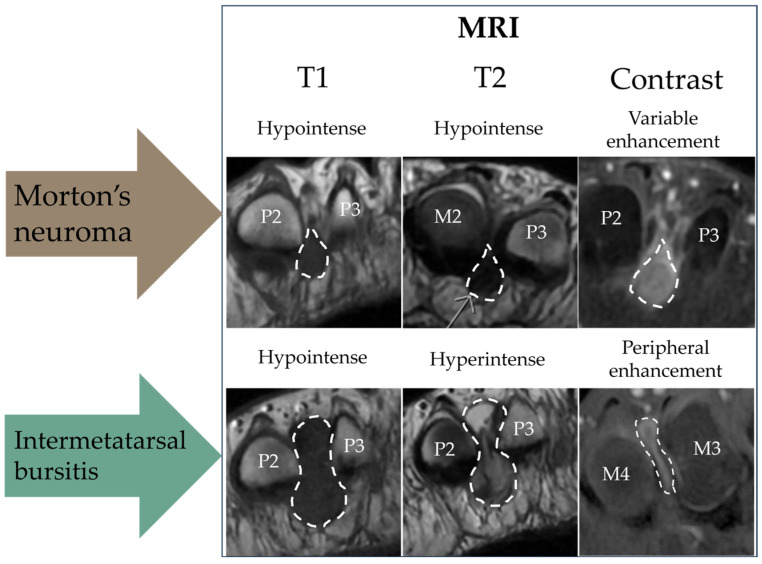 Figure 1
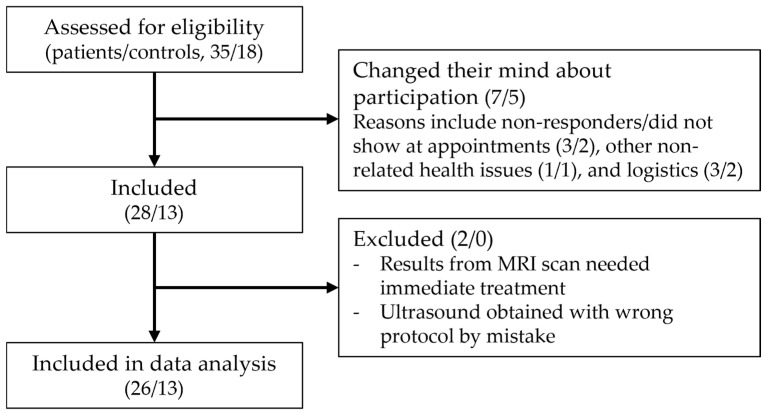 Figure 2
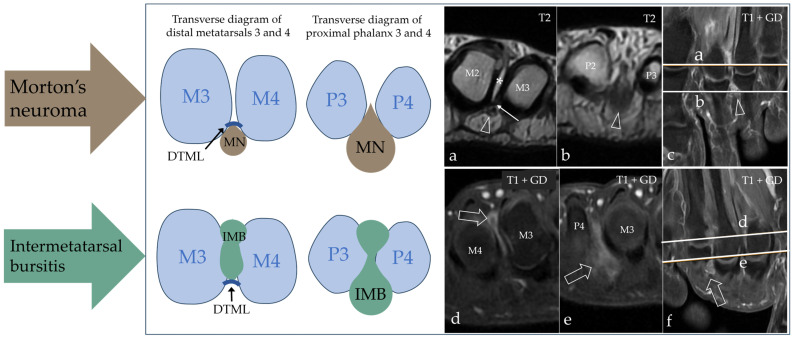 Figure 3
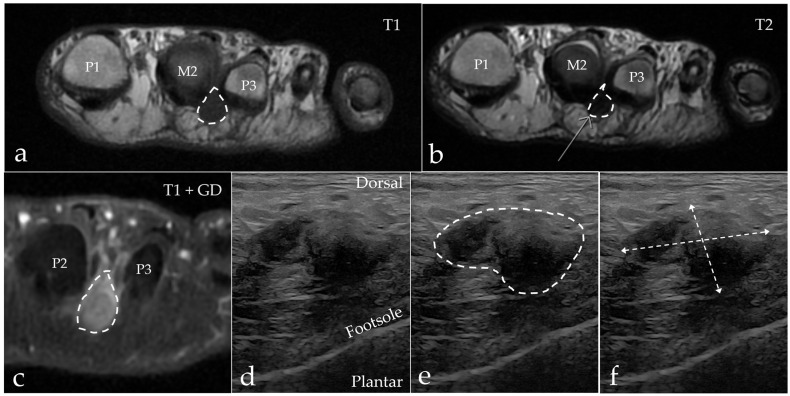 Figure 4
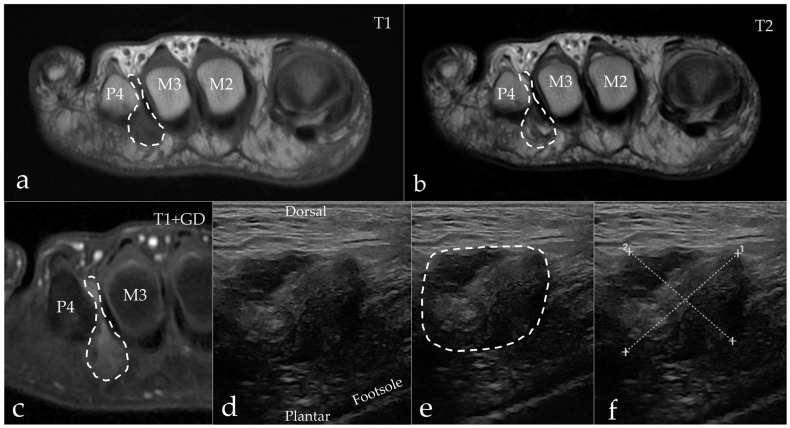 Figure 5
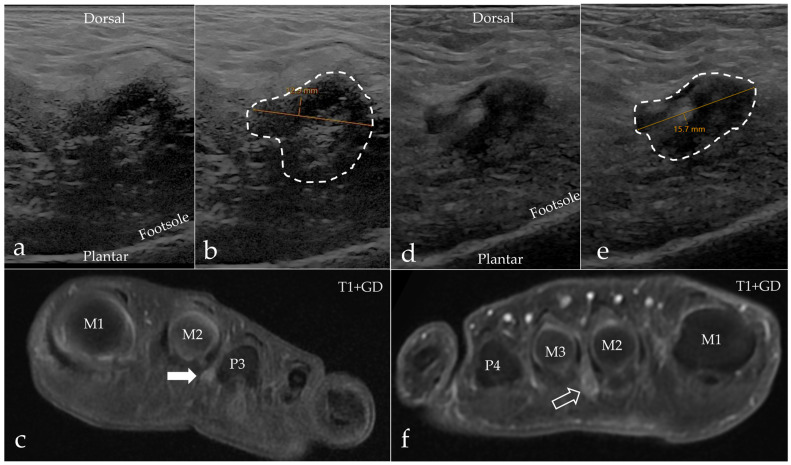 Figure 6
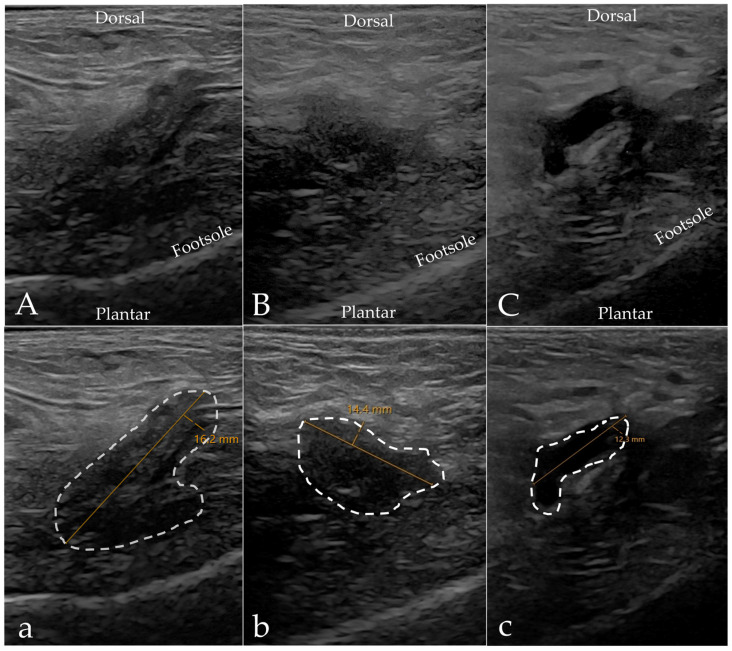 Figure 7
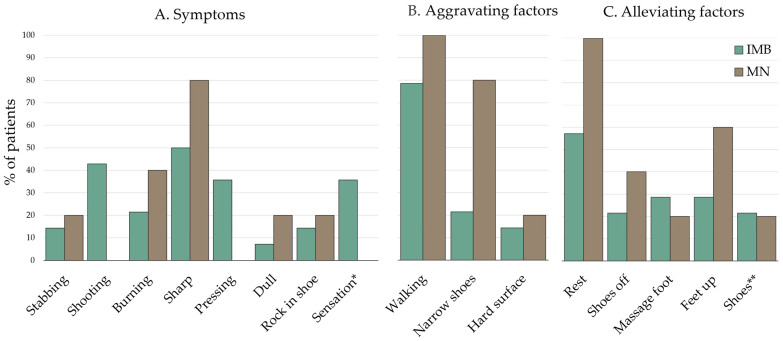 Figure 8
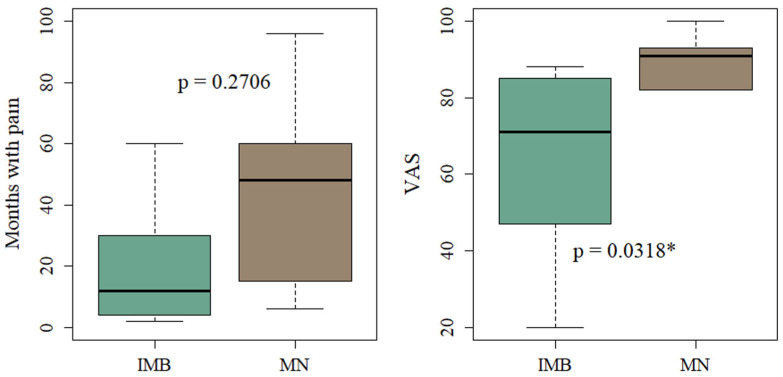 Figure 9
Peer Reviews
No public reviews on file for this paper yet. If you reviewed it on a platform where reviews are public (OpenReview, ICLR, NeurIPS, ICML), you can paste yours below so the community can read it here.
Videos
No videos yet. Explain this paper in a talk, walkthrough, or lecture? Add one.
Taxonomy
TopicsMusculoskeletal synovial abnormalities and treatments · Peripheral Nerve Disorders · Shoulder Injury and Treatment