Protective Effect of a Hexapeptide Derived from Rotifer-Specific SCO-Spondin Against Beta-Amyloid Toxicity
Zsolt Datki, Rita Sinka, Brian J. Dingmann, Bence Galik, Antal Szabo, Zita Galik-Olah, Gabor K. Toth, Zsolt Bozso

TL;DR
A hexapeptide derived from a rotifer protein protects against beta-amyloid toxicity, which is linked to neurodegenerative diseases like Alzheimer's.
Contribution
The study identifies a novel hexapeptide, DSSNDL, with protective effects against beta-amyloid toxicity in both in vitro and in vivo models.
Findings
DSSNDL showed significant protection against beta-amyloid toxicity in differentiated neuro-type cells and rotifers.
DSSNDL interacts with beta-amyloid aggregates, altering their properties and potentially inhibiting their toxicity.
The hexapeptide is present in both rotifer and human proteomes, suggesting potential translational relevance.
Abstract
The Rotimer (rotifer-specific biopolymer) like SCO-spondin (R-SSPO/1), predicted as the main component of this biopolymer, is an adequate base for the design of functional small peptides. This macromolecule is interactive and protective against neurotoxic human-type beta-amyloid 1-42 aggregates (agg-Aβ). The current work presents biological investigations and predictable molecular interaction analysis of DSSNDL and PNCRDGSDE peptides that were synthesized based on the sequences of R-SSPO/1. Viability assays (NADH-dependent cellular reduction capacity, intracellular esterase activity, and motility) were performed on differentiated neuro-type cell cultures (SH-SY5Y and PC12) and on Rotimer-depleted rotifers (Euchlanis dilatata and Lecane bulla). A control peptide (STTRPTGTT), not found in Rotimer, was also included in the study. All three peptides are present in both rotifer and human…
Genes, proteins, chemicals, diseases, species, mutations and cell lines named across the full text — each resolved to its canonical identifier and authoritative record.
Click any figure to enlarge with its caption.
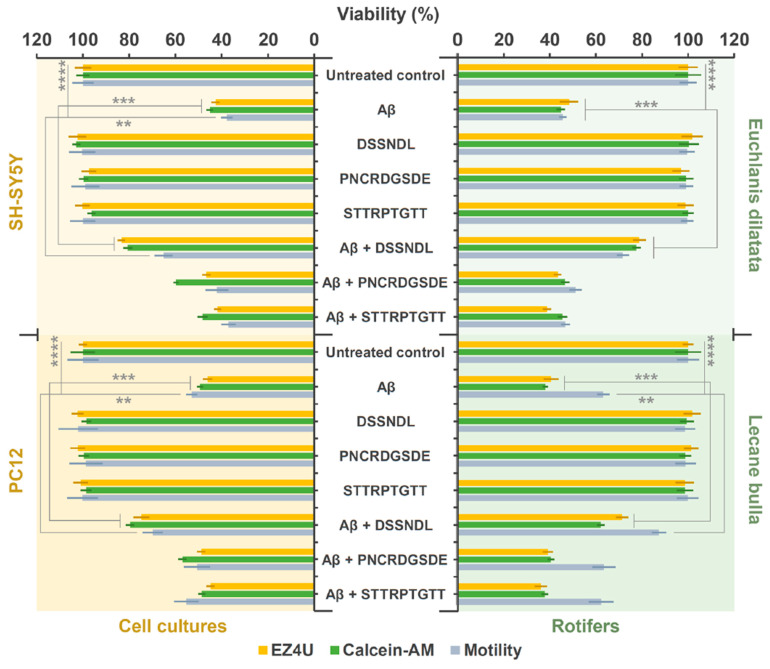 Figure 1
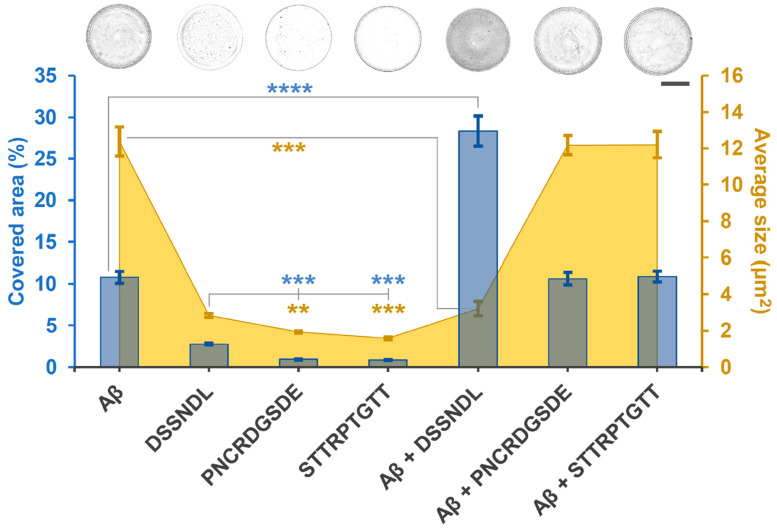 Figure 2
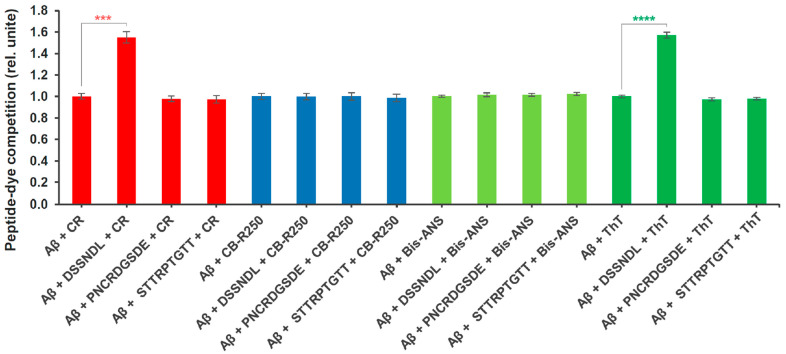 Figure 3
Peer Reviews
No public reviews on file for this paper yet. If you reviewed it on a platform where reviews are public (OpenReview, ICLR, NeurIPS, ICML), you can paste yours below so the community can read it here.
Videos
No videos yet. Explain this paper in a talk, walkthrough, or lecture? Add one.
Taxonomy
TopicsAlzheimer's disease research and treatments · Cholinesterase and Neurodegenerative Diseases · Protein Hydrolysis and Bioactive Peptides