Influence of HLA Class I and II Polymorphisms on COVID-19 Severity in a South Brazilian Population
Sergio Grava, Matheus Braga, Victor Hugo de Souza, Afonso Carrasco Pepineli, Aléia Harumi Uchibaba Yamanaka, Christiane Maria Ayo, Joana Maira Valentini Zacarias, Andréa Name Colado Simão, Larissa Danielle Bahls Pinto, Quirino Alves de Lima Neto, Jeane Eliete Laguila Visentainer

TL;DR
This study explores how variations in HLA genes affect the severity of COVID-19 in a Brazilian population, finding that certain HLA alleles are linked to either protection or increased risk.
Contribution
The study identifies specific HLA class II alleles associated with protection or risk for severe/critical COVID-19 outcomes in a South Brazilian population.
Findings
The DRB1*11 allelic group is associated with protection against severe and critical COVID-19.
The DRB1*15 allelic group is associated with increased risk of severe and critical disease.
In silico analysis shows DRB1*15 has higher binding affinity to SARS-CoV-2 non-structural proteins.
Abstract
The high variability of human leukocyte antigen (HLA) genes results in each molecule having distinct antigenic peptide binding capacities, potentially influencing the immune response to SARS-CoV-2. This study aimed to investigate associations between HLA class I (A, B) and class II (DRB1) polymorphisms and COVID-19 severity in a South Brazilian population, and to evaluate the binding affinity of alleles to viral peptides. A cross-sectional study included 503 unvaccinated patients with RT-qPCR-confirmed COVID-19: 145 non-severe, 129 severe, and 229 critical. HLA typing was performed using PCR-SSO and Luminex™ technology. The DRB1*11 allelic group was significantly associated with protection against severe and critical cases, while DRB1*15 was associated with increased risk; both remained significant after Bonferroni correction. Other allelic groups were associated with disease outcomes…
Genes, proteins, chemicals, diseases, species, mutations and cell lines named across the full text — each resolved to its canonical identifier and authoritative record.
Click any figure to enlarge with its caption.
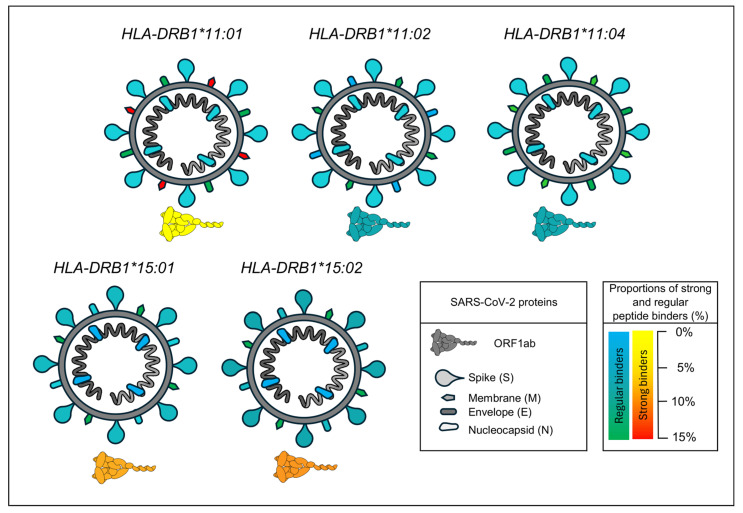 Figure 1
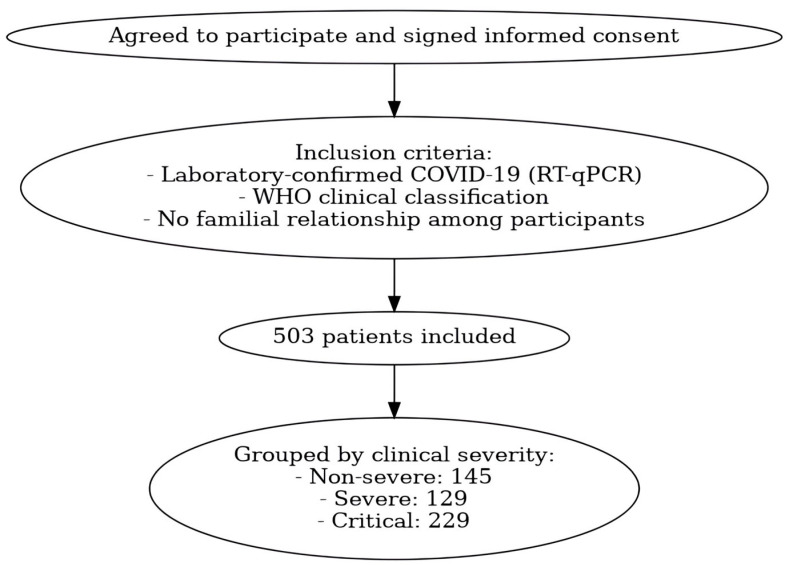 Figure 2
Peer Reviews
No public reviews on file for this paper yet. If you reviewed it on a platform where reviews are public (OpenReview, ICLR, NeurIPS, ICML), you can paste yours below so the community can read it here.
Videos
No videos yet. Explain this paper in a talk, walkthrough, or lecture? Add one.
Taxonomy
TopicsSARS-CoV-2 and COVID-19 Research · COVID-19 Clinical Research Studies · vaccines and immunoinformatics approaches