Decursin Suppresses Esophageal Squamous Cell Carcinoma Progression via Orchestrated Cell Cycle Deceleration, Apoptotic Activation, and Oncoprotein Degradation
Chen Fang, Lin Wu, Xiangzhe Yang, Kai Xie, Peng Zhang, Yu Feng, Haitao Ma, Xing Tong

TL;DR
Decursin, a natural compound, shows promise in treating esophageal cancer by stopping tumor growth and reducing harmful proteins.
Contribution
Decursin's novel mechanism involves proteasomal degradation of oncoproteins TP63 and SOX2 in ESCC.
Findings
Decursin selectively inhibits ESCC cell viability without harming normal cells.
Decursin reduces tumor growth in xenograft models without systemic toxicity.
Decursin induces cell cycle arrest and apoptosis via proteasome-mediated oncoprotein degradation.
Abstract
Esophageal squamous cell carcinoma (ESCC) remains a lethal malignancy with limited therapeutic options. This study investigated the antitumor efficacy and mechanisms of decursin, a natural pyranocoumarin derivative, against ESCC. In vitro analyses demonstrated that decursin selectively inhibited ESCC cell viability (IC50: 14.62 ± 0.61–26.20 ± 2.11 μM across TE-1, KYSE-30, and KYSE-150 cell lines) without affecting normal esophageal epithelial cells (Het-1A). Decursin (10 μM) suppressed colony formation, impaired wound healing (p < 0.001 at 48 h), and reduced Transwell migration/invasion in KYSE-150 cells. Subcutaneous xenograft models revealed significant tumor growth inhibition (p < 0.01) with decursin treatment (10 mg/kg, intraperitoneal), accompanied by no systemic toxicity. Mechanistically, decursin induced G0/G1 cell cycle deceleration (p < 0.01) and apoptosis through…
Genes, proteins, chemicals, diseases, species, mutations and cell lines named across the full text — each resolved to its canonical identifier and authoritative record.
Click any figure to enlarge with its caption.
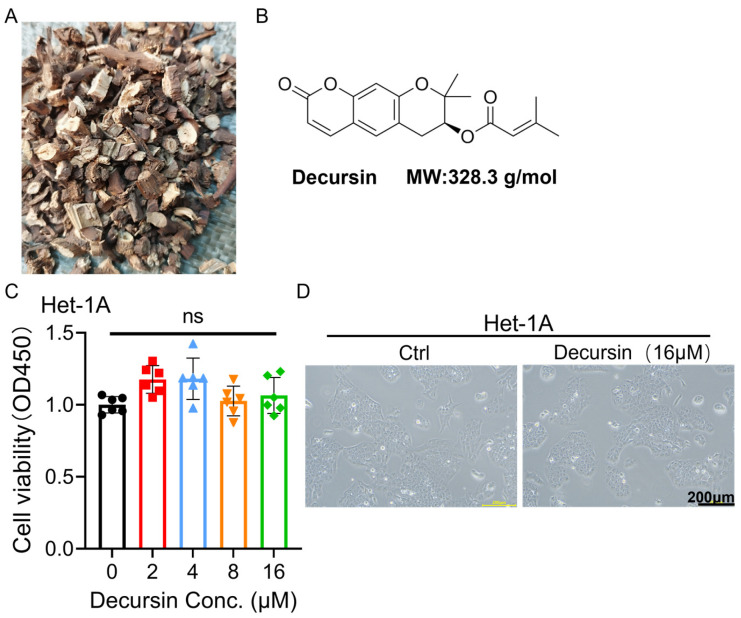 Figure 1
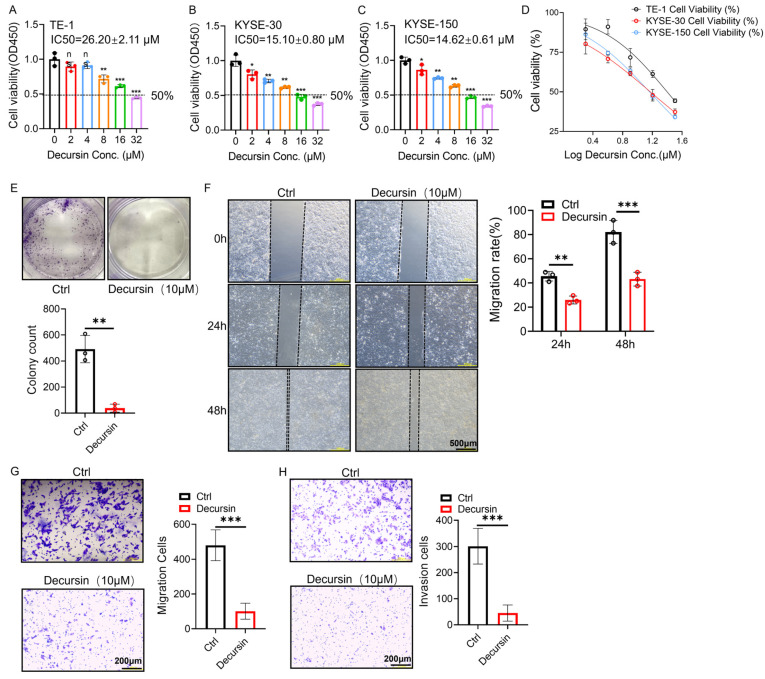 Figure 2
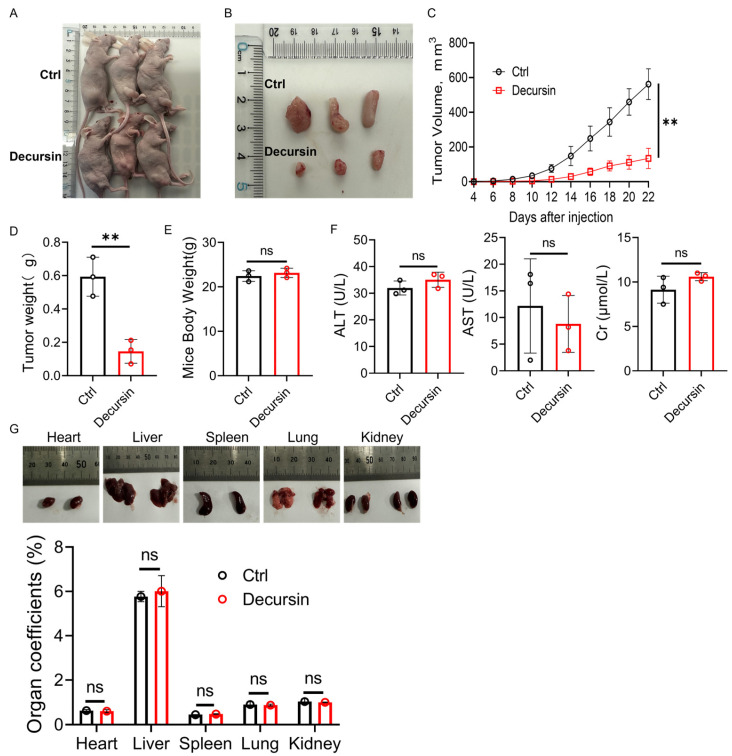 Figure 3
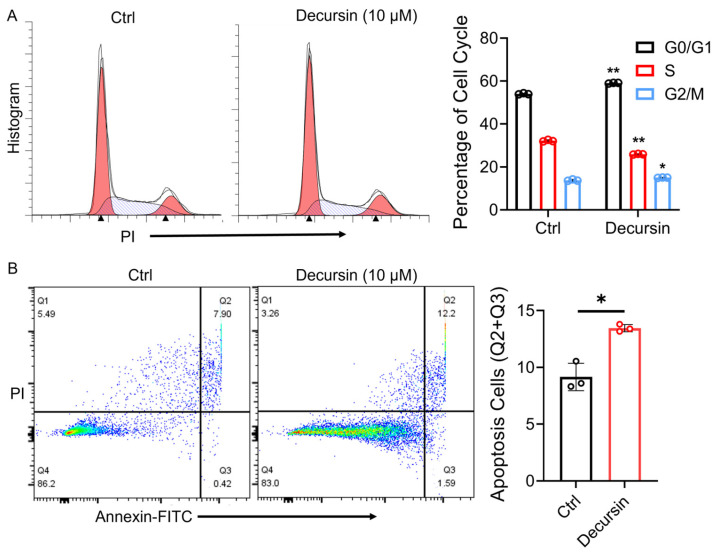 Figure 4
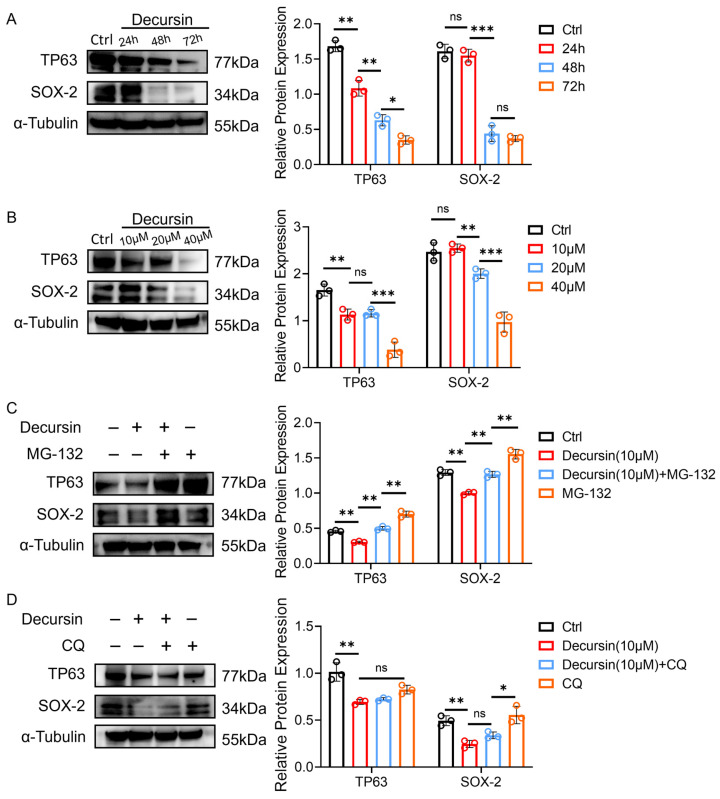 Figure 5
Peer Reviews
No public reviews on file for this paper yet. If you reviewed it on a platform where reviews are public (OpenReview, ICLR, NeurIPS, ICML), you can paste yours below so the community can read it here.
Videos
No videos yet. Explain this paper in a talk, walkthrough, or lecture? Add one.
Taxonomy
TopicsMicrobial Natural Products and Biosynthesis · Marine Sponges and Natural Products · Infectious Diseases and Mycology