Impact of Storage Conditions on Bronchoalveolar Lavage Fluid Analysis: A Human Study
Yu Shionoya, Kanae Maruyama, Takeshi Kawasaki, Mayumi Ono, Yushi Murai, Ryutaro Hirama, Dai Horiuchi, Noriko Sakuma, Shinsuke Kitahara, Shun Sato, Kohei Takahashi, Yoshihito Ozawa, Takuji Suzuki

TL;DR
This study shows that storing bronchoalveolar lavage fluid affects neutrophil counts, suggesting prompt processing or refrigeration is needed for accurate lung disease diagnosis.
Contribution
The study identifies neutrophil susceptibility to storage conditions in BALF, offering guidance for optimal sample handling.
Findings
Total cell counts and percentages of eosinophils, lymphocytes, and macrophages remain stable for up to 24 hours.
Neutrophil percentages significantly decline over time, especially at room temperature.
Storage at 4°C preserves neutrophils better than room temperature, though declines still occur after 24 hours.
Abstract
Background: Bronchoalveolar lavage fluid (BALF) analysis is essential for the accurate diagnosis and management of interstitial lung diseases (ILDs). Despite established guidelines, variability in sample handling may affect diagnostic accuracy. This study aimed to evaluate how different storage conditions impact BALF cell counts and differentials to guide optimal sample handling practices. Methods: Forty patients who underwent BAL at Chiba University Hospital from June to December 2024 were included. BALF samples were allocated into five groups based on processing conditions: immediate analysis within 1 h, storage at either at 4 °C or room temperature (RT) for 6 h, or storage at 4 °C or RT for 24 h. Total cell counts (TCC) and differential counts were measured and compared among conditions. Results: TCC remained stable over 24 h at both 4 °C (p = 0.86) and RT (p = 0.90). Similarly, the…
Genes, proteins, chemicals, diseases, species, mutations and cell lines named across the full text — each resolved to its canonical identifier and authoritative record.
Click any figure to enlarge with its caption.
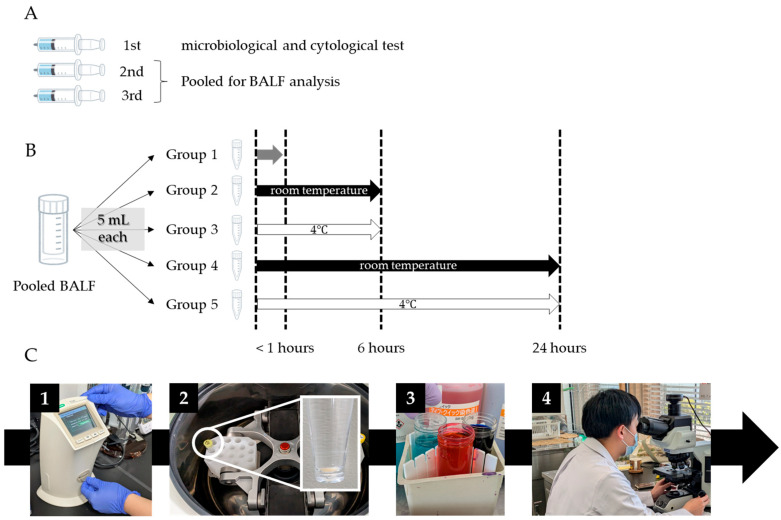 Figure 1
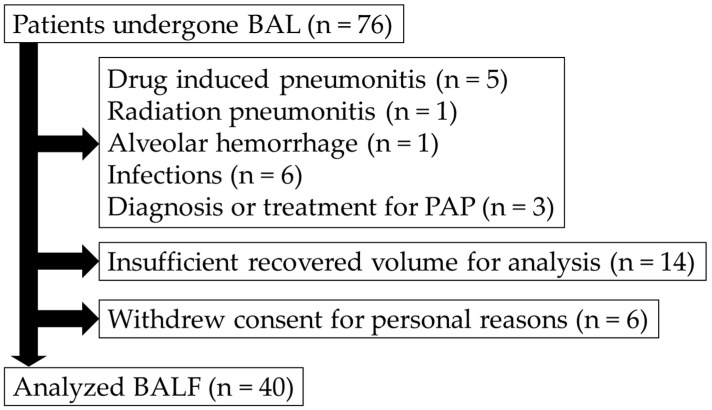 Figure 2
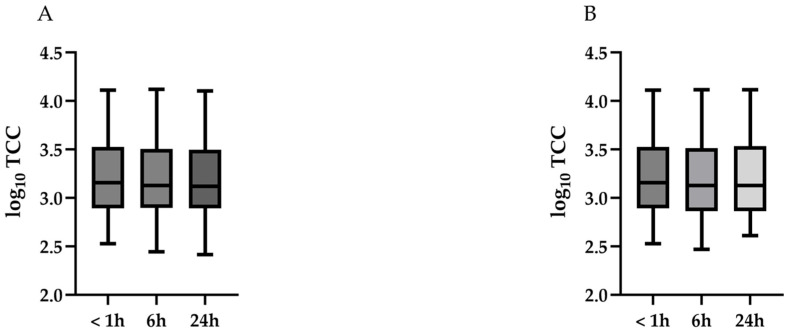 Figure 3
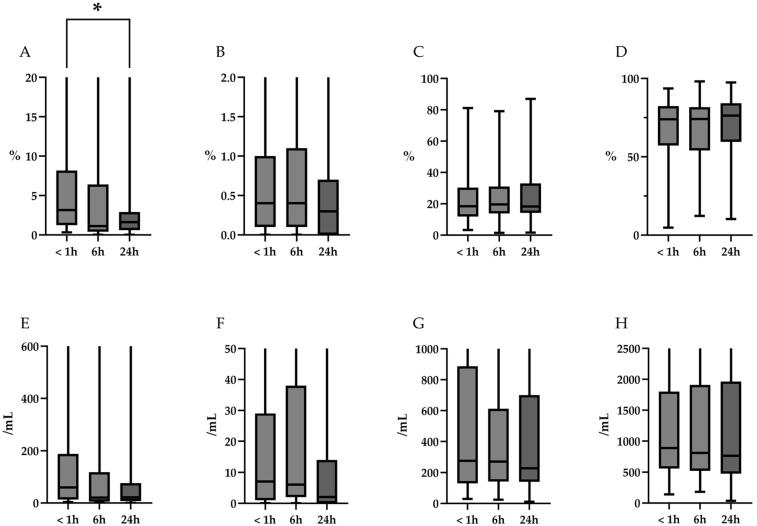 Figure 4
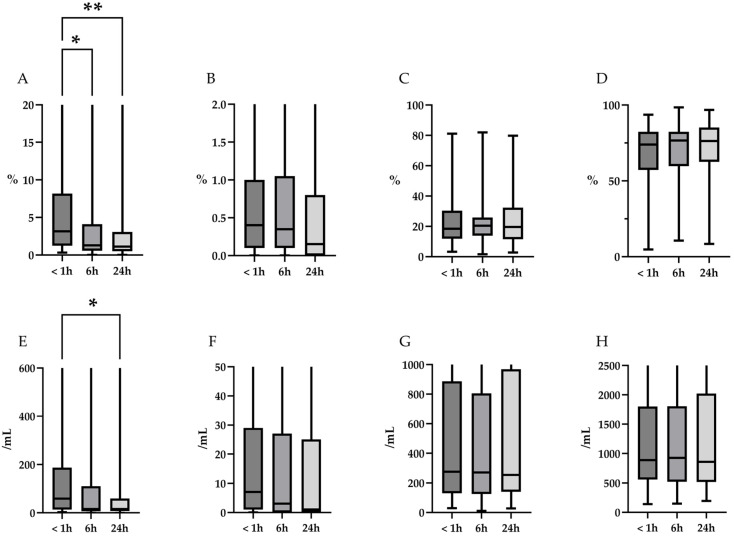 Figure 5
 Figure 6
Peer Reviews
No public reviews on file for this paper yet. If you reviewed it on a platform where reviews are public (OpenReview, ICLR, NeurIPS, ICML), you can paste yours below so the community can read it here.
Videos
No videos yet. Explain this paper in a talk, walkthrough, or lecture? Add one.
Taxonomy
TopicsInhalation and Respiratory Drug Delivery · Interstitial Lung Diseases and Idiopathic Pulmonary Fibrosis · Chronic Obstructive Pulmonary Disease (COPD) Research