A major ecological niche of eosinophils in evolving Schistosoma granulomas challenges the eosinophil view as “helminth killer” cells
Luccas M. Barata, Kássia K. Malta, Vitor H. Neves, Cinthia Palazzi, Eliane G. Oliveira-Barros, Yasmin Aguiar, Felipe Kneip, Bruno A. Marcelino, Lívia A. S. Carmo, João Felipe Audi-Gazeta, Pedro H. S. Santos, Maria Karolynna B. Milani, Michelle C. A. Paula, Eliana C. B. Toscano

TL;DR
Eosinophils in schistosomiasis granulomas are organized in a peripheral niche and act as immunoregulatory cells, not just 'helminth killer' cells.
Contribution
Reveals a conserved spatial niche of eosinophils in Schistosoma granulomas, challenging their traditional role as helminth killers.
Findings
Eosinophils occupy a major peripheral niche in all granuloma stages.
Eosinophils interact with immune cells and secrete via piecemeal degranulation.
The niche is unrelated to parasite eggs and is conserved in both mouse and natural infections.
Abstract
Eosinophil-rich granulomas, formed around tissue-trapped parasite eggs, are hallmarks of schistosomiasis mansoni, a prevalent neglected tropical disease. How eosinophils populate and affect the complex Schistosoma granulomas remains unclear. Here, we mapped eosinophils across evolutional hepatic granulomas in a mouse model and in a primary wild reservoir for human schistosomiasis in Brazil (water rat Nectomys squamipes). With in-depth quantitative image analysis and three-dimensional histological reconstructions of entire granulomas, we find that eosinophils are spatially organized and occupy a major, peripheral niche conserved across space and time in all granuloma stages and both experimental and natural infections. Within this niche, immature and mature eosinophils coinhabit, compartmentalize their major basic protein-1 content, robustly interact with other immune cells, and secrete…
Genes, proteins, chemicals, diseases, species, mutations and cell lines named across the full text — each resolved to its canonical identifier and authoritative record.
Click any figure to enlarge with its caption.
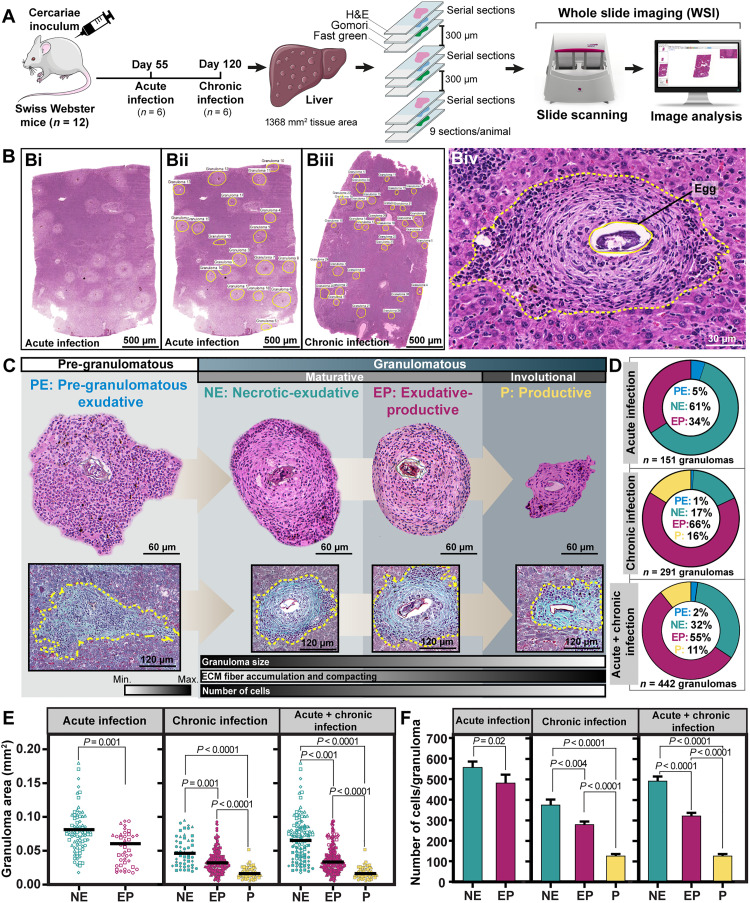 Figure 1
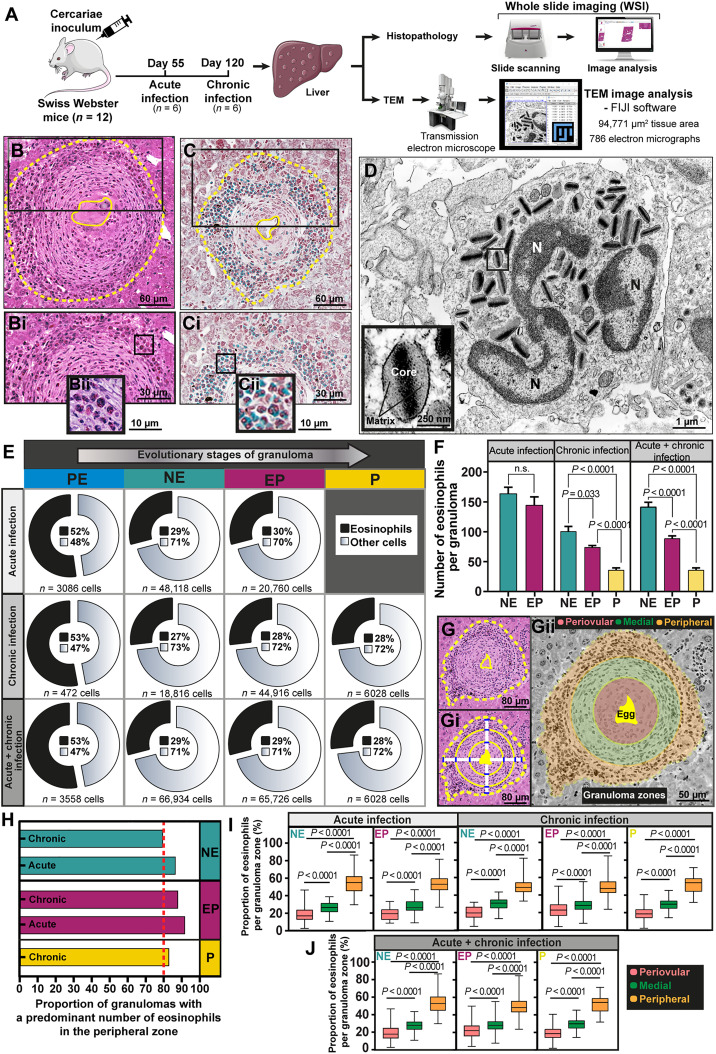 Figure 2
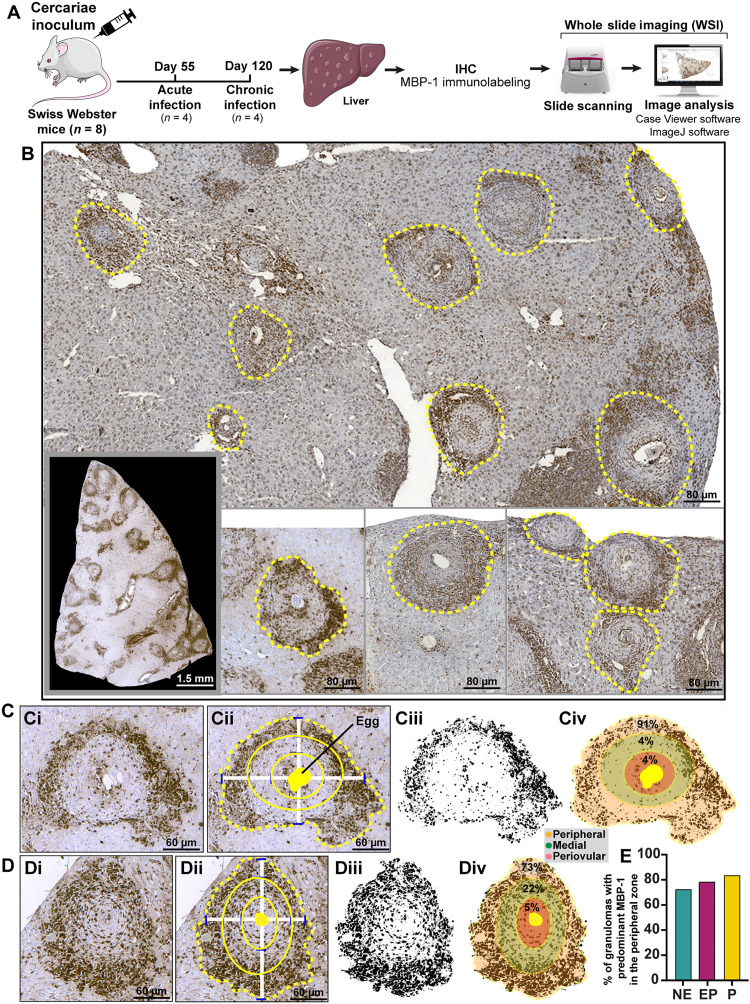 Figure 3
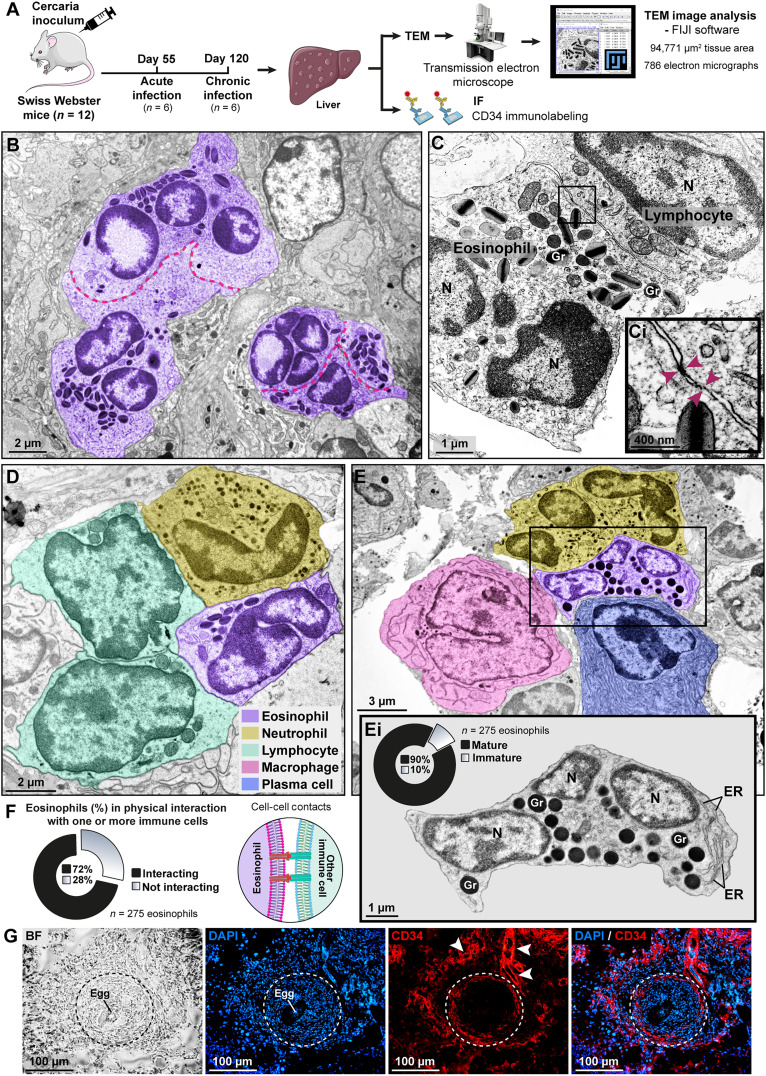 Figure 4
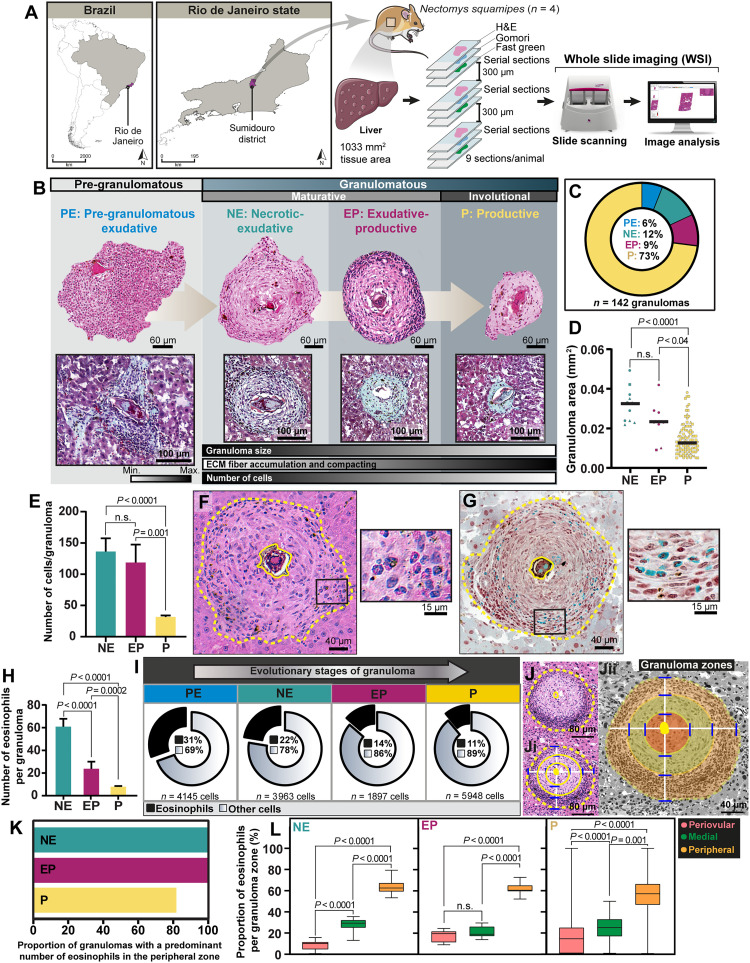 Figure 5
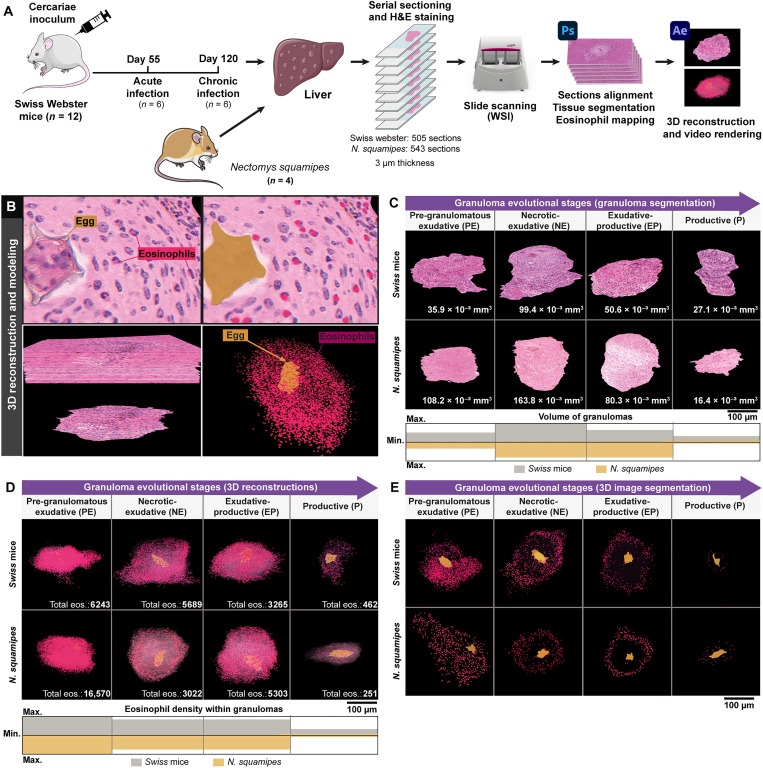 Figure 6
Peer Reviews
No public reviews on file for this paper yet. If you reviewed it on a platform where reviews are public (OpenReview, ICLR, NeurIPS, ICML), you can paste yours below so the community can read it here.
Videos
No videos yet. Explain this paper in a talk, walkthrough, or lecture? Add one.
Taxonomy
TopicsParasites and Host Interactions · Helminth infection and control · Parasitic Diseases Research and Treatment