Evaluating Impulsivity as a Mechanism of Behaviour Change for 12-step Engagement during Alcohol Use Disorder Recovery
Emily E. Levitt, Kyla L. Belisario, Amanda Doggett, Allan Clifton, Robert Stout, John F. Kelly, James MacKillop

TL;DR
This study explores whether reduced impulsivity explains the benefits of 12-step group participation in early alcohol use disorder recovery.
Contribution
The study provides new evidence on the relationship between 12-step attendance and impulsivity in early recovery from alcohol use disorder.
Findings
Increased 12-step attendance was linked to reduced drinking and specific impulsivity traits.
Impulsivity changes did not mediate the benefits of 12-step participation.
Findings suggest the need for further research on the mechanisms of 12-step effectiveness.
Abstract
Participation in 12-step groups (TS), such as Alcoholics Anonymous, confers benefits among individuals with alcohol use disorder (AUD), and one candidate mechanism underlying these effects is reductions in impulsivity. Using a multidimensional assessment of impulsivity, the current study examined impulsive personality and action in a longitudinal cohort of adults with AUD initiating a significant recovery attempt. A prospective matched-sample cohort study design compared participants who reported a clinically meaningful increase in TS attendance (i.e., increase of ≥ 1 meetings/week; n = 74) from enrollment to 6 weeks to a matched control group who did not increase attendance (n = 74). Drinking was assessed using the Timeline Followback (% drinking days [%DD], % heavy drinking days [%HDD]); impulsivity was assessed using delay discounting (DD) and five UPPS-P subscales. Mediation models…
Genes, proteins, chemicals, diseases, species, mutations and cell lines named across the full text — each resolved to its canonical identifier and authoritative record.
Click any figure to enlarge with its caption.
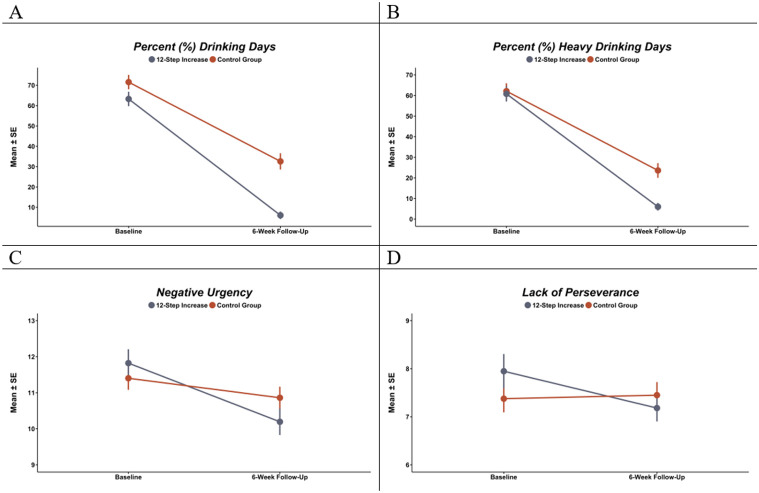 Figure 1
Peer Reviews
No public reviews on file for this paper yet. If you reviewed it on a platform where reviews are public (OpenReview, ICLR, NeurIPS, ICML), you can paste yours below so the community can read it here.
Videos
No videos yet. Explain this paper in a talk, walkthrough, or lecture? Add one.
Taxonomy
TopicsSubstance Abuse Treatment and Outcomes · Behavioral Health and Interventions