Cellular and Transcriptional Landscape of Human Hypoplastic Left Heart Syndrome
Kory Lavine, Farid Kadyrov, Junedh Amrute, Ivan Kuznetsov, Kristina Li, Zoltan Arany, Jonathan Edwards, Carmen Sucharov, Shelley Miyamoto

TL;DR
This study maps the cellular and genetic changes in a severe heart defect using advanced sequencing to understand how heart cells interact and contribute to heart failure.
Contribution
The study provides a detailed single-nucleus RNA sequencing atlas of human hypoplastic left heart syndrome and identifies cell-specific signaling pathways in heart failure.
Findings
Fibroblasts and endocardial cells show significant transcriptional changes between non-failing and failing heart states.
NRG3 and CCN2 signaling pathways are implicated in endocardial-fibroblast communication in different disease states.
FOS, JUN, and STAT3 are predicted regulators of fibroblast activation and endocardial adaptation in heart failure.
Abstract
Hypoplastic left heart syndrome (HLHS) is a congenital heart defect characterized by impaired development of the left ventricle, often managed through surgical palliation creating a single ventricle (SV). Failure of the anatomical right ventricle (RV) represents a common complication with high mortality. We used single-nucleus RNA sequencing to generate a map of the pediatric non-failing (NF) and failing (SysHF) SV. Fibroblasts and endocardial cells displayed the greatest transcriptional shifts between NF and SysHF. Notably, activated fibroblasts expanded in SysHF, and endocardial cells in NF demonstrated adaptive transcriptomic shifts absent from controls or SysHF samples. Ligand-target analysis predicted disease-state specific signaling from endocardial cells to fibroblasts: NRG3 signaling in NF and CCN2 signaling in SysHF. In silico perturbation predicted FOS, JUN, and STAT3 as…
Genes, proteins, chemicals, diseases, species, mutations and cell lines named across the full text — each resolved to its canonical identifier and authoritative record.
Click any figure to enlarge with its caption.
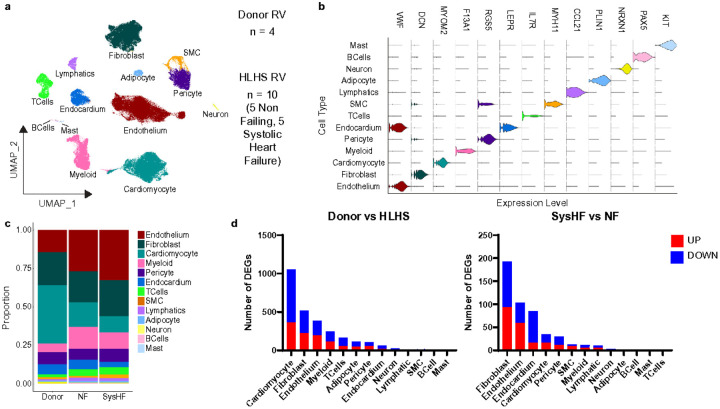 Figure 1
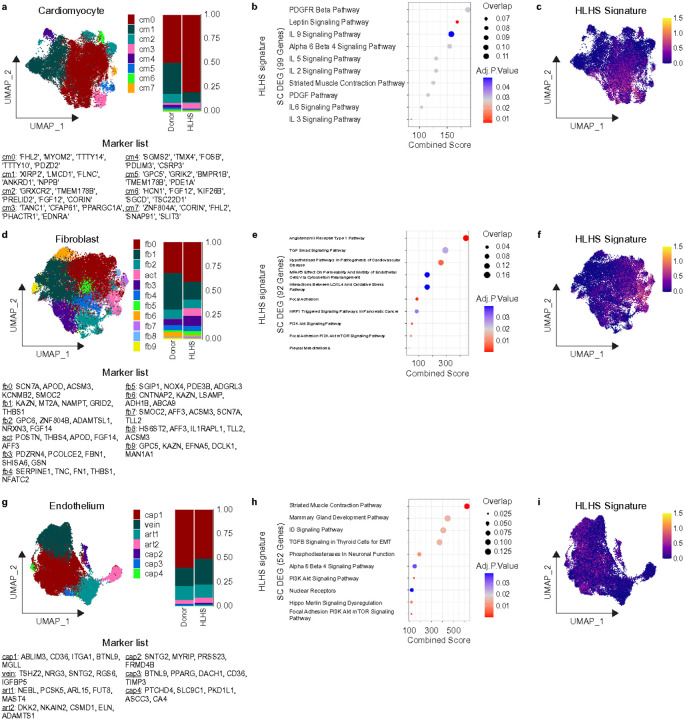 Figure 2
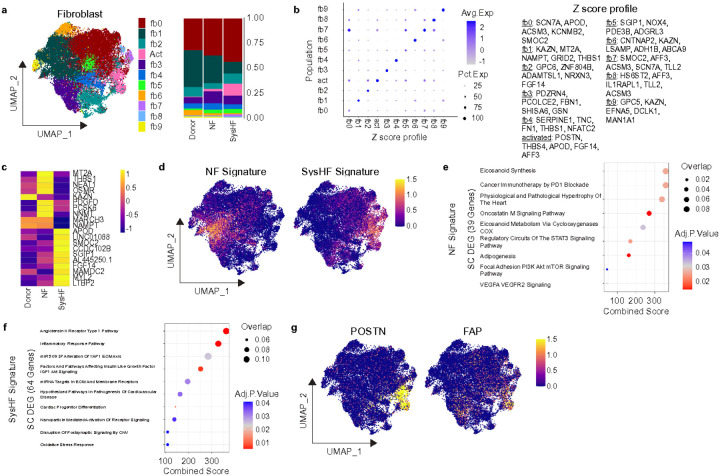 Figure 3
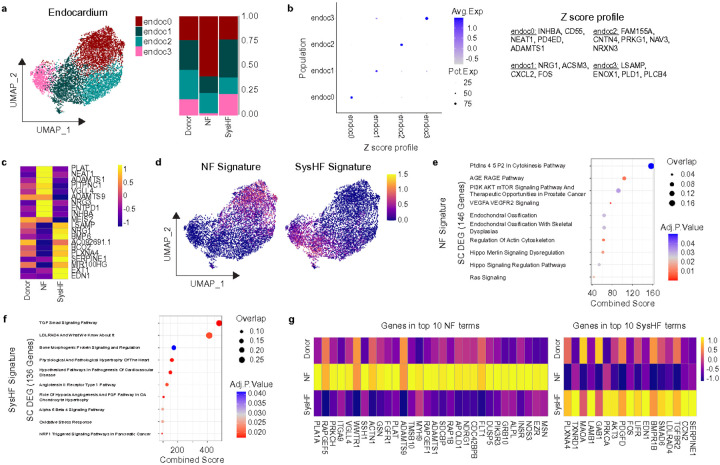 Figure 4
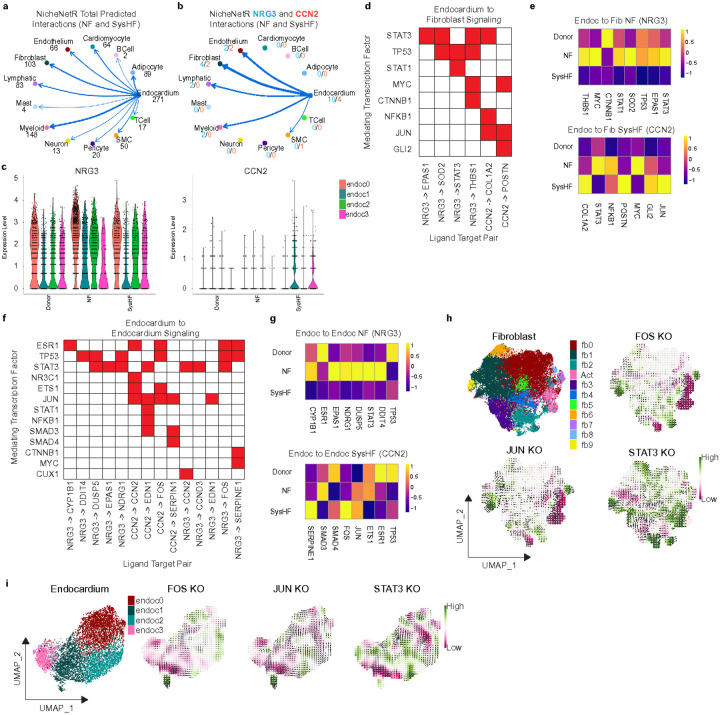 Figure 5
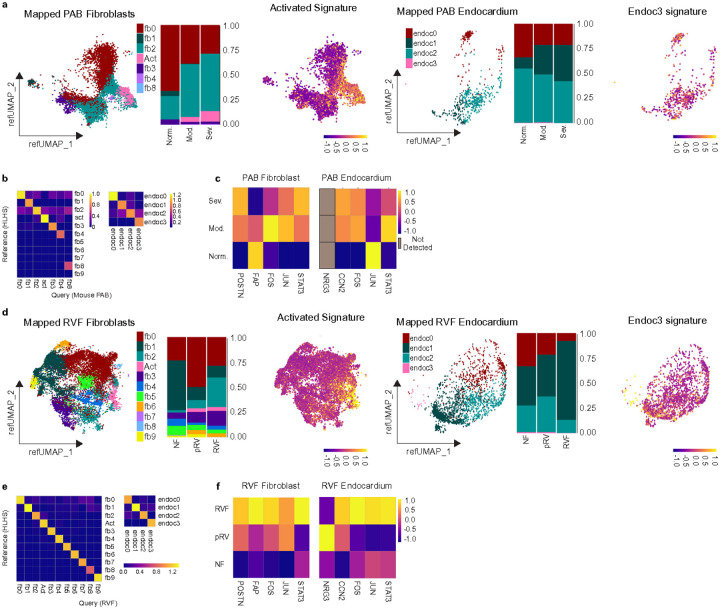 Figure 6
Peer Reviews
No public reviews on file for this paper yet. If you reviewed it on a platform where reviews are public (OpenReview, ICLR, NeurIPS, ICML), you can paste yours below so the community can read it here.
Videos
No videos yet. Explain this paper in a talk, walkthrough, or lecture? Add one.
Taxonomy
TopicsCongenital Heart Disease Studies