Identification of cross-stage, cross-species malaria CD8+ T cell antigens
Camila R. R. Barbosa, Luna B. de Lacerda, Paulo Bettencourt, David Morrow, Dhelio B. Pereira, Maya Aleshnick, Julie Mitchell, Zezhou Zhao, Cristopher Gomes, Guilherme C. Maia, Gregório G. Almeida, Camila M. Costa, Annalisa Nicastri, Marie Rose Schrimpf, Roxanne Beebe

TL;DR
Researchers identified malaria antigens that could be used in a vaccine targeting multiple parasite stages and species.
Contribution
The study provides the first unbiased identification of Plasmodium antigens presented via HLA-I on infected reticulocytes.
Findings
453 unique peptides from 166 proteins were identified as HLA-I-presented antigens in P. vivax-infected reticulocytes.
Many identified peptides are conserved between P. falciparum and P. vivax and are immunogenic in human and non-human primate samples.
Some antigens were targets of protective CD8+ T cell immunity in rodents, suggesting potential for cross-species vaccine development.
Abstract
Malaria is one of the most prevalent parasitic diseases in the world. In 2023, 263 million malaria cases were estimated worldwide1. Two species of Plasmodium, P. falciparum and P. vivax, cause most human malaria. Despite the licensing of two partially protective vaccines for P. falciparum, there is no vaccine capable of providing long-term control or elimination2,3. A major limitation for vaccine development is the lack of validated T cell epitopes for either species that could be targeted by vaccines. P. vivax is the most widespread human malaria parasite and is the major species causing malaria in the Americas and Asia while P. falciparum is more prevalent in Africa1. P. vivax exclusively infects reticulocytes in peripheral blood, which, unlike the mature erythrocytes infected by P. falciparum, still retain RNA and therefore retain host protein translation capabilities4. We previously…
Genes, proteins, chemicals, diseases, species, mutations and cell lines named across the full text — each resolved to its canonical identifier and authoritative record.
Click any figure to enlarge with its caption.
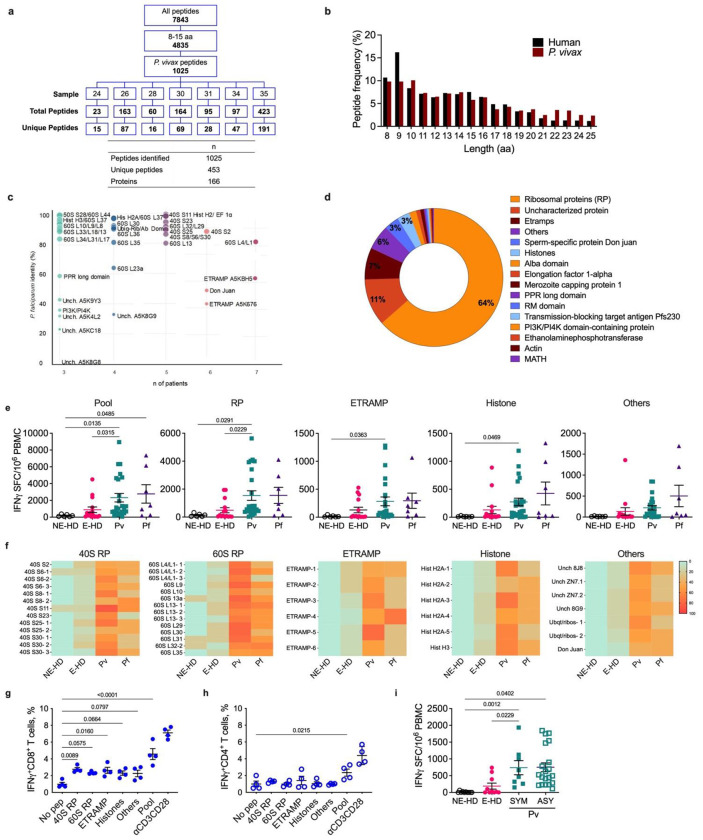 Figure 1
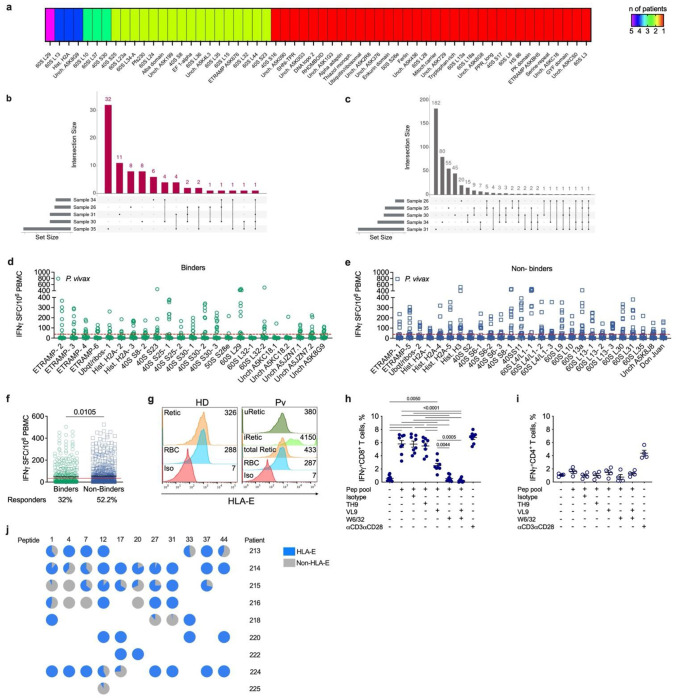 Figure 2
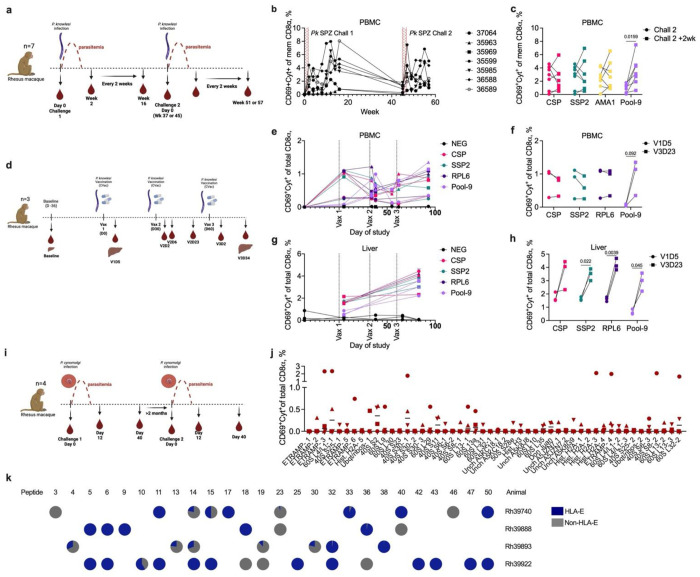 Figure 3
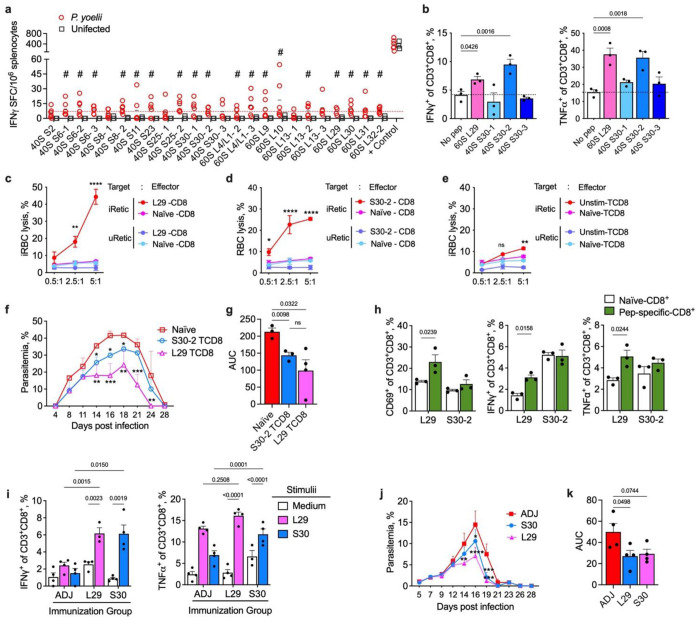 Figure 4
Peer Reviews
No public reviews on file for this paper yet. If you reviewed it on a platform where reviews are public (OpenReview, ICLR, NeurIPS, ICML), you can paste yours below so the community can read it here.
Videos
No videos yet. Explain this paper in a talk, walkthrough, or lecture? Add one.
Taxonomy
TopicsMosquito-borne diseases and control · Malaria Research and Control · vaccines and immunoinformatics approaches