Plasma Extracellular Vesicles from Preeclamptic Patients Trigger a Detrimental Crosstalk Between Glomerular Endothelial Cells and Podocytes Involving Endothelin-1
Elena Grossini, Marco Quaglia, Stefania Prenna, Alessandra Stasi, Rossana Franzin, Giuseppe Castellano, Valentino Remorgida, Alessandro Libretti, Sakthipriyan Venkatesan, Carlo Smirne, Guido Merlotti, Carmen Imma Aquino, Stefania Bruno, Giovanni Camussi, Daniela Surico

TL;DR
This study shows that extracellular vesicles from preeclamptic patients harm kidney cells by triggering harmful interactions involving Endothelin-1.
Contribution
The study identifies a novel mechanism of glomerular damage in preeclampsia involving EVs and Endothelin-1-mediated crosstalk between kidney cells.
Findings
EVs from preeclamptic patients are higher in concentration and size compared to healthy controls.
PE-EVs induce kidney cell damage by increasing ROS and albumin permeability.
Endothelin-1 released by endothelial cells downregulates nephrin in podocytes, contributing to proteinuria.
Abstract
Extracellular vesicles (EVs) may play a role in preeclampsia (PE)-associated glomerular damage. We herein investigated the role of PE plasma EVs in triggering a detrimental crosstalk between glomerular endothelial cells (GEC) and podocytes (PODO). Clinical and laboratory variables were examined at T0 (diagnosis), T1 (delivery), and T2 (one month after delivery) in 36 PE patients and 17 age-matched controls. NanoSight and MACSPlex evaluated EV concentration, size, and phenotype. GEC and PODO were stimulated with plasma EVs to study viability, reactive oxygen species (ROS) production, permeability to albumin, endothelial-to-mesenchymal transition, and Endothelin-1 release. EV size and concentration were higher in PE than in healthy controls and in severe than in mild forms of disease. At T0, higher EV concentration correlated with proteinuria, blood pressure, uric acid, and liver enzyme…
Genes, proteins, chemicals, diseases, species, mutations and cell lines named across the full text — each resolved to its canonical identifier and authoritative record.
Click any figure to enlarge with its caption.
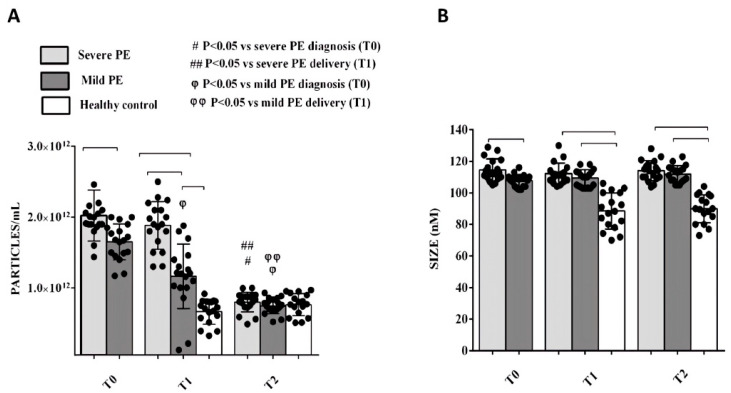 Figure 1
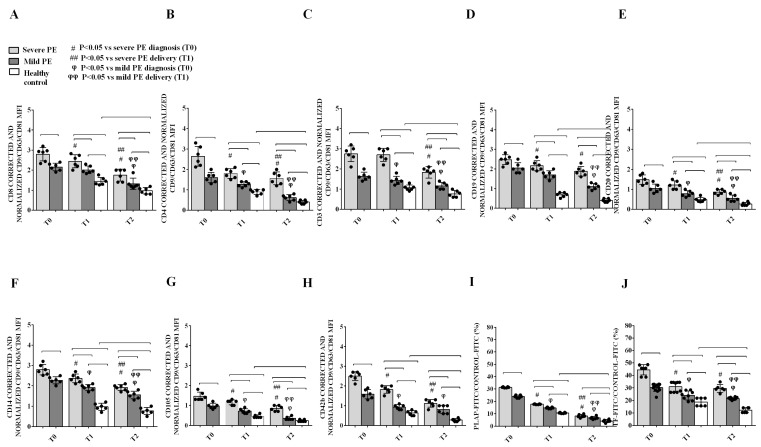 Figure 2
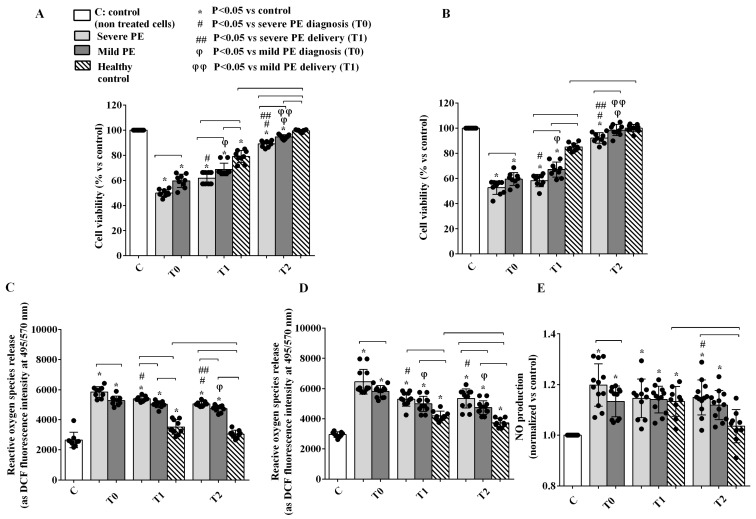 Figure 3
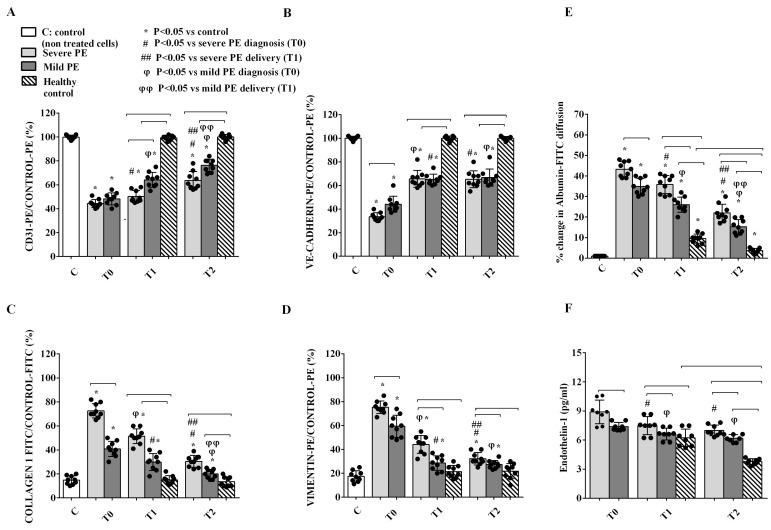 Figure 4
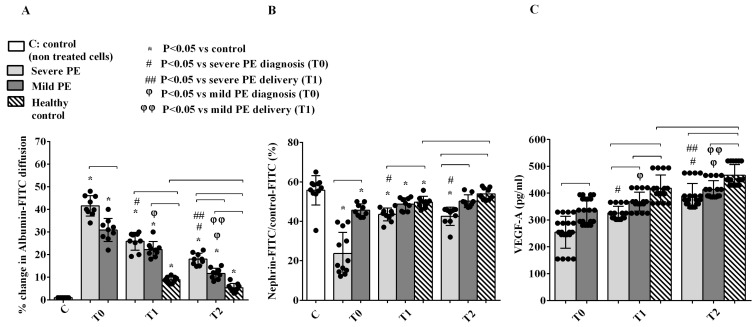 Figure 5
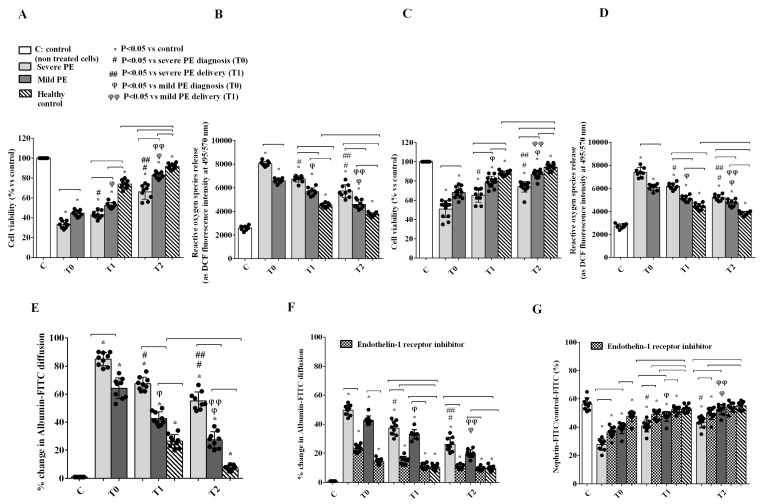 Figure 6
Peer Reviews
No public reviews on file for this paper yet. If you reviewed it on a platform where reviews are public (OpenReview, ICLR, NeurIPS, ICML), you can paste yours below so the community can read it here.
Videos
No videos yet. Explain this paper in a talk, walkthrough, or lecture? Add one.
Taxonomy
TopicsPregnancy and preeclampsia studies · Reproductive System and Pregnancy · Birth, Development, and Health