Metabolomic Analysis Provides Insights into Bud Paradormancy in Camellia sinensis cv. Huangdan
Mingjie Chen, Zhenghua Du, Wenjie Yue, Xiangrui Kong, Quanming Xu, Dongsheng Fang, Changsong Chen

TL;DR
This study explores how bud dormancy is controlled in tea plants using metabolomic analysis, revealing changes in sugar and flavonoid levels during dormancy release.
Contribution
The study provides novel insights into paradormancy mechanisms in a perennial evergreen species using untargeted metabolomics.
Findings
Paradormant buds had lower glucose-1-phosphate and fructose but higher trehalose and raffinose.
Flavonoids like C-diglucosylapigenin and proanthocyanidins were enriched in paradormant buds.
Metabolite levels reversed during the transition from paradormancy to growth.
Abstract
Bud paradormancy has been widely studied in perennial deciduous woody species, but little attention has been paid to paradormancy set and release in perennial evergreen tree species. Here, shoot bud paradormancy in Camellia sinensis cv. Huangdan was studied by untargeted metabolomics. We found that after removing the axillary floral buds for one day, the paradormancy of the axillary shoot buds was released. The paradormant shoot buds had lower glucose-1-phosphate, fructose, and D-(-)-tagatofuranose content but higher trehalose, raffinose, galactinol, and α-D-xylopyranose content. Meanwhile, high levels of asparagine were accumulated. Flavonoids were differentially accumulated, and higher levels of three flavone glycosides (C-diglucosylapigenin, apigenin 6-C-glucoside 8-C-arabinoside, and prunin) and four proanthocyanidins (Procyanidin trimer isomer 1, Galloylprocyanidin dimer,…
Genes, proteins, chemicals, diseases, species, mutations and cell lines named across the full text — each resolved to its canonical identifier and authoritative record.
Click any figure to enlarge with its caption.
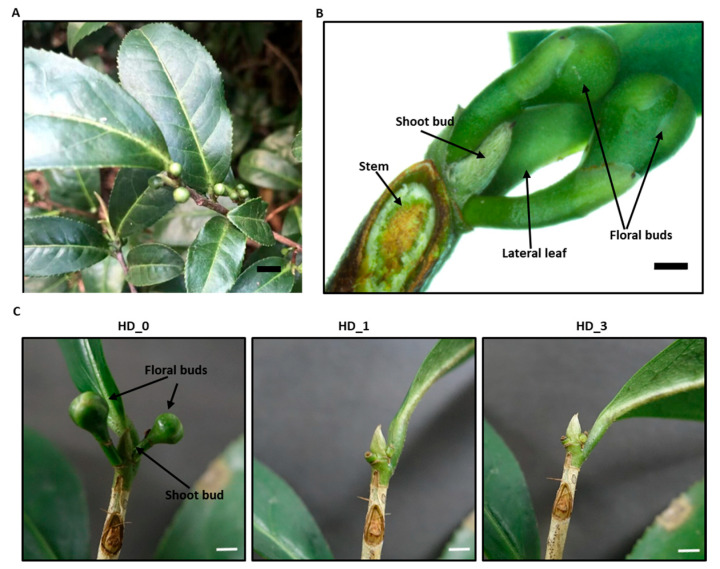 Figure 1
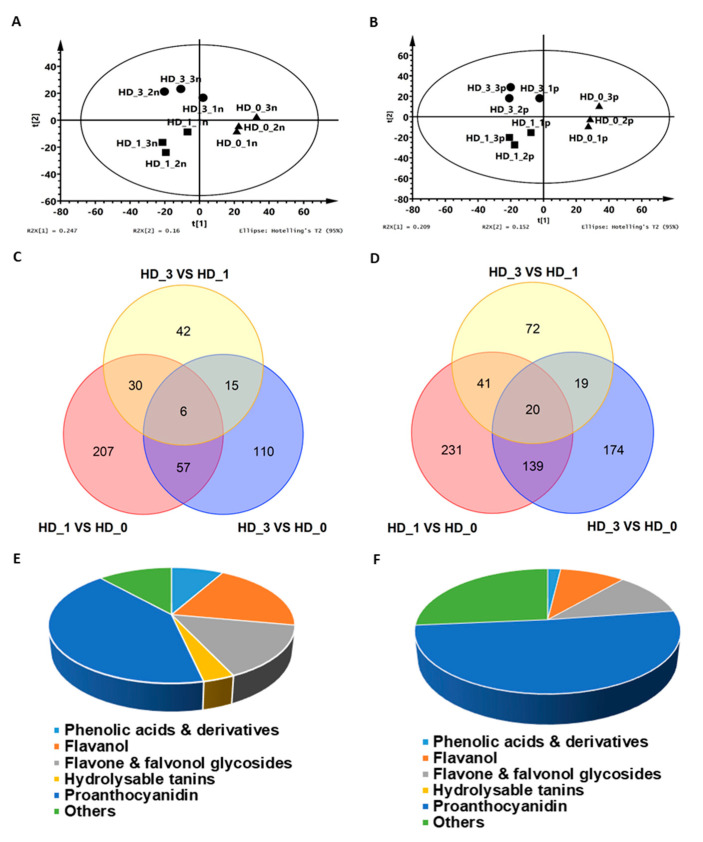 Figure 2
Peer Reviews
No public reviews on file for this paper yet. If you reviewed it on a platform where reviews are public (OpenReview, ICLR, NeurIPS, ICML), you can paste yours below so the community can read it here.
Videos
No videos yet. Explain this paper in a talk, walkthrough, or lecture? Add one.
Taxonomy
TopicsPlant and animal studies · Plant and Fungal Species Descriptions · Phytochemistry and Biological Activities