Pharmacokinetic Profile of Two Active Dipyrone Metabolites, 4-Methylaminoantipyrine (MAA) and 4-Aminoantipyrine (AA), Following Intravenous Administration in Dogs: A Preliminary Study
Andressa N. Mouta, Kathryn N. Arcoverde, Naftáli S. Fernandes, Yanna D. B. Passos, Caio V. A. de Oliveira, Robson A. Honorato, Gabriel Araujo-Silva, Valéria V. de Paula

TL;DR
This study examines how two active forms of dipyrone are processed in dogs' bodies after an injection, revealing differences in metabolism rates and effective pain-relief concentrations.
Contribution
The study provides the first UPLC-MS/MS-based pharmacokinetic analysis of dipyrone metabolites in dogs and identifies variable metabolism rates.
Findings
Dipyrone metabolites reached minimum effective concentrations for analgesia in dogs.
Two groups of metabolizers (fast and slow) were identified for MAA using PCA.
Metabolites remained detectable for up to 48 hours in all dogs for MAA and seven for AA.
Abstract
Dipyrone is widely used to control pain. However, although the standard dose for routine use is 25 mg·kg−1, no studies addressing the pharmacokinetics of this drug employing ultra-performance liquid chromatography coupled to mass spectrometry (UPLC-MS/MS) are available to date. Thus, the aim of this study was to determine the pharmacokinetic profile of the active metabolites of dipyrone 4-methylaminoantipyrine (MAA) and 4-aminoantipyrine (AA) administered intravenously, at 25 mg·kg−1, in eleven mixed-breed dogs (weighing 14.43 ± 2.86 kg). Serial blood samples were collected after the drug administration, stored at −80 °C and analyzed by high-performance chromatography coupled to mass spectrometry. A Principal Component Analysis (PCA) indicated two groups of metabolizers, fast and slow, for MAA. This demonstrates metabolism variability within the same group of mixed-breed dogs.…
Genes, proteins, chemicals, diseases, species, mutations and cell lines named across the full text — each resolved to its canonical identifier and authoritative record.
Click any figure to enlarge with its caption.
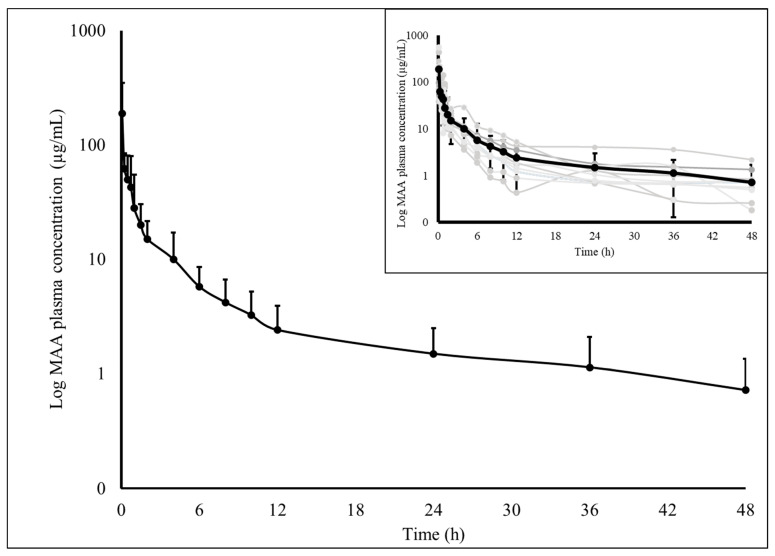 Figure 1
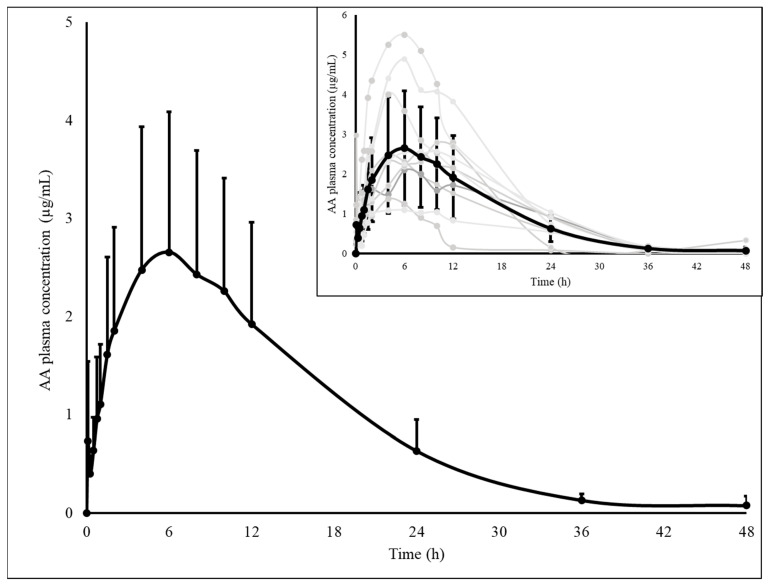 Figure 2
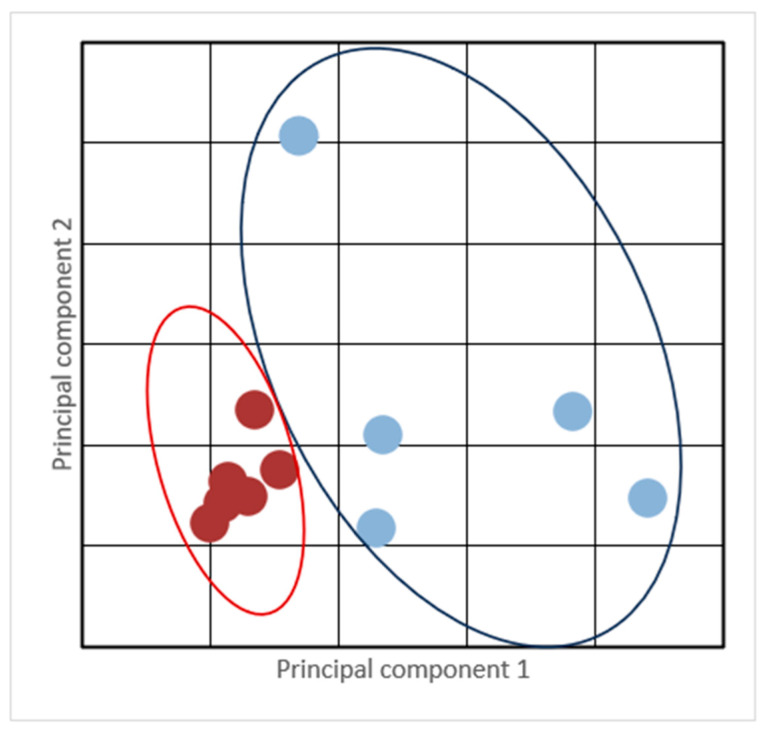 Figure 3
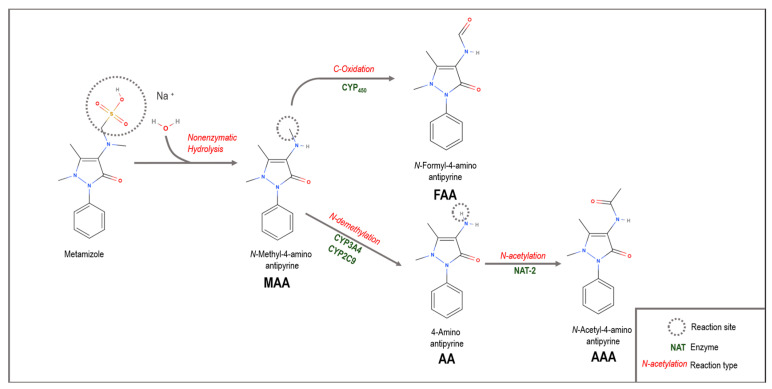 Figure 4
Peer Reviews
No public reviews on file for this paper yet. If you reviewed it on a platform where reviews are public (OpenReview, ICLR, NeurIPS, ICML), you can paste yours below so the community can read it here.
Videos
No videos yet. Explain this paper in a talk, walkthrough, or lecture? Add one.
Taxonomy
TopicsInflammatory mediators and NSAID effects · Blood disorders and treatments · Pharmacogenetics and Drug Metabolism