Efficient Generation of Induced Pluripotent Stem Cell-Derived Definitive Endoderm Cells with Growth Factors and Small Molecules
Faizal Z. Asumda, Shadia Alzoubi, Kiyasha Padarath, Nina John, Kimya Jones, Ravindra Kolhe, Ashis Kumar Mondal, Tae Jin Lee, Wenbo Zhi, Robert C. Huebert, Nathan P. Staff, Lindsey A. Kirkeby

TL;DR
This study compares two methods for generating definitive endoderm cells from stem cells and finds that both work similarly but differ in liver cell development.
Contribution
The study identifies protocol-specific differences in hepatic specification during definitive endoderm differentiation.
Findings
Both GF and SM protocols produce similar definitive endoderm cells in morphology and gene expression.
GF protocol leads to better hepatic specification with distinct metabolic protein profiles in hepatoblasts.
Divergence between protocols is observed during liver-specific development stages.
Abstract
Definitive endoderm (DE) differentiation leads to the development of the major internal organs including the liver, intestines, pancreas, gall bladder, prostate, bladder, thyroid, and lungs. The two primary methods utilized for in vitro differentiation of induced pluripotent stem cells (iPSCs) into DE cells are the growth factor (GF) and the small molecule (SM) approaches. The GSK-3 inhibitor (CHIR99021) is a key factor for the SM approach. Activin A and Wnt3a are utilized in the GF approach. In this study, both the GF and SM protocols were compared to each other. The results show that both the GF and SM protocol produce DE with a similar morphological phenotype, gene and protein expression, and a similar level of homogeneity and functionality. However, on both the gene expression and proteomic level, there is a divergence between the two protocols during hepatic specification.…
Genes, proteins, chemicals, diseases, species, mutations and cell lines named across the full text — each resolved to its canonical identifier and authoritative record.
Click any figure to enlarge with its caption.
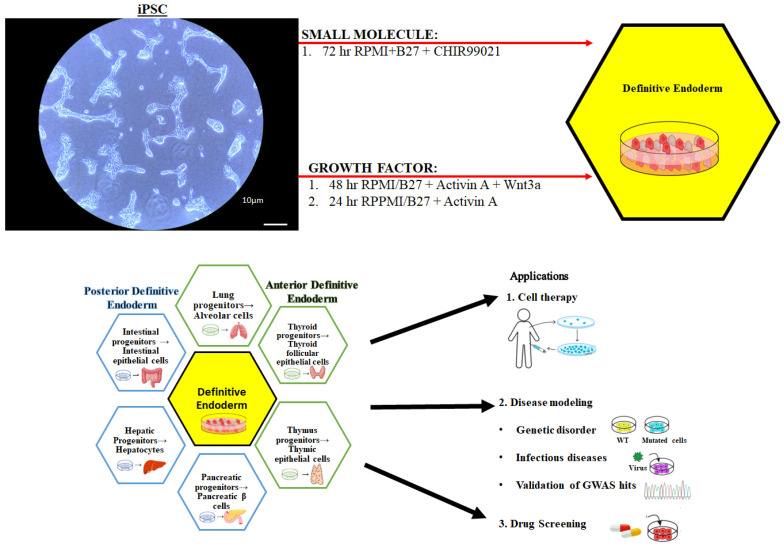 Figure 1
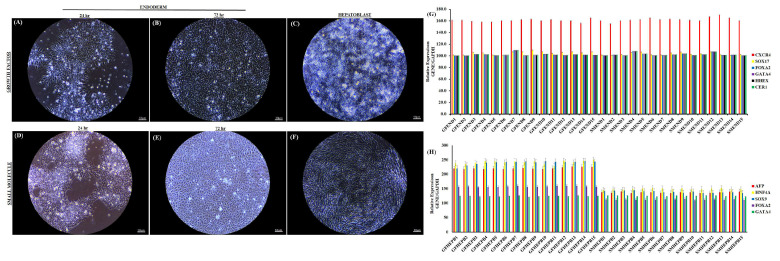 Figure 2
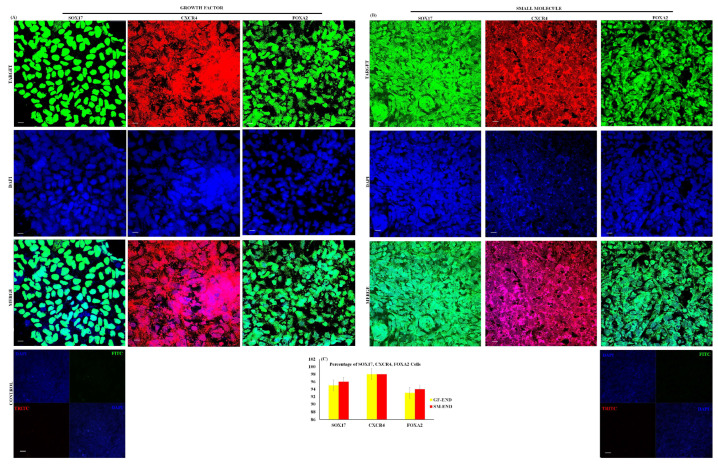 Figure 3
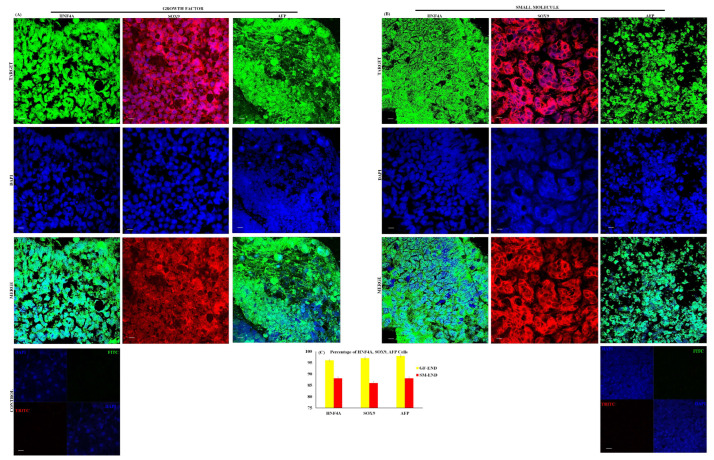 Figure 4
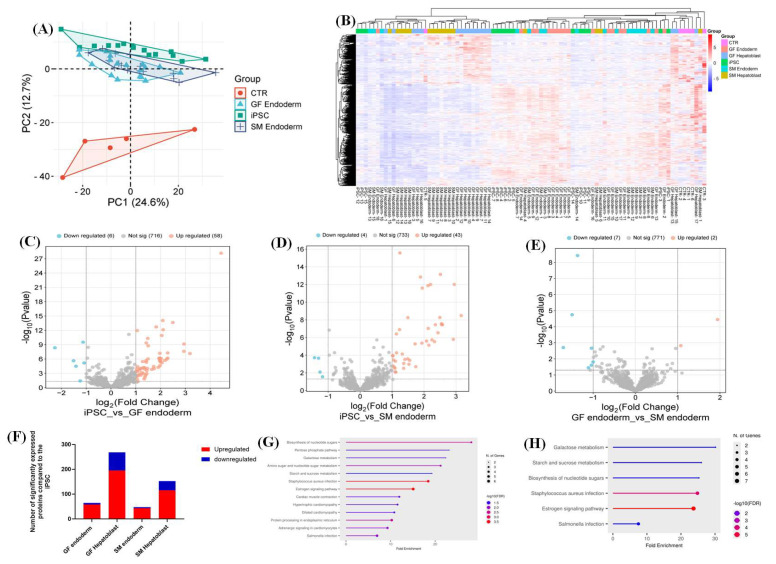 Figure 5
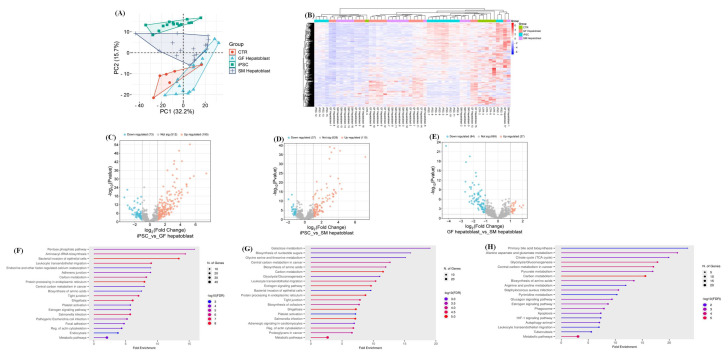 Figure 6
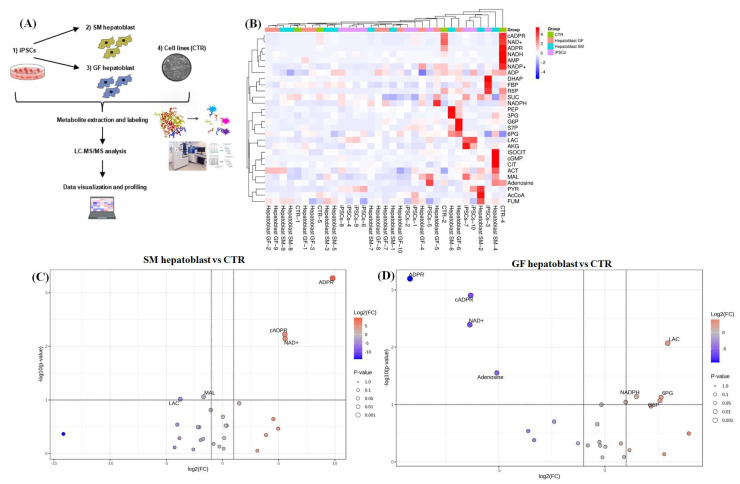 Figure 7
Peer Reviews
No public reviews on file for this paper yet. If you reviewed it on a platform where reviews are public (OpenReview, ICLR, NeurIPS, ICML), you can paste yours below so the community can read it here.
Videos
No videos yet. Explain this paper in a talk, walkthrough, or lecture? Add one.
Taxonomy
TopicsPluripotent Stem Cells Research · 3D Printing in Biomedical Research · Renal and related cancers