SLFN11 Restricts LINE-1 Mobility
Zhongjie Ye, Yuqing Duan, Ao Zhang, Zixiong Zhang, Saisai Guo, Qian Liu, Dongrong Yi, Xinlu Wang, Jianyuan Zhao, Quanjie Li, Ling Ma, Jiwei Ding, Shan Cen, Xiaoyu Li

TL;DR
SLFN11, a protein in the Schlafen family, restricts LINE-1 transposon activity by blocking its transcription and promoting epigenetic silencing.
Contribution
SLFN11 is newly identified as a LINE-1 restriction factor that acts through RNA binding and epigenetic mechanisms.
Findings
SLFN11 inhibits LINE-1 retrotransposition via its helicase domain.
SLFN11 binds to the LINE-1 5′UTR and prevents RNA polymerase II recruitment.
SLFN11 promotes heterochromatinization, indicating an epigenetic suppression pathway.
Abstract
Long interspersed element-1 (LINE-1) is the only active autonomous transposon comprising about 17% of human genomes. LINE-1 transposition can cause the mutation and rearrangement of the host’s genomic DNA. The host has, therefore, developed multiple mechanisms to restrict LINE-1 mobility. Here, we report that SLFN11, a member of the Schlafen family, can restrict LINE-1 retrotransposition, and the inhibitory activity requires its helicase domain. Mechanistically, SLFN11 specifically binds to the LINE-1 5′ untranslated region (5′UTR) and blocks RNA polymerase II recruitment, thereby suppressing its transcription. Furthermore, SLFN11 promotes heterochromatinization, suggesting an epigenetic inhibition pathway.
Genes, proteins, chemicals, diseases, species, mutations and cell lines named across the full text — each resolved to its canonical identifier and authoritative record.
Click any figure to enlarge with its caption.
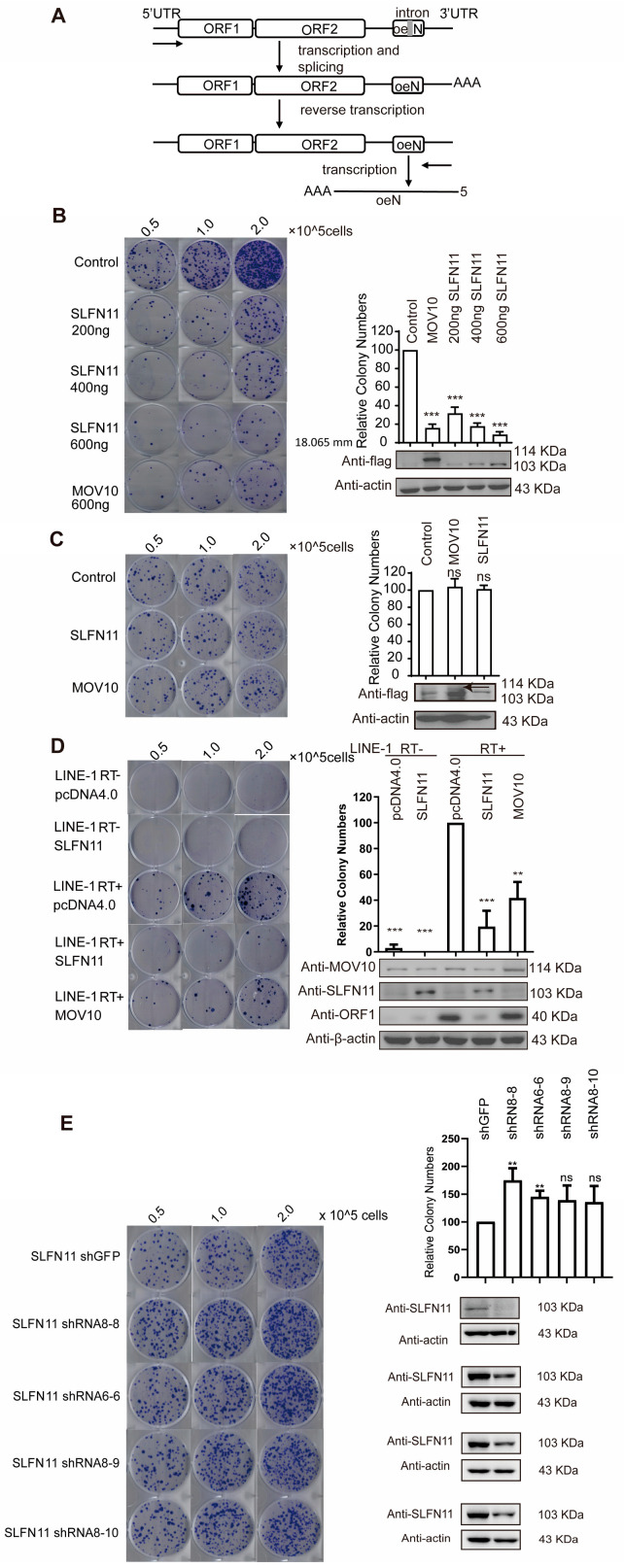 Figure 1
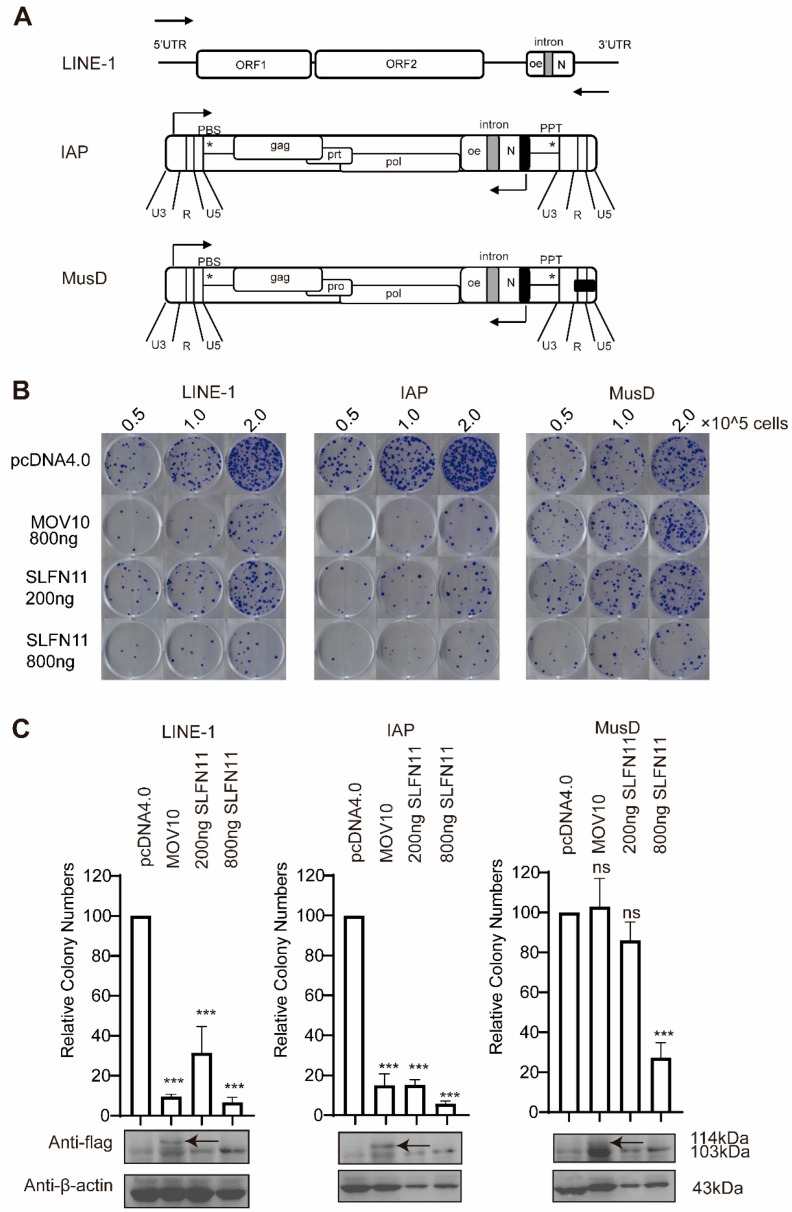 Figure 2
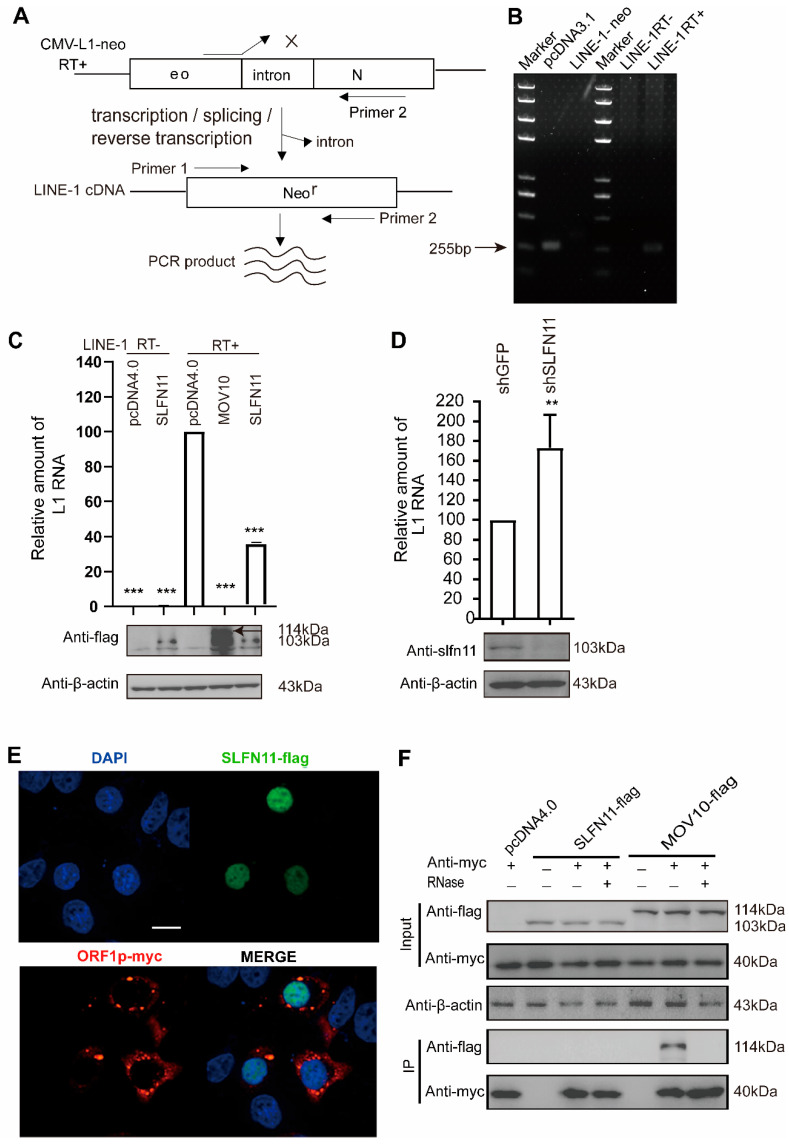 Figure 3
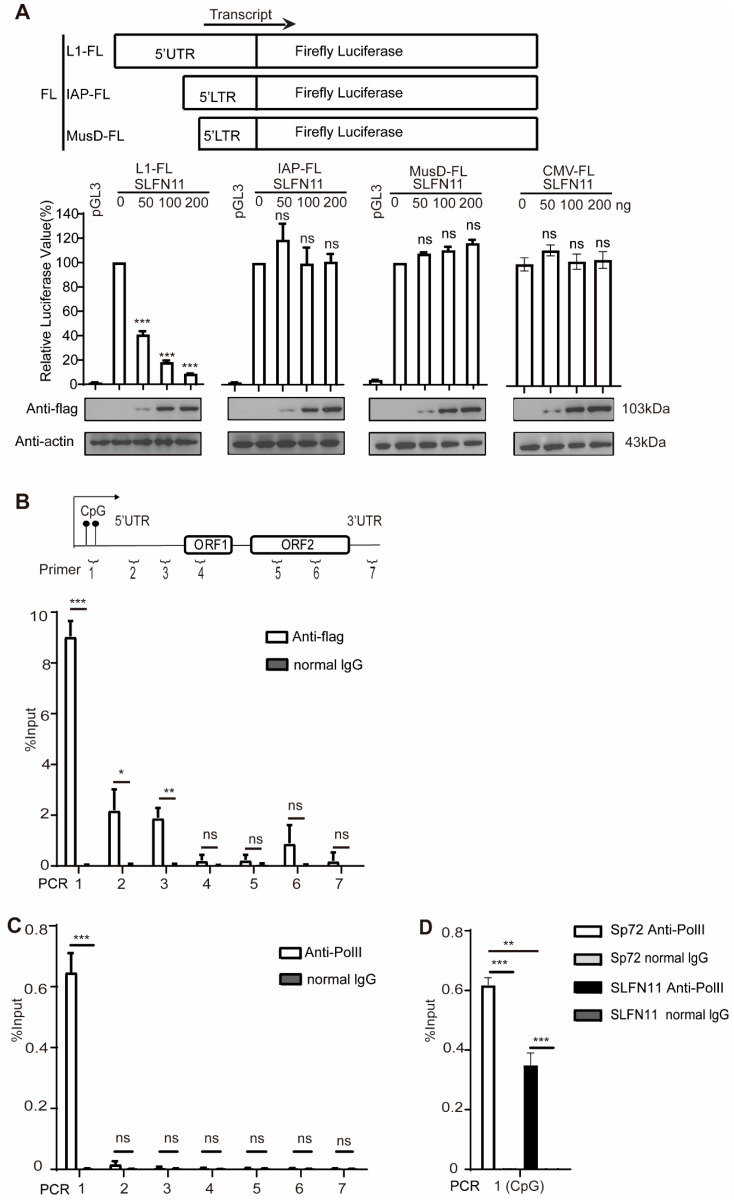 Figure 4
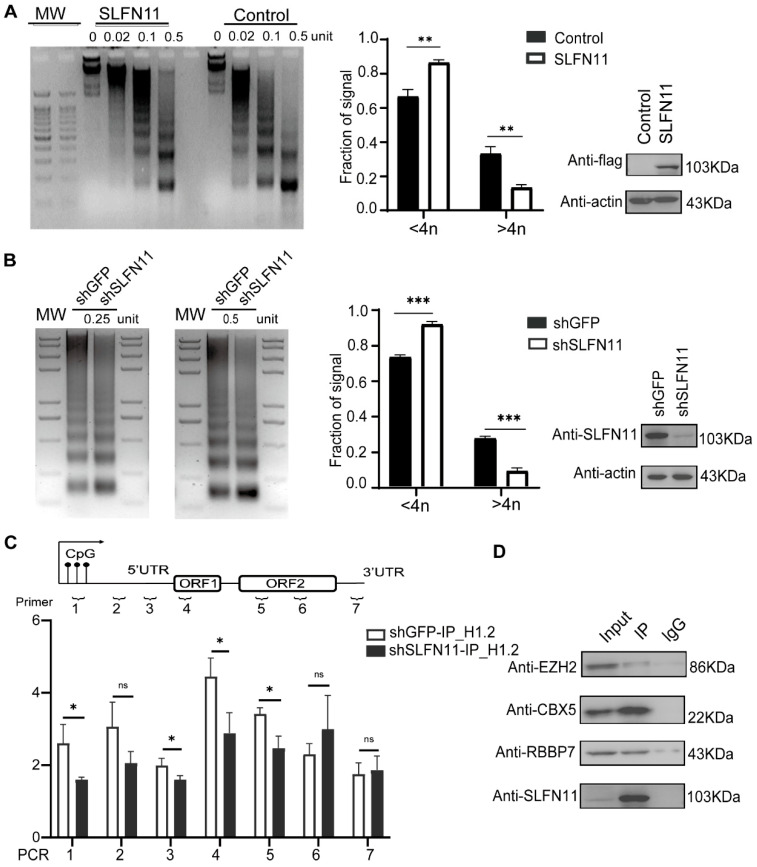 Figure 5
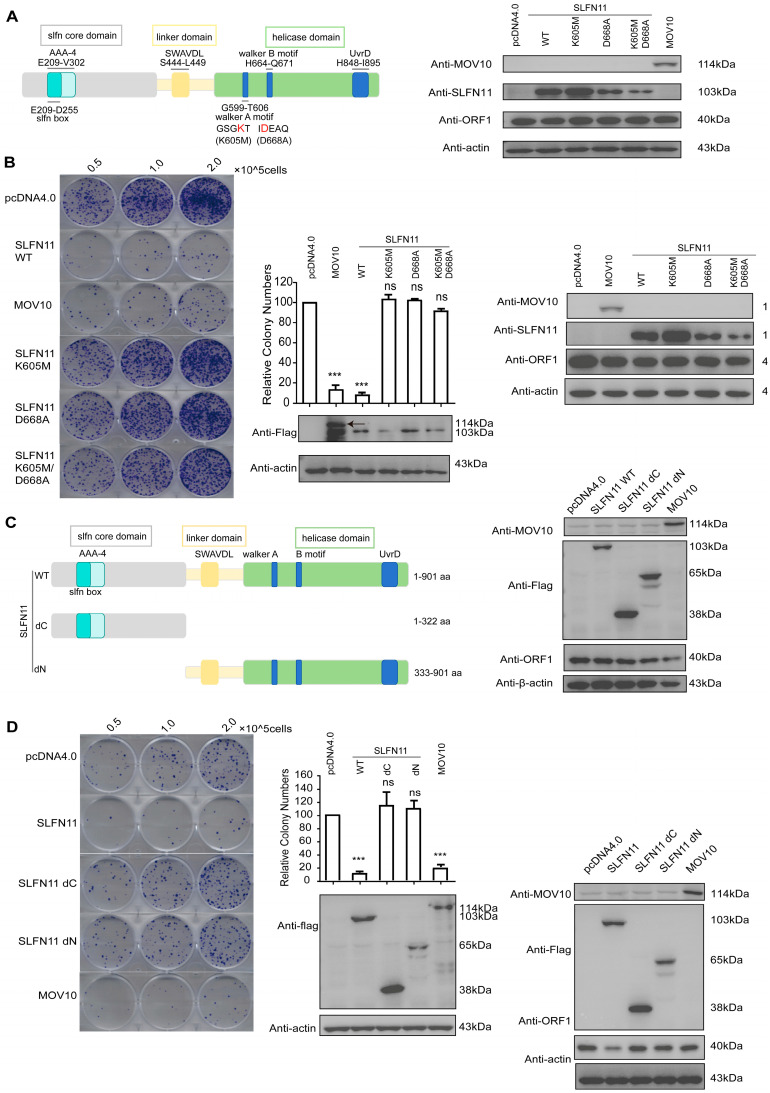 Figure 6
Peer Reviews
No public reviews on file for this paper yet. If you reviewed it on a platform where reviews are public (OpenReview, ICLR, NeurIPS, ICML), you can paste yours below so the community can read it here.
Videos
No videos yet. Explain this paper in a talk, walkthrough, or lecture? Add one.
Taxonomy
TopicsChromosomal and Genetic Variations · CRISPR and Genetic Engineering · Ubiquitin and proteasome pathways