People and Pets in the COVID-19 Pandemic and the Cost-of-Living Crisis: Identifying Trends in the Intake, Adoption and Return of Companion Animals During Times of Uncertainty
Lindsay Murray, Janine Carroll, Jane Tyson

TL;DR
This study explores how the intake, adoption, and return of pets changed during the COVID-19 pandemic and cost-of-living crisis in England and Wales.
Contribution
The study provides novel insights into how global crises impact pet adoption and return trends using RSPCA data and an interrupted time series analysis.
Findings
Fewer dogs and cats were taken in and adopted during the pandemic compared to pre-pandemic.
Intake and adoption rates were lower during the cost-of-living crisis than before.
The return of animals decreased, with common reasons including problem behaviors and owner unpreparedness.
Abstract
Pet ownership is the most common form of human–animal interaction, is prevalent worldwide and confers benefits for the health and wellbeing of humans. Here, we examined a large set of data from the Royal Society for the Prevention of Cruelty to Animals (RSPCA) to identify trends in the intake, adoption and return of companion animals in England and Wales before and during times of uncertainty, namely, the COVID-19 pandemic and the cost-of-living crisis (COLC). We used an interrupted time series analysis which controls for pre-existing trends by comparing observed outcomes post-intervention with those expected if the intervention had not occurred. Nearly 200,000 animals were taken in by the RSPCA and over 140,000 animals were adopted or released over the four-year period from 2018 to 2022. When controlling for the brief closure of RSPCA sites, fewer dogs and cats were taken in and…
Genes, proteins, chemicals, diseases, species, mutations and cell lines named across the full text — each resolved to its canonical identifier and authoritative record.
Click any figure to enlarge with its caption.
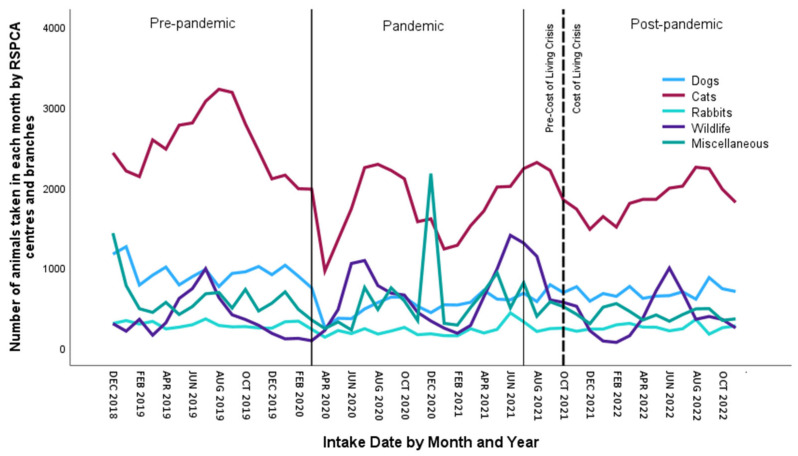 Figure 1
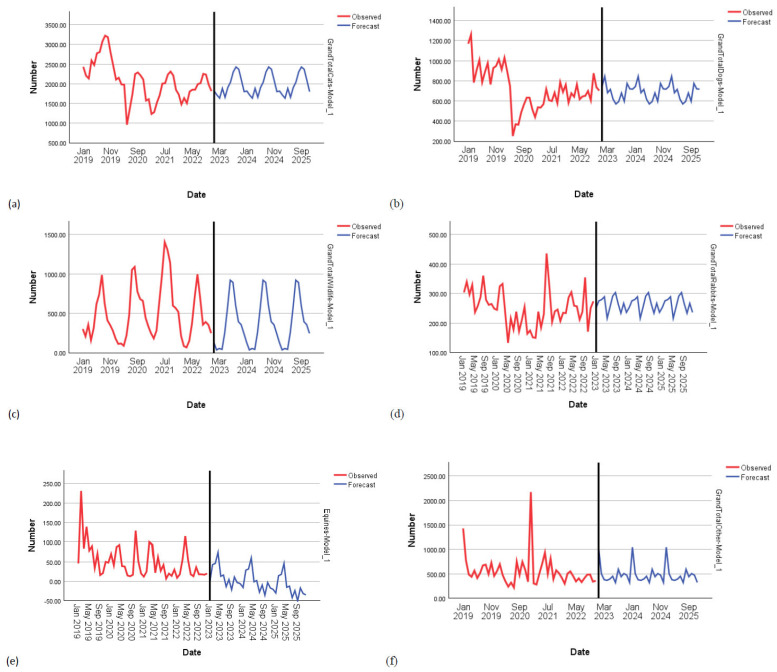 Figure 2
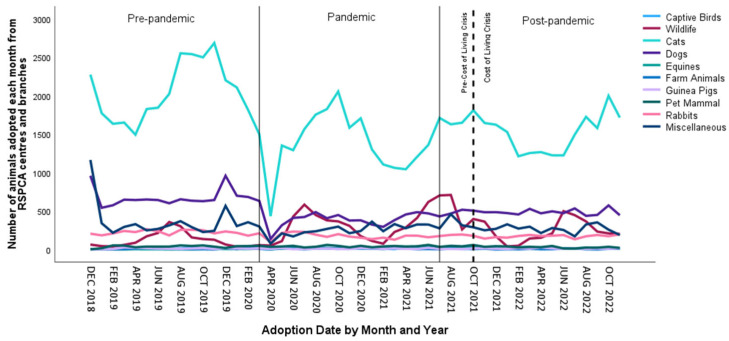 Figure 3
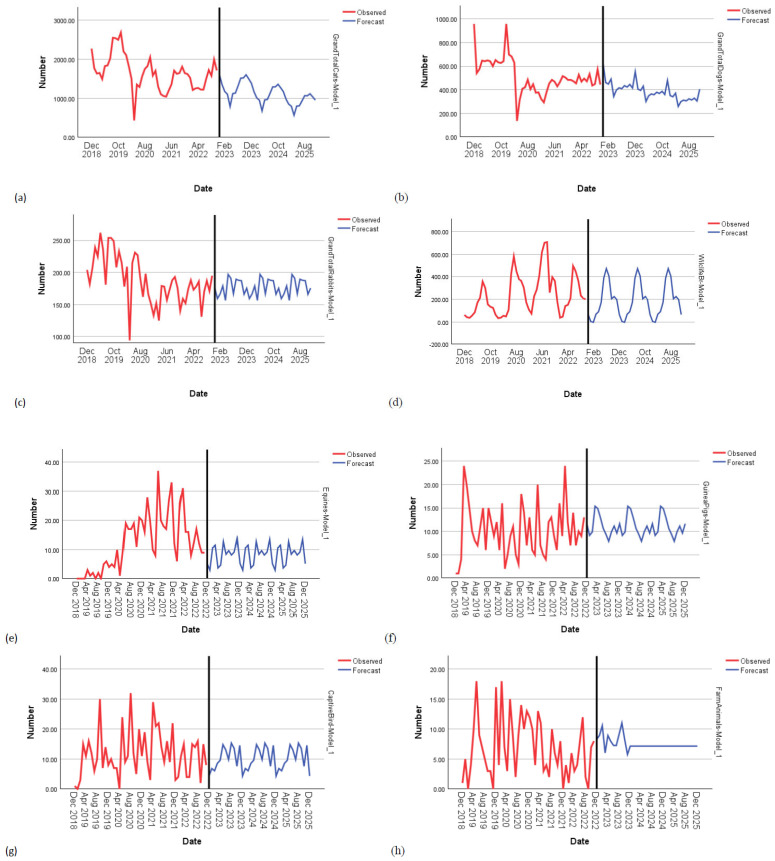 Figure 4
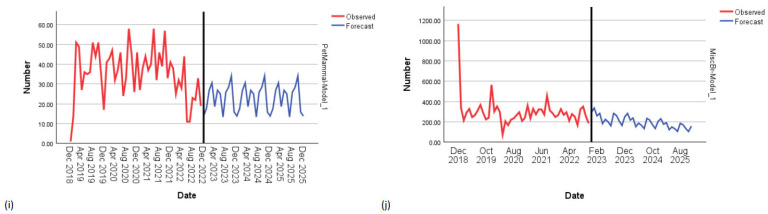 Figure 5
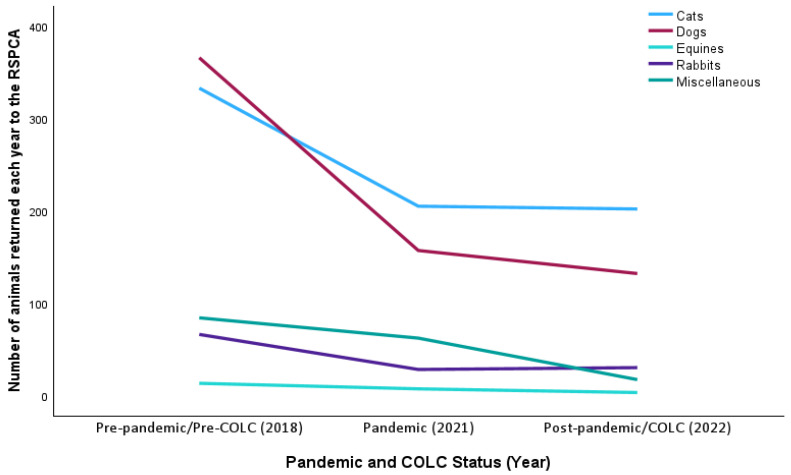 Figure 6
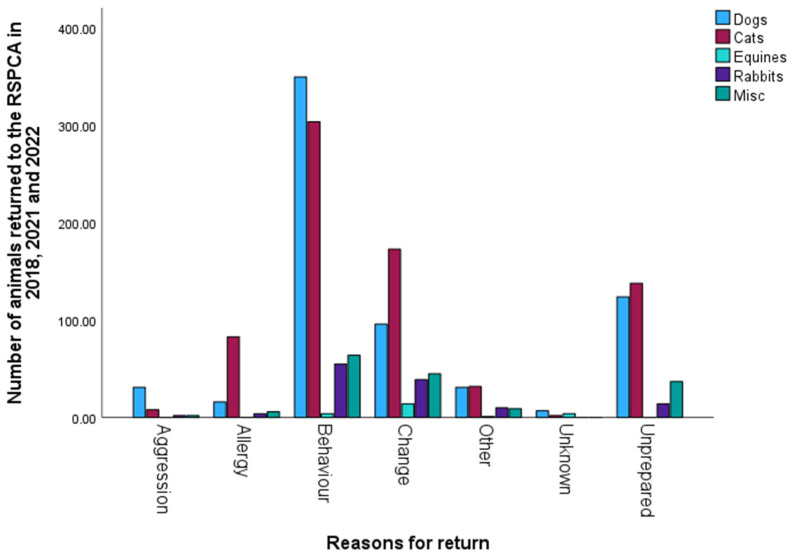 Figure 7
Peer Reviews
No public reviews on file for this paper yet. If you reviewed it on a platform where reviews are public (OpenReview, ICLR, NeurIPS, ICML), you can paste yours below so the community can read it here.
Videos
No videos yet. Explain this paper in a talk, walkthrough, or lecture? Add one.
Taxonomy
TopicsHuman-Animal Interaction Studies · Animal Behavior and Welfare Studies · Veterinary Practice and Education Studies