Docetaxel Administration via Novel Hierarchical Nanoparticle Reduces Proinflammatory Cytokine Levels in Prostate Cancer Cells
Ravikumar Aalinkeel, Satish Sharma, Supriya D. Mahajan, Paras N. Prasad, Stanley A. Schwartz

TL;DR
A new nanoparticle-based delivery system for docetaxel reduces proinflammatory cytokines in prostate cancer cells, potentially improving treatment outcomes.
Contribution
A novel hierarchical nanoparticle delivery system for docetaxel is shown to reduce proinflammatory signaling in docetaxel-resistant prostate cancer cells.
Findings
LNCaP-Doc/R cells required 90-fold higher docetaxel concentrations for 50% cell killing compared to naive cells.
Free docetaxel treatment increased proinflammatory cytokines like IFNγ, IL-1α, and RANTES by 2–5.75-fold compared to HNP-encapsulated docetaxel.
HNP-encapsulated docetaxel reduced macrophage differentiation markers in co-cultured U937 monocytes compared to free docetaxel.
Abstract
Docetaxel (Doc) resistance in prostate cancer (CaP) is linked to the secretion of proinflammatory cytokines, which facilitate interactions between tumor cells and macrophages, contributing to treatment resistance. This study developed a Doc-resistant CaP cell line (LNCaP-Doc/R) to investigate whether encapsulating Doc in a PLGA-Chitosan core-shell hierarchical nanoparticle (HNP-Doc) could reduce proinflammatory signaling. Results showed that LNCaP-Doc/R cells required significantly higher Doc concentrations for effective treatment. Cells treated with free Doc exhibited markedly higher levels of proinflammatory cytokines compared to those treated with HNP-Doc. Additionally, co-culturing LNCaP-Doc/R cells with monocytes revealed reduced macrophage differentiation markers when treated with HNP-Doc. These findings suggest that nanoparticle-encapsulated Doc can mitigate the proinflammatory…
Genes, proteins, chemicals, diseases, species, mutations and cell lines named across the full text — each resolved to its canonical identifier and authoritative record.
Click any figure to enlarge with its caption.
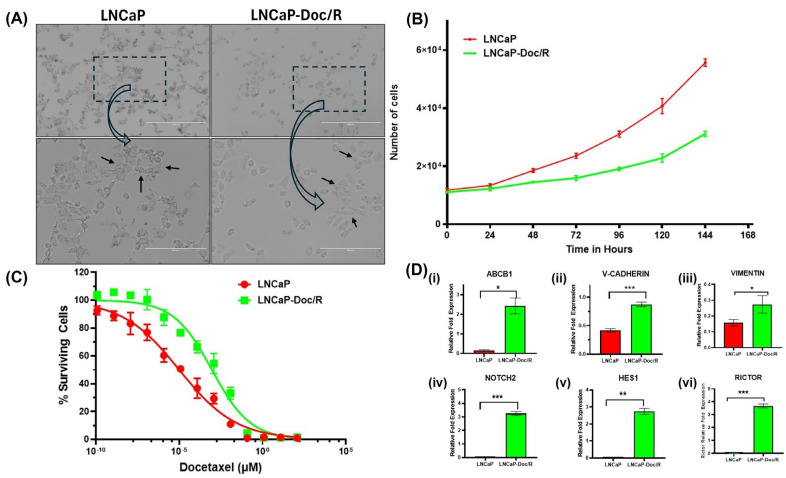 Figure 1
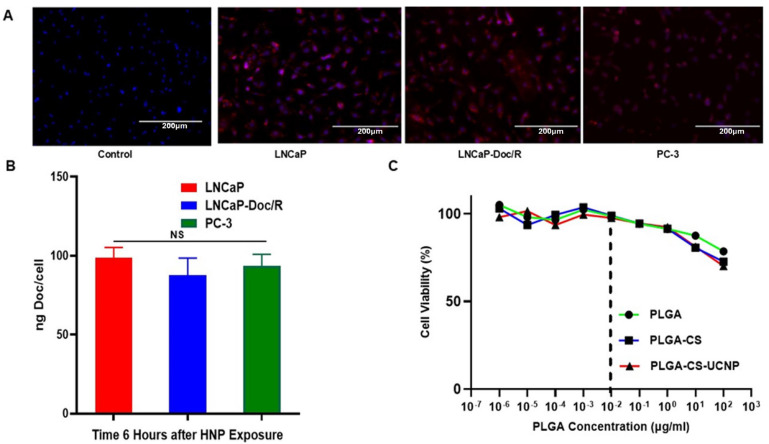 Figure 2
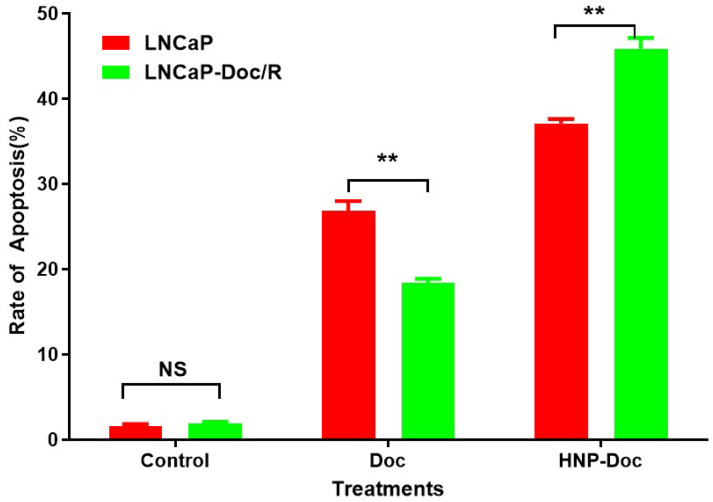 Figure 3
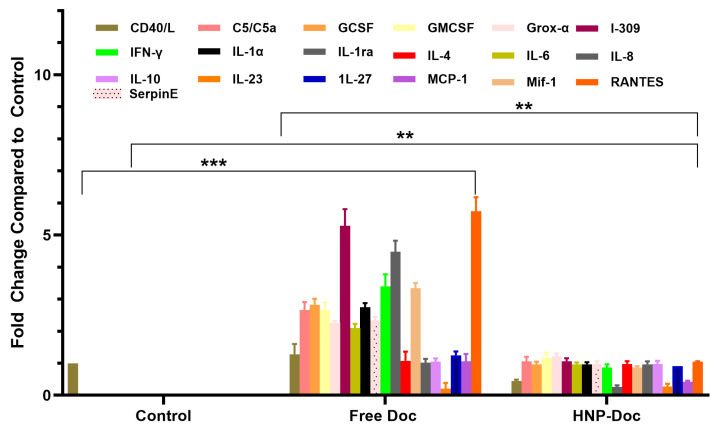 Figure 4
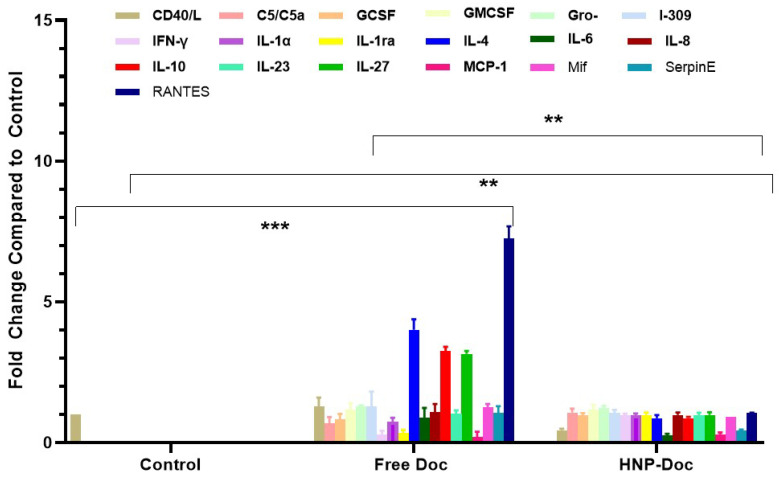 Figure 5
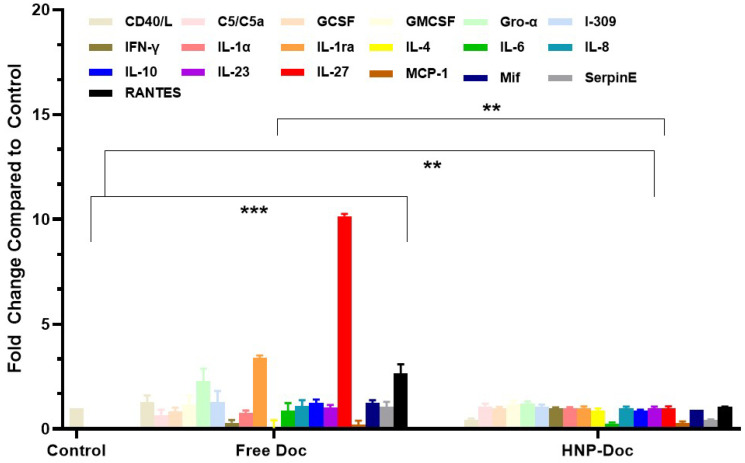 Figure 6
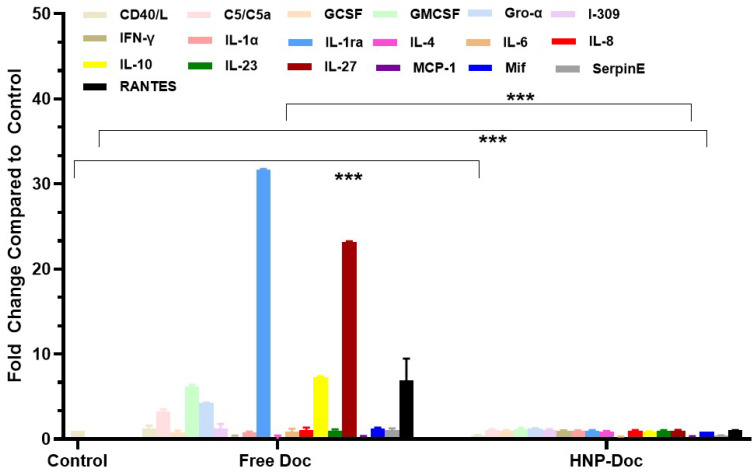 Figure 7
Peer Reviews
No public reviews on file for this paper yet. If you reviewed it on a platform where reviews are public (OpenReview, ICLR, NeurIPS, ICML), you can paste yours below so the community can read it here.
Videos
No videos yet. Explain this paper in a talk, walkthrough, or lecture? Add one.
Taxonomy
TopicsChemokine receptors and signaling · Immune cells in cancer · Immunotherapy and Immune Responses